
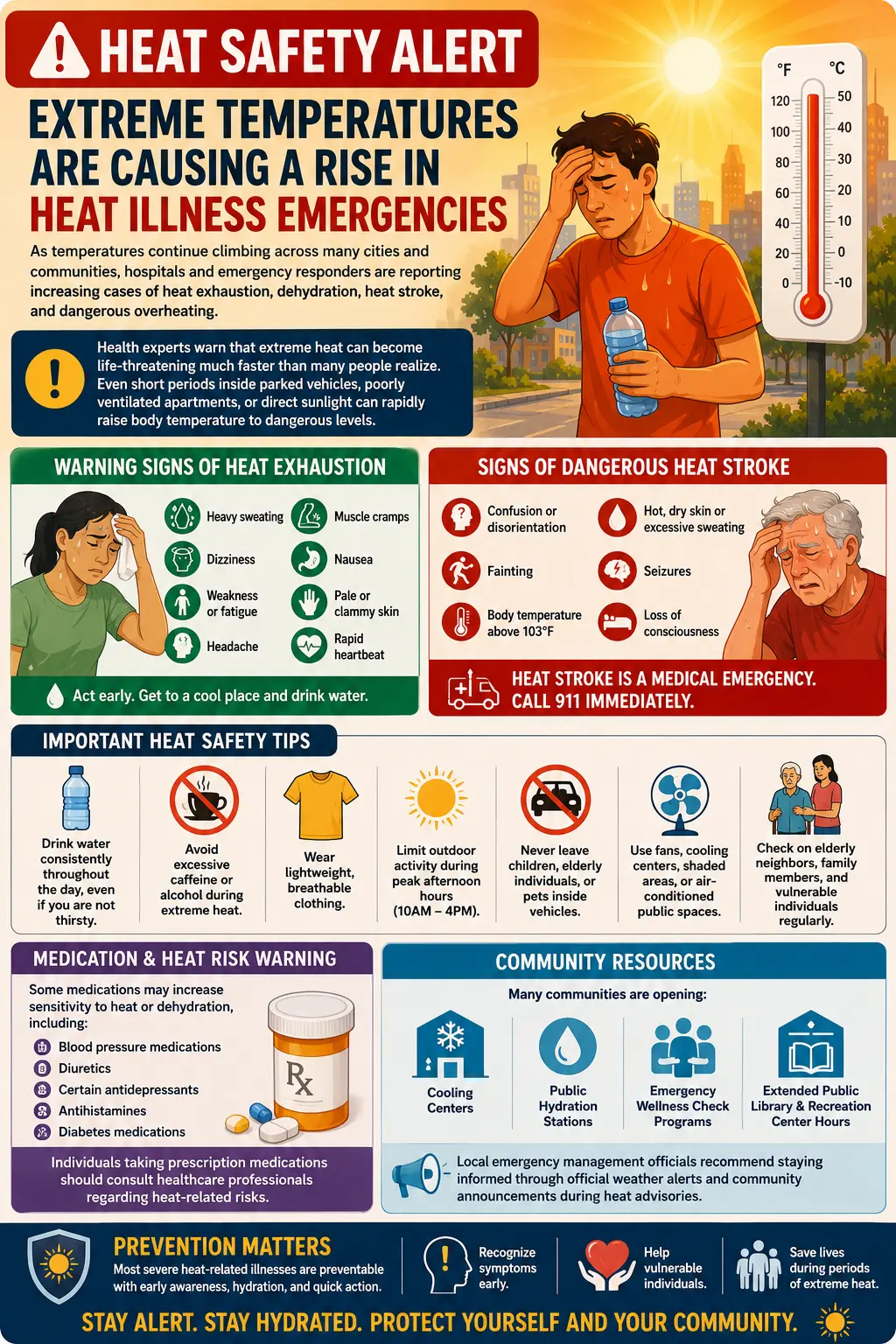
As temperatures continue climbing across many cities and communities, hospitals and emergency responders are reporting increasing cases of heat exhaustion, dehydration, heat stroke, and dangerous overheating — especially among seniors, children, outdoor workers, individuals without air conditioning, and people with medical conditions.
Health experts warn that extreme heat can become life-threatening much faster than many people realize. Even short periods inside parked vehicles, poorly ventilated apartments, or direct sunlight can rapidly raise body temperature to dangerous levels.
Warning Signs of Heat Exhaustion:
– Heavy sweating
– Dizziness
– Weakness or fatigue
– Headache
– Muscle cramps
– Nausea
– Pale or clammy skin
– Rapid heartbeat
Signs of Dangerous Heat Stroke:
– Confusion or disorientation
– Fainting
– Body temperature above 103°F
– Hot, dry skin or excessive sweating
– Seizures
– Loss of consciousness
Heat stroke is a medical emergency and requires immediate assistance.
Important Heat Safety Tips:
– Drink water consistently throughout the day, even if you are not thirsty.
– Avoid excessive caffeine or alcohol during extreme heat.
– Wear lightweight, breathable clothing.
– Limit outdoor activity during peak afternoon hours.
– Never leave children, elderly individuals, or pets inside vehicles.
– Use fans, cooling centers, shaded areas, or air-conditioned public spaces whenever possible.
– Check on elderly neighbors, family members, and vulnerable individuals regularly.
Medication & Heat Risk Warning:
Some medications may increase sensitivity to heat or dehydration, including:
– Blood pressure medications
– Diuretics
– Certain antidepressants
– Antihistamines
– Diabetes medications
Individuals taking prescription medications should consult healthcare professionals regarding heat-related risks.
Community Resources:
Many communities are opening:
– Cooling centers
– Public hydration stations
– Emergency wellness check programs
– Extended public library and recreation center hours
Local emergency management officials recommend staying informed through official weather alerts and community announcements during heat advisories.
Prevention Matters:
Most severe heat-related illnesses are preventable with early awareness, hydration, and quick action. Recognizing symptoms early and helping vulnerable individuals can save lives during periods of extreme heat.
Stay alert. Stay hydrated. Protect yourself and your community.