
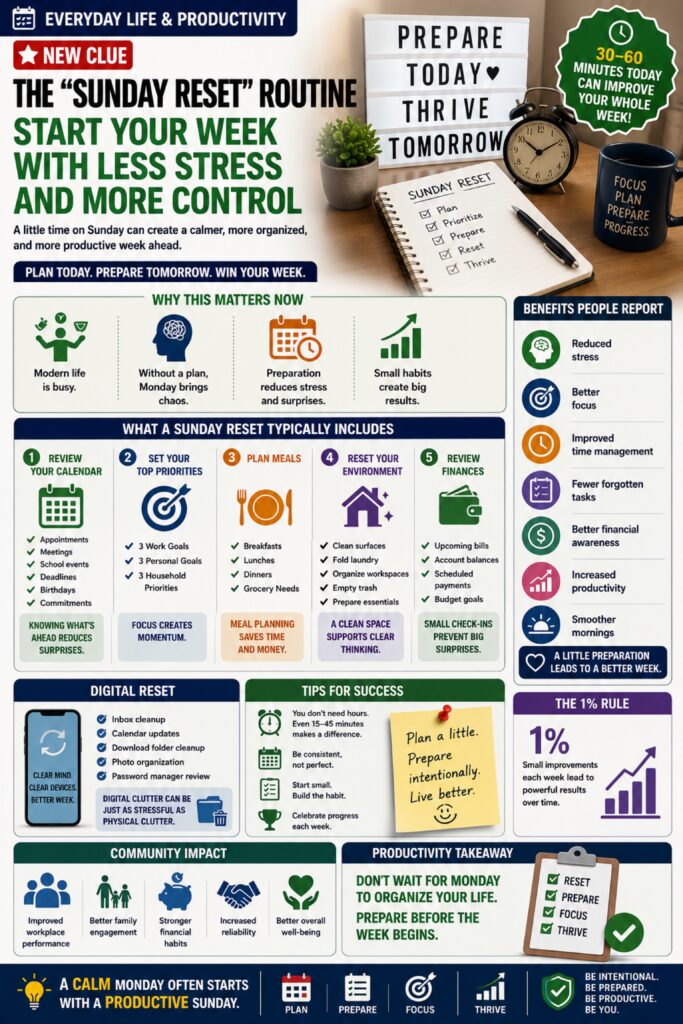
The “Sunday Reset” Routine Is Helping People Start the Week With Less Stress and More Control
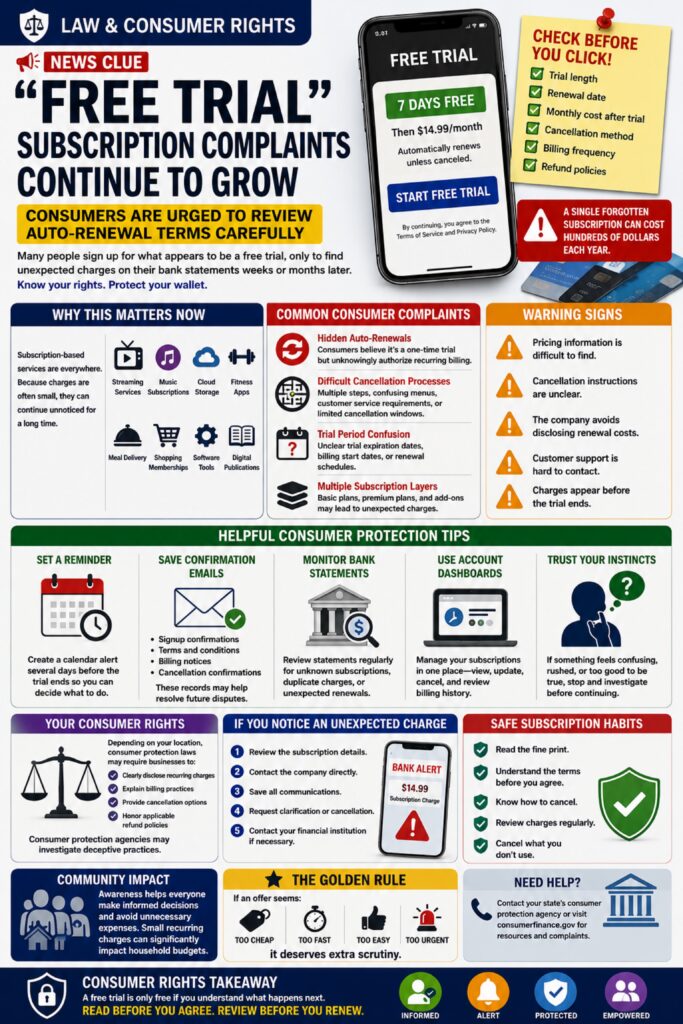
“Free Trial” Subscription Complaints Continue To Grow — Consumers Are Urged To Review Auto-Renewal Terms Carefully
Consumer protection agencies continue receiving complaints from individuals who signed up for what appeared to be a free trial, only to discover recurring charges appearing on their bank statements weeks or months later.
From streaming services and fitness apps to AI tools, meal programs, wellness subscriptions, software platforms, and online memberships, businesses increasingly use free trials as a way to introduce consumers to products and services.
While many companies operate legally and clearly disclose their terms, consumer advocates warn that some subscription offers use confusing language, difficult cancellation processes, or automatic renewals that consumers may overlook during signup.
As subscription-based services continue expanding across nearly every industry, understanding your rights as a consumer has become increasingly important.
⚖️ Why This Matters Now
Many consumers currently manage:
* Streaming services
* Music subscriptions
* Cloud storage plans
* AI platforms
* Fitness memberships
* Meal delivery services
* Shopping memberships
* Software subscriptions
* Digital publications
Because recurring charges are often relatively small, they can continue unnoticed for long periods of time.
A single forgotten subscription may cost hundreds of dollars annually.
🚨 Common Consumer Complaints
Hidden Auto-Renewals
Consumers believe they are signing up for a one-time trial but unknowingly authorize recurring billing.
Difficult Cancellation Processes
Some users report:
* Multiple cancellation steps
* Confusing account menus
* Customer service requirements
* Limited cancellation windows
Trial Period Confusion
Consumers sometimes misunderstand:
* Trial expiration dates
* Billing start dates
* Renewal schedules
Multiple Subscription Layers
Some services offer:
* Basic plans
* Premium plans
* Add-on services
Consumers may not realize multiple subscriptions have been activated.
🔍 Before Starting A Free Trial
Take a few moments to verify:
✔ Trial length
✔ Renewal date
✔ Monthly cost after trial
✔ Cancellation method
✔ Billing frequency
✔ Refund policies
Reading the details upfront can help prevent future surprises.
📅 Helpful Consumer Protection Tips
Set A Reminder
Create a calendar alert several days before the trial ends.
This allows time to evaluate whether the service remains worthwhile.
Save Confirmation Emails
Keep:
* Signup confirmations
* Terms and conditions
* Billing notices
* Cancellation confirmations
These records may help resolve future disputes.
Monitor Bank Statements
Review statements regularly for:
* Unknown subscriptions
* Duplicate charges
* Unexpected renewals
Small recurring charges are often overlooked.
Use Account Dashboards
Many services provide subscription management tools that allow users to:
* View active subscriptions
* Update payment methods
* Cancel renewals
* Review billing history
⚠️ Warning Signs
Exercise caution if:
❌ Pricing information is difficult to locate.
❌ Cancellation instructions are unclear.
❌ The company avoids disclosing renewal costs.
❌ Customer support is difficult to contact.
❌ Charges appear before the trial ends.
These situations deserve closer review.
🛡️ Your Consumer Rights
Depending on your location, consumer protection laws may require businesses to:
* Clearly disclose recurring charges
* Explain billing practices
* Provide cancellation options
* Honor applicable refund policies
Consumer protection agencies often investigate deceptive subscription practices.
📞 If You Notice An Unexpected Charge
Take action quickly:
1. Review the subscription details.
2. Contact the company directly.
3. Save all communications.
4. Request clarification or cancellation.
5. Contact your financial institution if necessary.
The sooner an issue is identified, the easier it may be to resolve.
🌎 Community Impact
Subscription services offer convenience and value for millions of consumers.
However, increased awareness helps individuals make informed financial decisions and avoid unnecessary expenses.
Small recurring charges can significantly impact household budgets over time.
🎯 Consumer Rights Takeaway
A free trial is only free if you understand what happens next.
Before clicking “Start Free Trial,” take a moment to understand the terms, set a reminder, and know how to cancel if needed.
Remember:
Read before you agree. Review before you renew.
⚖️💳🔍📅 Your attention today can prevent unwanted charges tomorrow.
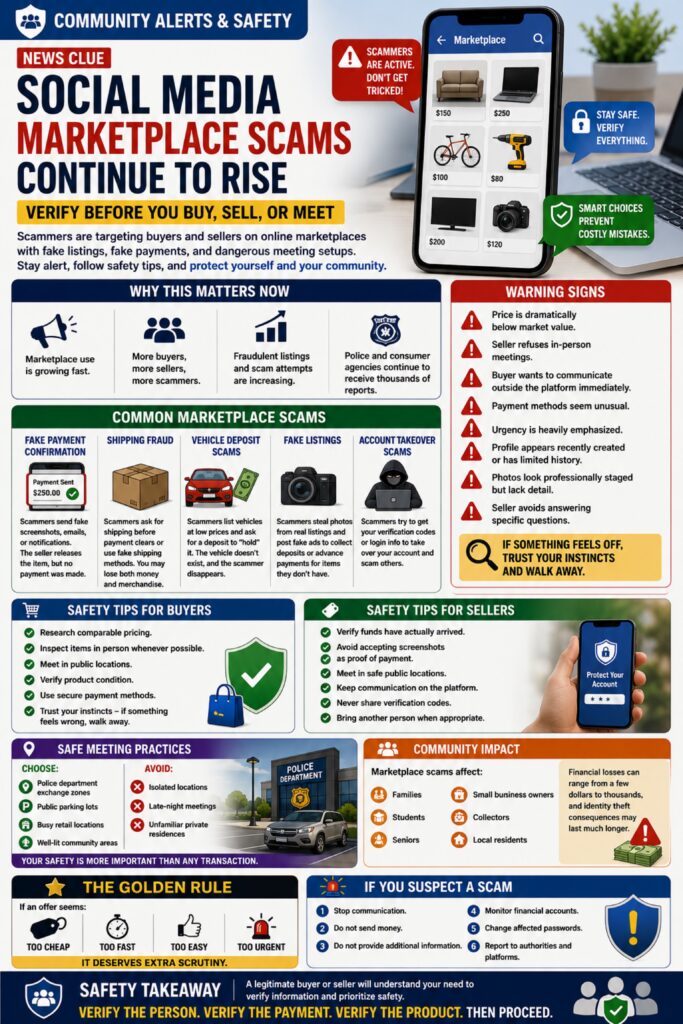
Social Media Marketplace Scams Continue To Rise — Verify Before You Buy, Sell, or Meet
Online community marketplaces have made it easier than ever to buy, sell, and trade goods locally. From furniture and electronics to vehicles, tools, collectibles, and household items, millions of transactions occur every day through social media groups and marketplace platforms.
Unfortunately, scammers are increasingly exploiting these platforms to target both buyers and sellers.
Law enforcement agencies and consumer protection organizations continue to receive reports involving fake listings, counterfeit payment confirmations, account takeover attempts, shipping fraud, deposit scams, and dangerous in-person meeting situations.
Many scams succeed because victims feel pressured to act quickly before an item is “sold” or because they trust that local marketplace users have already been verified.
🚨 Why This Matters Now
Community marketplaces are growing rapidly because they offer:
* Convenient local transactions
* Lower prices
* Quick sales
* Direct communication
* Wide product selection
Criminals follow where people gather.
As marketplace activity increases, fraudulent listings and scam attempts often increase alongside it.
⚠️ Common Marketplace Scams
💰 Fake Payment Confirmation
A buyer claims payment was sent.
They provide:
* Screenshots
* Emails
* Fake payment notifications
The seller releases the item before confirming funds were actually received.
📦 Shipping Fraud
Scammers request:
* Shipping before payment clears
* Alternative delivery methods
* Off-platform communication
Victims may lose both money and merchandise.
🚗 Vehicle Deposit Scams
Fraudsters advertise:
* Vehicles
* Boats
* RVs
* Motorcycles
At unusually attractive prices.
They request deposits to “hold” the item before the buyer has an opportunity to inspect it.
The vehicle often doesn’t exist.
🎁 Fake Listings
Scammers steal photos from legitimate listings and repost them.
Common targets include:
* Electronics
* Tools
* Appliances
* Gaming systems
* Power equipment
The goal is collecting deposits or advance payments.
🔐 Account Takeover Scams
Criminals may attempt to obtain:
* Verification codes
* Login credentials
* Authentication information
Once obtained, legitimate accounts may be used to scam additional victims.
🚩 Warning Signs
Be cautious if:
❌ The price is dramatically below market value.
❌ The seller refuses in-person meetings.
❌ The buyer wants to communicate outside the platform immediately.
❌ Payment methods seem unusual.
❌ Urgency is heavily emphasized.
❌ The profile appears recently created.
❌ Photos look professionally staged but lack detail.
❌ The seller avoids answering specific questions.
🛡️ Safety Tips For Buyers
Before purchasing:
✔ Research comparable pricing.
✔ Inspect items in person whenever possible.
✔ Meet in public locations.
✔ Verify product condition.
✔ Use secure payment methods.
✔ Trust your instincts.
If something feels wrong, walk away.
🛡️ Safety Tips For Sellers
Before releasing an item:
✔ Verify funds have actually arrived.
✔ Avoid accepting screenshots as proof of payment.
✔ Meet in safe public locations.
✔ Keep communication on the platform.
✔ Never share verification codes.
✔ Bring another person when appropriate.
🚔 Safe Meeting Practices
When meeting a buyer or seller:
Choose:
* Police department exchange zones
* Public parking lots
* Busy retail locations
* Well-lit community areas
Avoid:
* Isolated locations
* Late-night meetings
* Unfamiliar private residences
Personal safety is always more important than completing a transaction.
🌎 Community Impact
Marketplace scams affect:
* Families
* Students
* Seniors
* Small business owners
* Collectors
* Local residents
Financial losses can range from a few dollars to thousands, while identity theft consequences may persist much longer.
💡 Remember The Golden Rule
If an offer seems:
* Too cheap
* Too fast
* Too easy
* Too urgent
It deserves extra scrutiny.
Scammers often rely on excitement and urgency to bypass caution.
🎯 Safety Takeaway
A legitimate buyer or seller will understand your need to verify information and prioritize safety.
Never let pressure replace good judgment.
Remember:
Verify the person. Verify the payment. Verify the product. Then proceed.
🛒🔍🛡️⚠️ Safe transactions start with smart decisions.
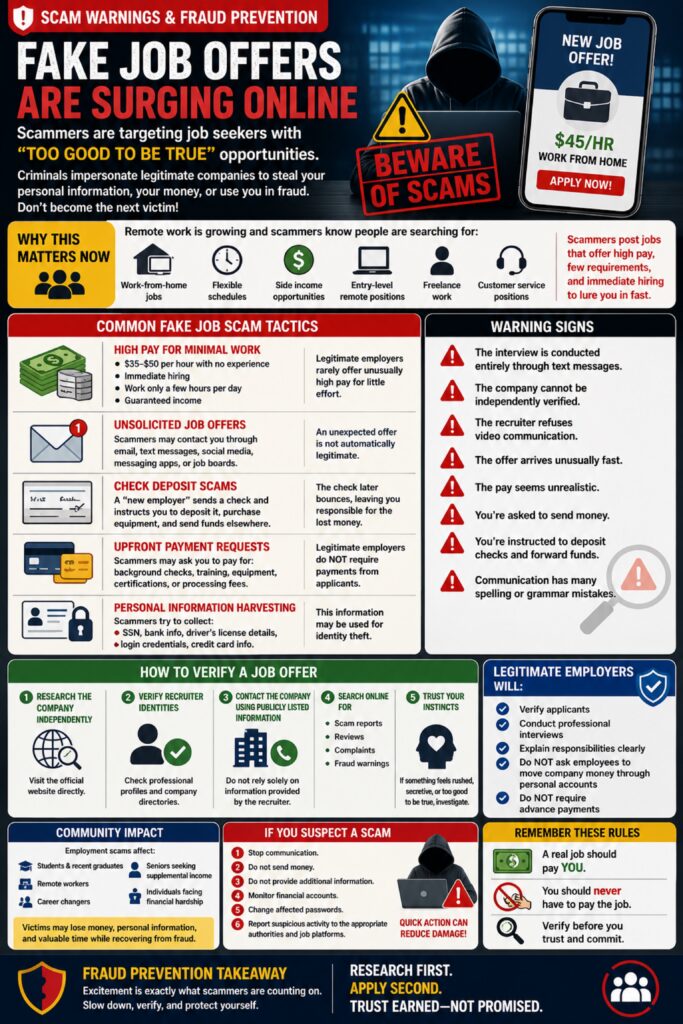
Fake Job Offers Are Surging Online — Scammers Are Targeting Job Seekers With “Too Good To Be True” Opportunities
As more employers embrace remote work, online recruiting, and digital hiring platforms, scammers are increasingly impersonating legitimate companies to trick job seekers into revealing personal information, sending money, or performing fraudulent financial transactions.
These fake job scams often appear highly professional. Criminals may create convincing websites, copy real company logos, use fake recruiter profiles, conduct online interviews, and even provide fraudulent employment paperwork.
The scam works because job seekers are often excited, hopeful, and eager to respond quickly when presented with an attractive opportunity.
Unfortunately, many victims don’t discover the deception until after sensitive information or money has already been lost.
🚨 Why This Matters Now
Remote work opportunities continue to grow.
People frequently search for:
* Work-from-home jobs
* Flexible schedules
* Side income opportunities
* Entry-level remote positions
* Freelance work
* Administrative jobs
* Customer service positions
Scammers know this.
They intentionally target individuals seeking employment by advertising positions that offer unusually high pay, minimal qualifications, or immediate hiring.
⚠️ Common Fake Job Scam Tactics
💰 High Pay for Minimal Work
Examples:
* $35–$50 per hour with no experience
* Immediate hiring
* Work only a few hours per day
* Guaranteed income
Legitimate employers rarely offer unusually high compensation for little effort.
📧 Unsolicited Job Offers
Scammers may contact victims through:
* Email
* Text messages
* Social media
* Messaging apps
* Job boards
Receiving an unexpected offer does not automatically mean it is legitimate.
🏦 Check Deposit Scams
A “new employer” sends a check and instructs the victim to:
* Deposit it
* Purchase equipment
* Send funds elsewhere
The check later bounces, leaving the victim responsible for the lost money.
💳 Upfront Payment Requests
Legitimate employers generally do not require applicants to pay for:
* Background checks
* Training
* Equipment
* Certifications
* Processing fees
Requests for payment should immediately raise concern.
🔐 Personal Information Harvesting
Scammers often attempt to collect:
* Social Security numbers
* Bank account information
* Driver’s license details
* Login credentials
* Credit card information
This information may later be used for identity theft.
🚩 Warning Signs**
Be cautious if:
❌ The interview is conducted entirely through text messages.
❌ The company cannot be independently verified.
❌ The recruiter refuses video communication.
❌ The offer arrives unusually quickly.
❌ The pay seems unrealistic.
❌ You’re asked to send money.
❌ You’re instructed to deposit checks and forward funds.
❌ Communication contains numerous spelling or grammar mistakes.
🛡️ How To Verify A Job Offer
Before accepting:
Step 1
Research the company independently.
Visit the official website directly.
Step 2
Verify recruiter identities.
Check professional profiles and company directories.
Step 3
Contact the company using publicly listed contact information.
Do not rely solely on information provided by the recruiter.
Step 4
Search online for:
* Scam reports
* Reviews
* Complaints
* Fraud warnings
Step 5
Trust your instincts.
If something feels rushed, secretive, or unusually generous, investigate further.
💡 Remember These Rules
Legitimate employers:
✔ Verify applicants
✔ Conduct professional interviews
✔ Explain responsibilities clearly
✔ Do not ask employees to move company money through personal accounts
✔ Do not require advance payments
🌎 Community Impact
Employment scams affect:
* Students
* Recent graduates
* Remote workers
* Career changers
* Seniors seeking supplemental income
* Individuals facing financial hardship
Victims may lose money, personal information, and valuable time while recovering from fraud.
🚔 If You Suspect A Scam
Immediately:
1. Stop communication.
2. Do not send money.
3. Do not provide additional information.
4. Monitor financial accounts.
5. Change affected passwords.
6. Report suspicious activity to appropriate authorities and job platforms.
Quick action can significantly reduce damage.
🎯 Fraud Prevention Takeaway
A real job should pay you.
You should never have to pay the job.
When an opportunity seems unusually easy, unusually fast, or unusually profitable, take time to verify before proceeding.
Remember:
Excitement is exactly what scammers are counting on. Slow down, verify, and protect yourself.
💼🔍🛡️⚠️ Research first. Apply second. Trust earned—not promised.
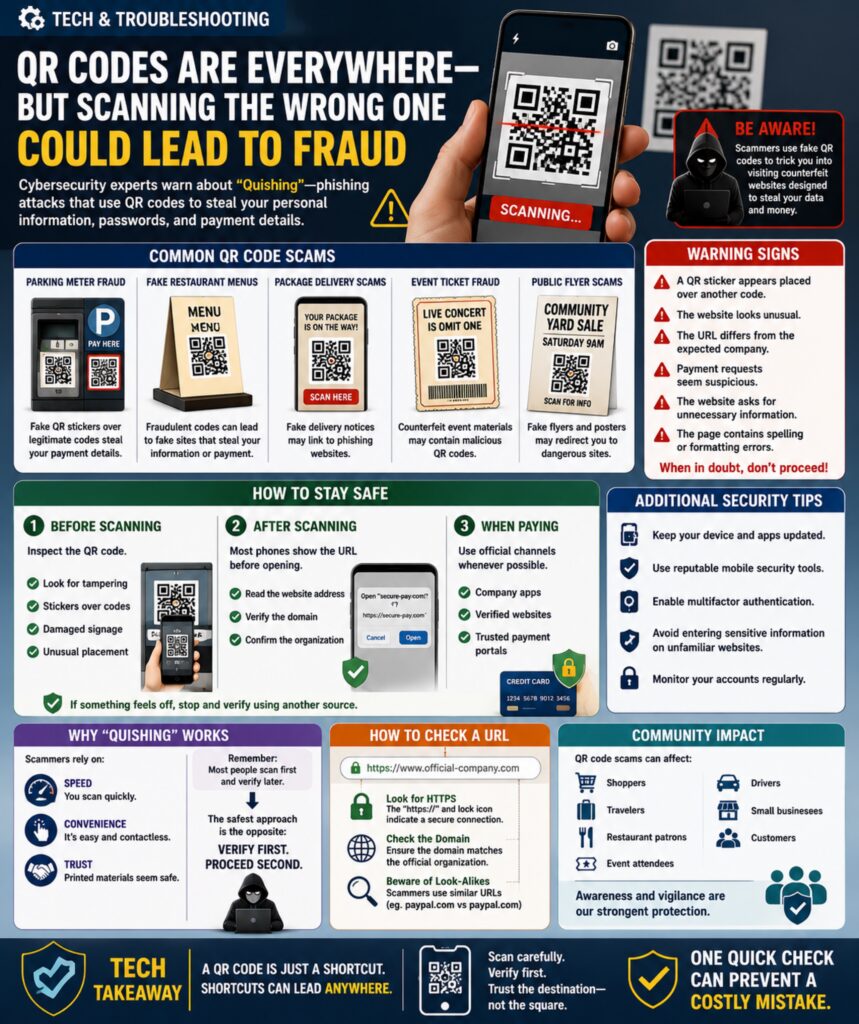
QR Codes Are Everywhere — But Scanning the Wrong One Could Lead to Fraud
QR codes have become part of everyday life. They’re used for restaurant menus, parking payments, event tickets, product information, Wi-Fi access, package tracking, digital payments, and countless other services.
While QR codes are convenient, cybersecurity experts are warning about a growing threat known as “Quishing” — phishing attacks that use QR codes instead of traditional links.
Because people cannot immediately see the website hidden inside a QR code, scammers are increasingly using fake codes to redirect victims to fraudulent websites designed to steal passwords, payment information, personal data, and account credentials.
As QR code usage continues expanding, learning how to verify them is becoming an important digital safety skill.
📱 Why This Matters Now
QR code usage exploded during recent years because they allow:
* Contactless payments
* Quick website access
* Mobile ticketing
* Digital menus
* Product authentication
* Event registration
Unfortunately, criminals quickly recognized an opportunity.
Unlike traditional phishing emails, QR code scams often bypass suspicion because people tend to trust printed materials more than unexpected links.
🚨 Common QR Code Scams
Parking Meter Fraud
Scammers place fake QR stickers over legitimate parking payment codes.
Victims believe they’re paying for parking but are actually entering payment information into a fraudulent website.
Fake Restaurant Menus
Fraudulent QR codes can direct users to websites designed to collect payment information or personal data.
Package Delivery Scams
Fake package notices sometimes include QR codes claiming to provide delivery updates.
Event Ticket Fraud
Scammers create counterfeit event materials containing malicious QR codes.
Public Flyer Scams
Fake advertisements, posters, and community notices sometimes contain fraudulent codes that redirect users to dangerous websites.
⚠️ Warning Signs
Be cautious if:
* A QR sticker appears placed over another code.
* The website looks unusual.
* The URL differs from the expected company.
* Payment requests seem suspicious.
* The website asks for unnecessary information.
* The page contains spelling or formatting errors.
Always verify before entering sensitive information.
🔍 How To Stay Safe
Before Scanning
Inspect the QR code.
Look for:
✔ Tampering
✔ Stickers placed over existing codes
✔ Damaged signage
✔ Unusual placement
After Scanning
Most phones display the destination URL before opening.
Take a moment to:
✔ Read the website address
✔ Verify the domain
✔ Confirm the organization
When Paying
Use official:
* Company apps
* Verified websites
* Trusted payment portals
Whenever possible, manually navigate to the organization’s website rather than relying solely on a QR code.
🛡️ Additional Security Tips
* Keep devices updated.
* Use reputable mobile security tools.
* Enable multifactor authentication.
* Avoid entering sensitive information on unfamiliar websites.
* Monitor accounts regularly.
These habits help protect against a wide variety of online threats.
🧠 Why Quishing Works
Scammers rely on:
* Speed
* Convenience
* Trust
Most people scan first and verify later.
Criminals hope you never verify at all.
The safest approach is the opposite:
Verify first. Proceed second.
🌎 Community Impact
QR code scams affect:
* Shoppers
* Travelers
* Restaurant patrons
* Event attendees
* Drivers
* Small business customers
As communities adopt more digital services, awareness becomes one of the strongest forms of protection.
🎯 Tech Takeaway
A QR code is simply a shortcut.
And shortcuts can lead anywhere.
Before entering payment information, passwords, or personal details, take a few seconds to confirm where that QR code is sending you.
Remember:
Scan carefully. Verify first. Trust the destination—not the square.
📱🔍🛡️⚠️ One quick check can prevent a costly mistake.
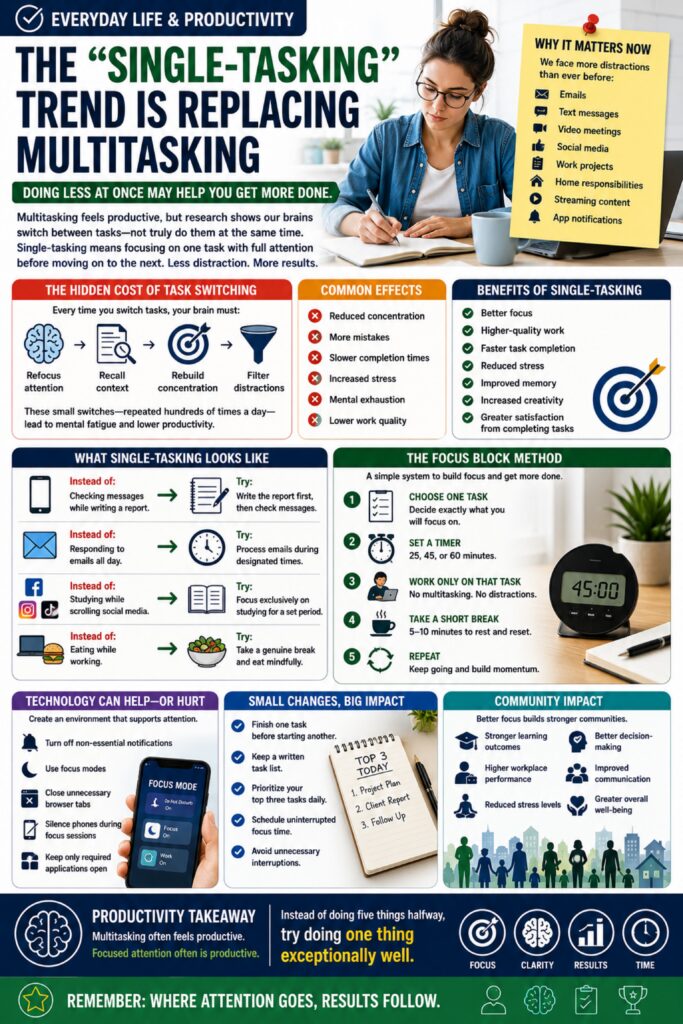
The “Single-Tasking” Trend Is Replacing Multitasking — Doing Less at Once May Help You Get More Done
For years, multitasking was often viewed as a valuable productivity skill. Many people prided themselves on answering emails during meetings, checking messages while working, watching videos while studying, or juggling multiple projects simultaneously.
Today, productivity researchers and workplace experts are increasingly promoting a different approach:
Single-Tasking.
Single-tasking means focusing on one task at a time with full attention before moving on to the next activity.
While multitasking feels productive, studies suggest that the brain doesn’t truly perform multiple complex tasks simultaneously. Instead, it rapidly switches between them. Each switch requires mental energy, reducing efficiency and increasing the likelihood of mistakes.
As distractions continue to grow through smartphones, notifications, social media, messaging platforms, and constant connectivity, many people are discovering that focusing on one thing at a time may actually help them accomplish more.
🧠 Why This Matters Now
Modern workers and students face unprecedented levels of distraction.
Many people regularly juggle:
* Emails
* Text messages
* Video meetings
* Social media
* Work projects
* Household responsibilities
* Streaming content
* App notifications
Because attention is constantly divided, many individuals report feeling busy all day while struggling to make meaningful progress.
⚠️ The Hidden Cost of Task Switching
Every time you switch tasks, your brain must:
* Refocus attention
* Recall context
* Rebuild concentration
* Filter distractions
These transitions may only take seconds, but repeated hundreds of times per day, they create significant mental fatigue.
Common effects include:
* Reduced concentration
* More mistakes
* Slower completion times
* Increased stress
* Mental exhaustion
* Lower work quality
🎯 What Single-Tasking Looks Like
Instead of:
📱 Checking messages while writing a report
Try:
📝 Writing the report first, then checking messages afterward.
Instead of:
📧 Responding to emails all day
Try:
⏰ Processing emails during designated times.
Instead of:
📚 Studying while scrolling social media
Try:
🎓 Focusing exclusively on studying for a set period.
Instead of:
🍽️ Eating while working
Try:
🥗 Taking a genuine break and eating mindfully.
🚀 Benefits of Single-Tasking
Many people report:
✔ Better focus
✔ Higher-quality work
✔ Faster task completion
✔ Reduced stress
✔ Improved memory
✔ Increased creativity
✔ Greater satisfaction from completing tasks
⏱️ The Focus Block Method
One popular approach involves:
Step 1
Choose one task.
Step 2
Set a timer for:
* 25 minutes
* 45 minutes
* 60 minutes
Step 3
Work only on that task.
Step 4
Take a short break.
Step 5
Repeat.
This structured approach helps build concentration while reducing burnout.
📱 Technology Can Help—or Hurt
Productivity experts often recommend:
* Turning off non-essential notifications
* Using focus modes
* Closing unnecessary browser tabs
* Silencing phones during focus sessions
* Keeping only required applications open
Creating an environment that supports attention often produces immediate improvements.
🧩 Small Changes That Make a Big Difference
Try:
* Finishing one task before starting another.
* Keeping a written task list.
* Prioritizing your top three tasks daily.
* Scheduling uninterrupted focus time.
* Avoiding unnecessary interruptions.
Even small reductions in task switching can improve productivity.
🌎 Community Impact
Improved focus benefits more than individual productivity.
Better concentration can contribute to:
* Stronger learning outcomes
* Higher workplace performance
* Reduced stress levels
* Better decision-making
* Improved communication
* Greater overall well-being
As distractions continue increasing, attention is becoming one of the most valuable personal resources people possess.
🔍 Productivity Takeaway
Multitasking often feels productive.
Focused attention often is productive.
Instead of doing five things halfway, try doing one thing exceptionally well.
Remember:
Where attention goes, results follow.
🎯🧠📈⏱️ One task. Full focus. Better results.
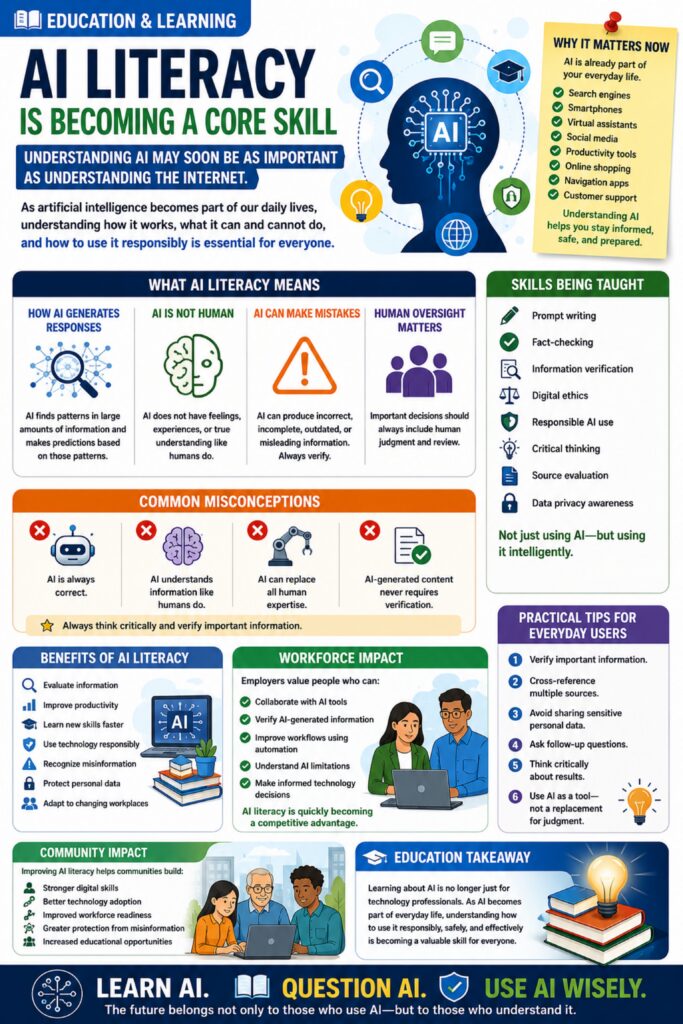
AI Literacy Is Becoming a Core Skill — Understanding AI May Soon Be as Important as Understanding the Internet
Schools, universities, employers, and workforce development organizations are increasingly emphasizing a new form of digital literacy:
AI Literacy.
As artificial intelligence becomes integrated into search engines, productivity software, customer service platforms, healthcare systems, education tools, financial services, and everyday devices, experts believe understanding how AI works is becoming an essential life skill.
AI literacy does not require learning computer programming or becoming a software engineer. Instead, it focuses on helping people understand what AI can do, what it cannot do, how to evaluate AI-generated information, and how to use these tools responsibly and effectively.
Much like internet literacy became critical during the rise of the digital age, AI literacy is quickly becoming an important part of education and lifelong learning.
🤖 Why This Matters Now
Artificial intelligence is appearing almost everywhere.
People encounter AI when using:
* Search engines
* Smartphones
* Virtual assistants
* Navigation apps
* Customer service chatbots
* Social media platforms
* Productivity software
* Content creation tools
* Translation services
* Online shopping recommendations
Many individuals use AI daily without realizing it.
As adoption continues to grow, understanding the technology becomes increasingly important.
📚 What AI Literacy Means
AI literacy includes understanding:
How AI Generates Responses
AI identifies patterns from large amounts of information and generates predictions based on those patterns.
AI Is Not Human
AI can produce impressive results, but it does not possess human judgment, emotions, experiences, or true understanding.
AI Can Make Mistakes
AI systems sometimes generate inaccurate, incomplete, outdated, or misleading information.
Verification remains essential.
Human Oversight Matters
Critical decisions should involve human review and judgment.
🧠 Skills Being Taught
Educational programs are increasingly teaching:
* Prompt writing
* Fact-checking
* Information verification
* Digital ethics
* Responsible AI use
* Critical thinking
* Source evaluation
* Data privacy awareness
The goal is not simply using AI, but using it intelligently.
⚠️ Common Misconceptions
Many people incorrectly assume:
* AI is always correct.
* AI understands information like humans do.
* AI can replace all human expertise.
* AI-generated content never requires verification.
Experts strongly recommend maintaining critical thinking when using any AI-powered system.
🎓 Benefits of AI Literacy
People who understand AI may be better equipped to:
✔ Evaluate information
✔ Improve productivity
✔ Learn new skills faster
✔ Use technology responsibly
✔ Recognize misinformation
✔ Protect personal data
✔ Adapt to changing workplaces
💼 Workforce Impact
Employers increasingly value workers who can:
* Collaborate with AI tools
* Verify AI-generated information
* Improve workflows using automation
* Understand AI limitations
* Make informed technology decisions
Many industries now view AI literacy as a competitive advantage.
📱 Practical Tips for Everyday Users
When using AI:
1. Verify important information.
2. Cross-reference multiple sources.
3. Avoid sharing sensitive personal data.
4. Ask follow-up questions.
5. Think critically about results.
6. Use AI as a tool—not as a replacement for judgment.
🌎 Community Impact
Communities that improve AI literacy may benefit from:
* Stronger digital skills
* Better technology adoption
* Improved workforce readiness
* Greater protection from misinformation
* Increased educational opportunities
The ability to understand emerging technologies helps individuals participate more effectively in modern society.
🔍 Education Takeaway
Learning about AI is no longer just for technology professionals.
As AI becomes woven into everyday life, understanding how to use it responsibly, safely, and effectively is becoming a valuable skill for everyone.
Remember:
The future belongs not only to those who use AI—but to those who understand it.
🤖📚💡🌎 Learn AI. Question AI. Use AI wisely.
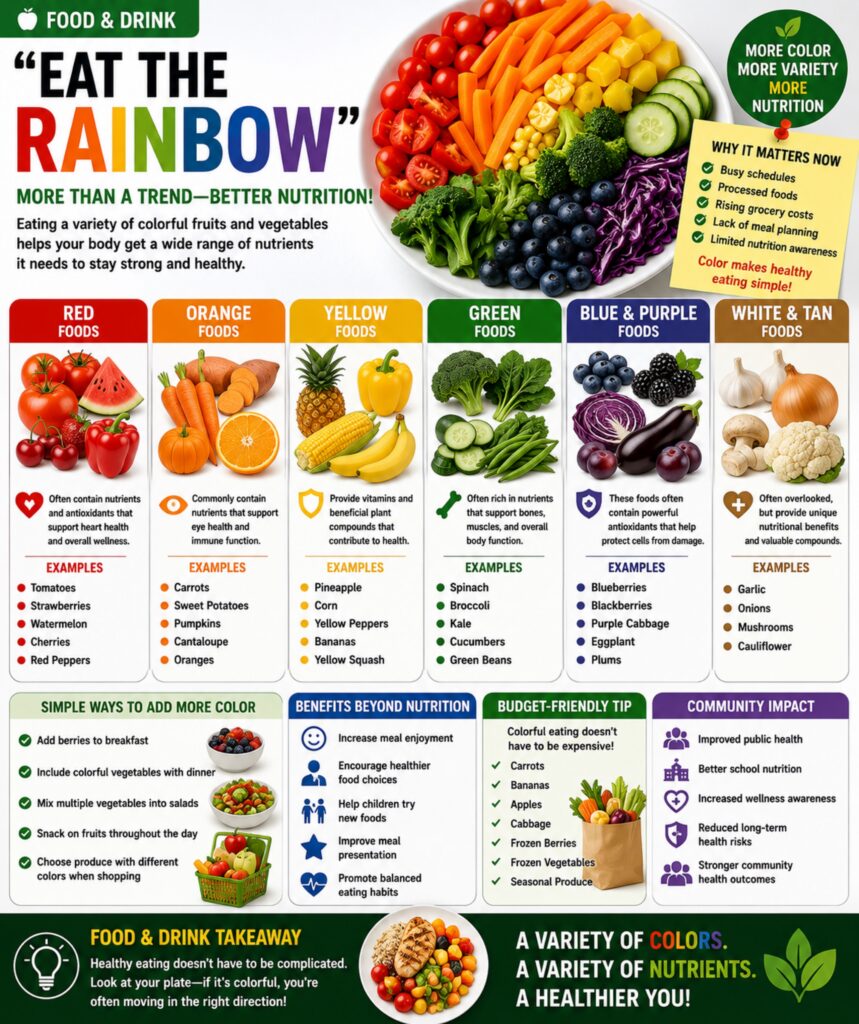
“Eat the Rainbow” Is More Than a Trend — Colorful Foods May Improve Overall Nutrition
Nutrition experts continue to encourage a simple guideline that is gaining popularity among families, schools, wellness programs, and healthcare providers:
Eat the Rainbow.
The idea is straightforward: consume fruits and vegetables of many different colors throughout the week. Different colors often indicate different vitamins, minerals, antioxidants, and plant compounds that support various functions within the body.
While no single food contains everything the body needs, a colorful plate naturally increases nutritional variety and may help people consume a broader range of beneficial nutrients.
The concept is simple enough for children to understand and practical enough for adults to apply during grocery shopping and meal planning.
🌈 Why This Matters Now
Many people struggle to meet recommended fruit and vegetable intake goals.
Common barriers include:
* Busy schedules
* Processed convenience foods
* Rising grocery costs
* Lack of meal planning
* Limited nutritional awareness
The “Eat the Rainbow” approach simplifies healthy eating by focusing on color variety instead of complicated nutrition calculations.
🔴 Red Foods
Examples:
* Tomatoes
* Strawberries
* Watermelon
* Cherries
* Red peppers
Often associated with nutrients and antioxidants that support heart health and overall wellness.
🟠 Orange Foods
Examples:
* Carrots
* Sweet potatoes
* Pumpkins
* Cantaloupe
* Oranges
Commonly contain nutrients that support eye health and immune function.
🟡 Yellow Foods
Examples:
* Pineapple
* Corn
* Yellow peppers
* Bananas
* Yellow squash
Often provide vitamins and beneficial plant compounds that contribute to overall health.
🟢 Green Foods
Examples:
* Spinach
* Broccoli
* Kale
* Cucumbers
* Green beans
Often rich in nutrients that support bones, muscles, and overall body function.
🔵🟣 Blue & Purple Foods
Examples:
* Blueberries
* Blackberries
* Purple cabbage
* Eggplant
* Plums
These foods often contain powerful antioxidants that help protect cells from damage.
⚪ White & Tan Foods
Examples:
* Garlic
* Onions
* Mushrooms
* Cauliflower
Though often overlooked, these foods provide unique nutritional benefits and valuable compounds.
🍽️ Simple Ways To Add More Color
Try:
* Adding berries to breakfast
* Including colorful vegetables with dinner
* Mixing multiple vegetables into salads
* Snacking on fruits throughout the day
* Choosing produce with different colors during grocery shopping
Small additions can significantly improve dietary variety over time.
🧠 Benefits Beyond Nutrition
Colorful meals may also:
✔ Increase meal enjoyment
✔ Encourage healthier food choices
✔ Help children try new foods
✔ Improve meal presentation
✔ Promote balanced eating habits
Many people naturally consume more fruits and vegetables when focusing on color diversity.
🛒 Budget-Friendly Tip
You don’t need exotic ingredients.
Affordable options often include:
* Carrots
* Bananas
* Apples
* Cabbage
* Frozen berries
* Frozen vegetables
* Seasonal produce
Nutritional variety can be achieved without significantly increasing grocery costs.
🌎 Community Impact
Healthy eating habits contribute to:
* Improved public health
* Better school nutrition
* Increased wellness awareness
* Reduced long-term health risks
* Stronger community health outcomes
Simple nutrition education can create lasting positive effects across generations.
🔍 Food & Drink Takeaway
Healthy eating doesn’t have to be complicated.
Sometimes the easiest nutrition guide is also the most visual:
Look at your plate.
If it contains a variety of colors, you’re often moving in the right direction.
🌈🥦🍓🥕🍇 More color. More variety. More nutrition.
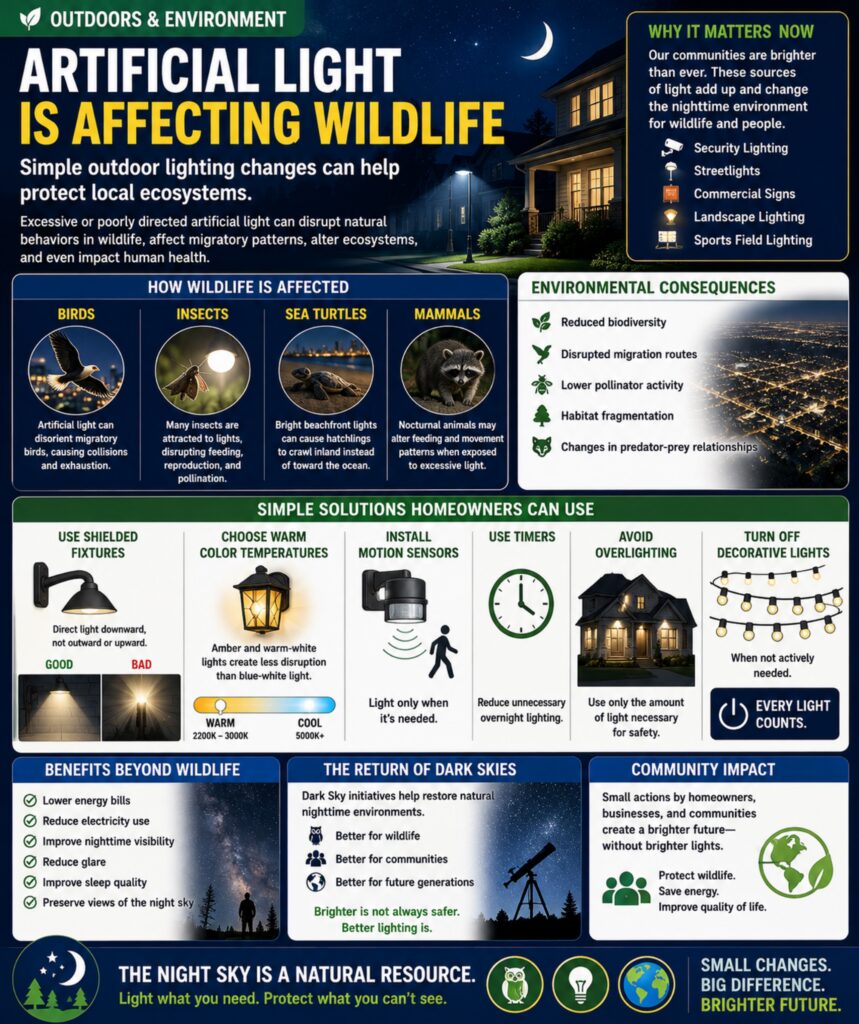
Artificial Light Is Affecting Wildlife — Simple Outdoor Lighting Changes Can Help Protect Local Ecosystems
As communities continue to grow, scientists and environmental organizations are paying closer attention to a lesser-known environmental issue: light pollution.
While outdoor lighting improves safety, visibility, and security, excessive or poorly directed artificial light can disrupt natural behaviors in wildlife, affect migratory patterns, alter ecosystems, and even impact human sleep cycles.
From bright residential floodlights to commercial signage and urban skyglow, artificial light is increasingly changing nighttime environments that many species have depended on for thousands of years.
The good news is that small adjustments to outdoor lighting can significantly reduce environmental impacts while still maintaining safety and visibility.
🌙 Why This Matters Now
Modern communities are brighter than ever.
Sources of nighttime illumination include:
* Security lighting
* Streetlights
* Parking lot lighting
* Decorative landscape lighting
* Commercial signage
* Digital billboards
* Sports field lighting
As development expands, truly dark nighttime environments are becoming increasingly rare.
Researchers are now studying how these changes affect both wildlife and human health.
🦉 How Wildlife Is Affected
Many species rely on darkness to:
* Hunt
* Navigate
* Reproduce
* Migrate
* Avoid predators
Artificial light can interfere with these natural behaviors.
Examples include:
Birds
Migratory birds often use natural nighttime cues for navigation.
Bright city lights can disorient them, causing collisions with buildings and exhaustion during migration.
Insects
Many insects are naturally attracted to light sources.
This can disrupt feeding patterns, reproduction, and pollination activities.
Sea Turtles
Young sea turtles use moonlight and natural horizons to locate the ocean.
Artificial beachfront lighting can cause hatchlings to move in the wrong direction.
Mammals
Nocturnal animals often alter feeding and movement patterns when exposed to excessive nighttime lighting.
🌎 Environmental Consequences
Light pollution may contribute to:
* Reduced biodiversity
* Disrupted migration routes
* Lower pollinator activity
* Habitat fragmentation
* Changes in predator-prey relationships
Because ecosystems are interconnected, even small disruptions can create larger environmental effects over time.
💡 Simple Solutions Homeowners Can Use
Environmental experts recommend:
Use Shielded Fixtures
Direct light downward rather than outward or upward.
Choose Warm Color Temperatures
Amber and warm-white lights generally create less disruption than bright blue-white lighting.
Install Motion Sensors
Only illuminate areas when needed.
Use Timers
Reduce unnecessary overnight lighting.
Avoid Overlighting
Use only the amount of light necessary for safety.
Turn Off Decorative Lighting
When not actively needed.
🏡 Benefits Beyond Wildlife
Reducing unnecessary lighting can also:
✔ Lower energy bills
✔ Reduce electricity consumption
✔ Improve nighttime visibility
✔ Reduce glare
✔ Improve sleep quality
✔ Preserve views of the night sky
🌌 The Return of Dark Skies
Communities worldwide are participating in “Dark Sky” initiatives designed to reduce light pollution and restore natural nighttime environments.
Residents often discover that properly designed lighting actually improves visibility by reducing glare and creating more balanced illumination.
Many people are surprised to learn that brighter does not always mean safer.
🌱 Community Impact
Small actions taken by individual homeowners, businesses, and municipalities can collectively create meaningful environmental improvements.
By making thoughtful lighting choices, communities can:
* Protect wildlife
* Save energy
* Improve quality of life
* Preserve natural ecosystems
* Maintain safer outdoor environments
🔍 Outdoors & Environment Takeaway
Darkness is an important part of nature.
Protecting nighttime environments doesn’t require turning off every light—it simply means using light more wisely.
Remember:
The night sky is a natural resource. Small lighting changes can make a big difference for wildlife, communities, and future generations.
🌙🦉💡🌎 Light what you need. Protect what you can’t see.
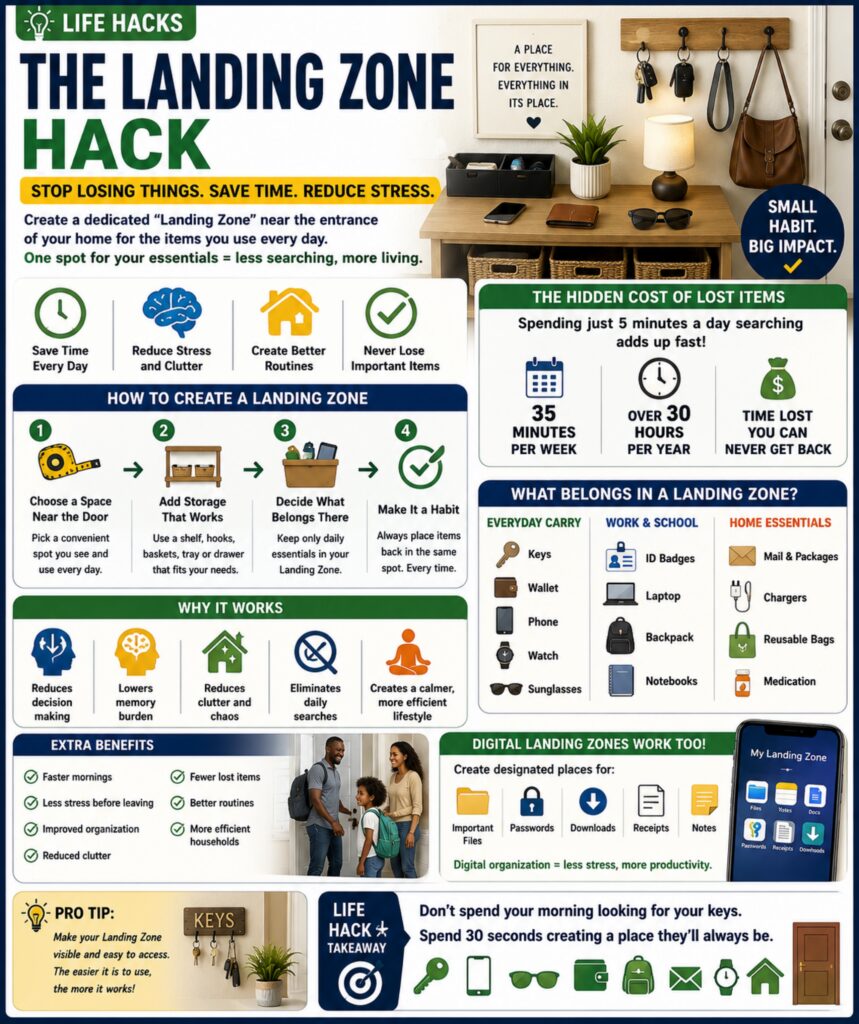
The “Landing Zone” Hack Is Helping People Stop Losing Everyday Items
One of the simplest organization hacks gaining popularity is creating a dedicated Landing Zone near the entrance of your home.
A Landing Zone is a small, designated area where you immediately place the items you use most often when leaving or returning home.
For many people, the daily search for keys, wallets, phones, sunglasses, work badges, purses, chargers, and mail creates unnecessary stress and wasted time. Studies on habits and organization suggest that reducing decision-making and creating consistent routines can dramatically improve efficiency.
Instead of setting important items down in random places throughout the day, the Landing Zone creates a single predictable location where essential belongings always belong.
🔑 Why This Matters Now
Modern life requires people to keep track of more items than ever before.
Many individuals carry:
* Smartphones
* Smartwatches
* Vehicle keys
* House keys
* Wallets
* Work IDs
* Earbuds
* Charging cables
* Sunglasses
* Medication
* Packages and mail
When these items are placed in different locations daily, small searches add up to significant wasted time and frustration.
⏰ The Hidden Cost of Lost Items
Many people spend several minutes each day looking for:
* Keys
* Phones
* Wallets
* Remote controls
* Chargers
* Important documents
Five minutes of searching each day equals:
* 35 minutes per week
* Over 30 hours per year
That’s nearly an entire work week spent looking for misplaced items.
🏠 How To Create a Landing Zone
A Landing Zone can be:
* Small shelf
* Entryway table
* Wall organizer
* Hooks near the door
* Basket system
* Charging station
* Cabinet drawer
The size doesn’t matter.
Consistency does.
📦 What Belongs in a Landing Zone
Common items include:
Everyday Carry
* Keys
* Wallet
* Phone
* Watch
* Sunglasses
Work & School
* ID badges
* Laptops
* Backpacks
* Notebooks
Home Essentials
* Incoming mail
* Packages
* Reusable shopping bags
* Chargers
The goal is creating one trusted location for frequently used items.
🧠 Why It Works
The Landing Zone works because it reduces:
* Decision making
* Memory burden
* Clutter
* Daily searches
* Stress
Instead of remembering where an item is, you only need to remember one rule:
Put it in the Landing Zone.
🚀 Additional Benefits
People often report:
✔ Faster mornings
✔ Less stress before leaving
✔ Improved organization
✔ Reduced clutter
✔ Fewer lost items
✔ Better routines
✔ More efficient households
📱 Digital Landing Zones
The same concept works digitally.
Create designated locations for:
* Important files
* Password managers
* Downloads
* Receipts
* Notes
Digital organization follows many of the same principles as physical organization.
💡 Pro Tip
Make your Landing Zone visible.
If it’s hidden inside a closet or drawer you rarely open, you’re less likely to use it consistently.
The easier it is to access, the more effective it becomes.
🎯 Life Hack Takeaway
Organization doesn’t require complicated systems.
Sometimes the best solution is simply giving important things a permanent home.
Remember:
Don’t spend your morning looking for your keys. Spend 30 seconds creating a place they’ll always be.
🔑📱🕶️🏠 A place for everything. Everything in its place.
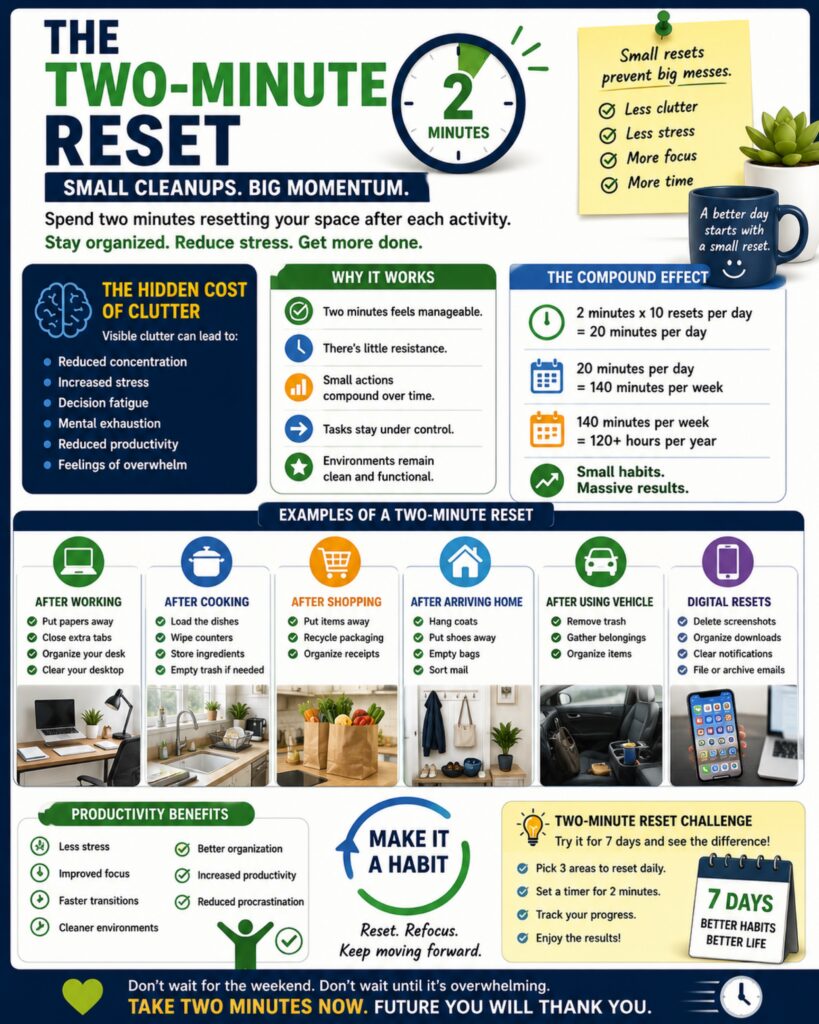
The “Two-Minute Reset” Is Becoming a Popular Productivity Habit — Small Cleanups Create Big Momentu
Productivity experts, organizers, and workplace coaches are increasingly recommending a simple habit known as the Two-Minute Reset.
The concept is straightforward:
Whenever you finish an activity, spend two minutes restoring the space before moving on to the next task.
Instead of allowing clutter, unfinished items, and distractions to accumulate throughout the day, small resets keep environments organized and reduce mental overload.
Many people underestimate how much visual clutter affects focus, stress levels, and productivity.
A desk covered with paperwork, a kitchen filled with dishes, an overflowing inbox, or a vehicle full of miscellaneous items can create a constant background reminder of unfinished work.
The Two-Minute Reset prevents these small problems from becoming large ones.
⏰ Why This Matters Now
Modern life is busier than ever.
People often move rapidly between:
* Work tasks
* Meetings
* Emails
* Household chores
* Social activities
* Parenting responsibilities
* Personal projects
Because we’re constantly switching activities, small messes and unfinished tasks tend to accumulate faster than we realize.
By the end of the day, many people feel overwhelmed—not because of one major problem—but because of dozens of small unfinished ones.
🧠 The Hidden Mental Cost of Clutter
Researchers have found that visible clutter can contribute to:
* Reduced concentration
* Increased stress
* Decision fatigue
* Mental exhaustion
* Reduced productivity
* Feelings of overwhelm
Even when you’re not actively thinking about the clutter, your brain is still processing it.
A cleaner environment often supports clearer thinking.
🏠 Examples of a Two-Minute Reset
After Working
* Put papers away
* Close unnecessary tabs
* Organize your workspace
* Clear your desktop
After Cooking
* Load dishes
* Wipe counters
* Store ingredients
* Empty trash if needed
After Shopping
* Put items away immediately
* Recycle packaging
* Organize receipts
After Arriving Home
* Hang coats
* Put shoes away
* Empty bags
* Sort mail
After Using Your Vehicle
* Remove trash
* Gather belongings
* Organize items before leaving
📱 Digital Resets Matter Too
The same principle applies digitally.
Spend two minutes:
* Deleting unnecessary screenshots
* Organizing downloads
* Clearing notifications
* Filing documents
* Archiving emails
Digital clutter can become just as overwhelming as physical clutter.
🚀 Why It Works
The habit succeeds because:
* Two minutes feels manageable.
* There’s little resistance.
* Small actions compound over time.
* Tasks stay under control.
* Environments remain functional.
The goal isn’t perfection.
The goal is preventing small problems from becoming large ones.
💡 Productivity Benefits
People who consistently perform small resets often report:
✔ Less stress
✔ Improved focus
✔ Faster task transitions
✔ Cleaner environments
✔ Better organization
✔ Increased productivity
✔ Reduced procrastination
🔄 The Compound Effect
Two minutes may not sound significant.
But:
* 2 minutes × 10 resets per day = 20 minutes
* 20 minutes per day = 140 minutes per week
* 140 minutes per week = over 120 hours annually
Small habits create powerful long-term results.
🎯 Productivity Takeaway
Don’t wait for a massive cleaning session.
Don’t wait for the weekend.
Don’t wait until things become overwhelming.
Take two minutes now.
Future you will thank you.
Remember:
Small resets create big momentum. A cleaner space often leads to a clearer mind. ⏰🧹💡📈
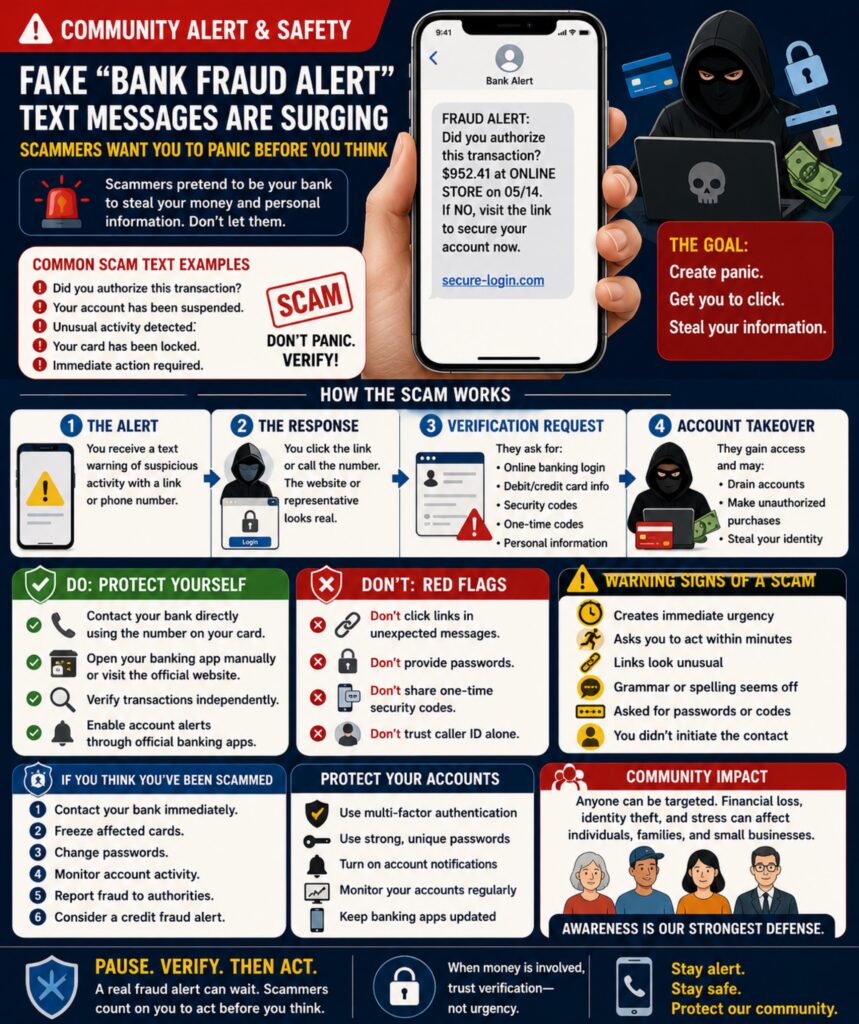
Fake “Bank Fraud Alert” Text Messages Are Surging — Scammers Want You to Panic Before You Think
Communities nationwide are seeing a sharp increase in fraud alert impersonation scams, where criminals send text messages claiming to be from a bank, credit union, payment app, or credit card company.
The messages often appear urgent and alarming:
* “Did you authorize this transaction?”
* “Your account has been suspended.”
* “Unusual activity detected.”
* “Your card has been locked.”
* “Immediate action required.”
The goal is simple: create panic.
Scammers know that when people believe their money is at risk, they are more likely to react quickly without carefully verifying the message.
🚨 Why This Matters Now
Financial institutions are increasingly using legitimate fraud alerts to protect customers.
Unfortunately, criminals are exploiting that familiarity.
Modern scam texts often:
* Look professionally designed
* Use bank-like language
* Mimic legitimate fraud departments
* Include realistic links
* Use spoofed phone numbers
Some even arrive within existing message threads, making them appear more trustworthy.
⚠️ How the Scam Typically Works
Step 1 — The Alert
The victim receives a text warning of suspicious activity.
A link or phone number is provided.
Step 2 — The Response
The victim clicks the link or calls the number.
The website or representative appears legitimate.
Step 3 — Verification Request
The scammer requests:
* Online banking credentials
* Debit card information
* Security codes
* One-time authentication codes
* Personal information
Many victims believe they are speaking with legitimate bank representatives.
Step 4 — Account Takeover
Once access is obtained:
* Accounts may be drained
* Cards may be compromised
* Personal information may be stolen
* New fraud may be committed using the victim’s identity
🛡️ Critical Safety Guidance
If you receive a fraud alert:
DO:
✔ Contact your bank directly using the number on your card.
✔ Open your banking app manually.
✔ Log in through official channels.
✔ Verify transactions independently.
✔ Enable account alerts through official banking apps.
DON’T:
❌ Click links in unexpected messages.
❌ Provide passwords.
❌ Provide one-time security codes.
❌ Share authentication texts.
❌ Trust caller ID alone.
📱 Warning Signs of a Scam
Be suspicious if:
* The message creates immediate urgency.
* It asks you to act within minutes.
* Links look unusual.
* Grammar seems odd.
* You are asked for passwords.
* You are asked for verification codes.
Legitimate banks generally do not request sensitive authentication information through unsolicited texts.
🏘️ Community Impact
These scams affect:
* Seniors
* Young adults
* Small business owners
* Online shoppers
* Mobile banking users
Financial losses can range from a few dollars to entire account balances.
Beyond monetary losses, victims often spend months restoring accounts, replacing cards, updating passwords, and repairing identity theft damage.
🔒 How To Protect Yourself
Experts recommend:
* Multi-factor authentication
* Strong unique passwords
* Account activity notifications
* Banking app security features
* Regular account monitoring
Awareness remains one of the most effective defenses.
🚔 What To Do If You Fall Victim
If you believe you’ve interacted with a scam:
1. Contact your bank immediately.
2. Freeze affected cards.
3. Change passwords.
4. Monitor account activity.
5. Report fraud to relevant authorities.
6. Enable fraud alerts on credit files if necessary.
The faster you respond, the greater the chance of limiting financial damage.
🔍 Safety Takeaway
Scammers want you to react emotionally.
Protect yourself by slowing down.
Pause. Verify. Then act.
A real fraud alert can wait long enough for you to confirm it through official channels.
📱🛡️💳 When money is involved, trust verification—not urgency.