
Categories
Everyday Life and Productivity

The “Sunday Reset” Routine Is Helping People Start the Week With Less Stress and More Control

Productivity experts, professional organizers, and wellness coaches are increasingly recommending a simple habit known as the Sunday Reset.

Rather than waiting until Monday morning to react to the week’s demands, the Sunday Reset involves spending 30–60 minutes preparing your home, schedule, finances, meals, and priorities before the new week begins.

The goal isn’t to work all weekend.

The goal is to eliminate Monday chaos.

Many people report that a small amount of preparation on Sunday creates a calmer, more organized, and more productive week overall.

📅 Why This Matters Now

Modern schedules are busier than ever.

People juggle:

* Work responsibilities
* School activities
* Household tasks
* Family commitments
* Appointments
* Financial obligations
* Personal goals

Without a plan, Monday often begins with:

* Last-minute decisions
* Missed deadlines
* Forgotten appointments
* Unnecessary stress

The Sunday Reset helps reduce that uncertainty.

🧠 The Hidden Cost of Starting Unprepared

When the week begins without a plan, many people experience:

* Decision fatigue
* Increased anxiety
* Missed opportunities
* Reduced productivity
* Time wasted searching for information
* Difficulty prioritizing tasks

A little preparation can prevent many small problems from becoming larger ones.

✅ What a Sunday Reset Typically Includes

📋 Review Your Calendar

Check:

* Appointments
* Meetings
* School events
* Deadlines
* Birthdays
* Commitments

Knowing what’s ahead reduces surprises.

🎯 Set Your Top Priorities

Identify:

* 3 important work goals
* 3 personal goals
* 3 household priorities

Focus creates momentum.

🍽️ Plan Meals

Decide:

* Breakfasts
* Lunches
* Dinners
* Grocery needs

Meal planning often saves both time and money.

🧺 Reset Your Environment

Spend a few minutes:

* Cleaning surfaces
* Folding laundry
* Organizing workspaces
* Emptying trash
* Preparing frequently used items

A cleaner environment often supports clearer thinking.

💰 Review Finances

Check:

* Upcoming bills
* Account balances
* Scheduled payments
* Budget goals

Small financial check-ins help prevent larger financial surprises.

📱 Digital Reset

Many people also include:

* Inbox cleanup
* Calendar updates
* Download folder cleanup
* Photo organization
* Password manager review

Digital clutter can become just as stressful as physical clutter.

🚀 Benefits People Report

Those who consistently perform weekly resets often notice:

✔ Reduced stress

✔ Better focus

✔ Improved time management

✔ Fewer forgotten tasks

✔ Better financial awareness

✔ Increased productivity

✔ Smoother mornings

⏰ You Don’t Need Hours

A successful reset doesn’t require an entire day.

Even:

* 15 minutes
* 30 minutes
* 45 minutes

Can dramatically improve the week ahead.

Consistency matters more than perfection.

🌎 Community Impact

When people are organized and less stressed, communities benefit through:

* Improved workplace performance
* Better family engagement
* Stronger financial habits
* Increased reliability
* Better overall well-being

Small habits often create large long-term results.

💡 The 1% Rule

The Sunday Reset isn’t about becoming perfectly organized.

It’s about becoming slightly more prepared each week.

Small improvements compound over time.

🎯 Productivity Takeaway

Don’t wait for Monday to organize your life.

Prepare before the week begins.

Remember:
A calm Monday often starts with a productive Sunday.

📅✅🏡📈 Reset. Prepare. Focus. Thrive.
Categories
Everyday Life and Productivity

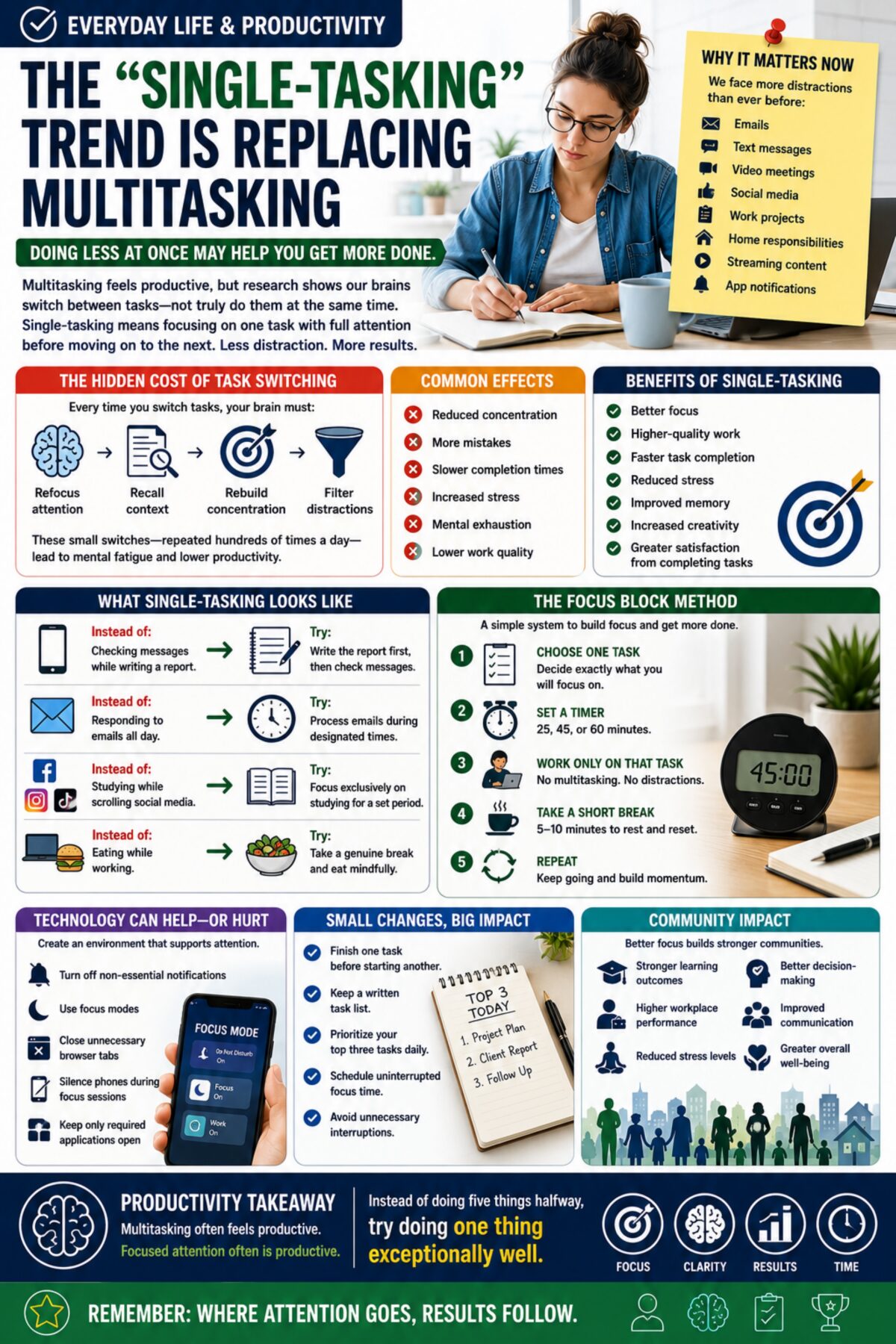
The “Single-Tasking” Trend Is Replacing Multitasking — Doing Less at Once May Help You Get More Done

For years, multitasking was often viewed as a valuable productivity skill. Many people prided themselves on answering emails during meetings, checking messages while working, watching videos while studying, or juggling multiple projects simultaneously.

Today, productivity researchers and workplace experts are increasingly promoting a different approach:

Single-Tasking.

Single-tasking means focusing on one task at a time with full attention before moving on to the next activity.

While multitasking feels productive, studies suggest that the brain doesn’t truly perform multiple complex tasks simultaneously. Instead, it rapidly switches between them. Each switch requires mental energy, reducing efficiency and increasing the likelihood of mistakes.

As distractions continue to grow through smartphones, notifications, social media, messaging platforms, and constant connectivity, many people are discovering that focusing on one thing at a time may actually help them accomplish more.

🧠 Why This Matters Now

Modern workers and students face unprecedented levels of distraction.

Many people regularly juggle:

* Emails
* Text messages
* Video meetings
* Social media
* Work projects
* Household responsibilities
* Streaming content
* App notifications

Because attention is constantly divided, many individuals report feeling busy all day while struggling to make meaningful progress.

⚠️ The Hidden Cost of Task Switching

Every time you switch tasks, your brain must:

* Refocus attention
* Recall context
* Rebuild concentration
* Filter distractions

These transitions may only take seconds, but repeated hundreds of times per day, they create significant mental fatigue.

Common effects include:

* Reduced concentration
* More mistakes
* Slower completion times
* Increased stress
* Mental exhaustion
* Lower work quality

🎯 What Single-Tasking Looks Like

Instead of:

📱 Checking messages while writing a report

Try:

📝 Writing the report first, then checking messages afterward.

Instead of:

📧 Responding to emails all day

Try:

⏰ Processing emails during designated times.

Instead of:

📚 Studying while scrolling social media

Try:

🎓 Focusing exclusively on studying for a set period.

Instead of:

🍽️ Eating while working

Try:

🥗 Taking a genuine break and eating mindfully.

🚀 Benefits of Single-Tasking

Many people report:

✔ Better focus

✔ Higher-quality work

✔ Faster task completion

✔ Reduced stress

✔ Improved memory

✔ Increased creativity

✔ Greater satisfaction from completing tasks

⏱️ The Focus Block Method

One popular approach involves:

Step 1

Choose one task.

Step 2

Set a timer for:

* 25 minutes
* 45 minutes
* 60 minutes

Step 3

Work only on that task.

Step 4

Take a short break.

Step 5

Repeat.

This structured approach helps build concentration while reducing burnout.

📱 Technology Can Help—or Hurt

Productivity experts often recommend:

* Turning off non-essential notifications
* Using focus modes
* Closing unnecessary browser tabs
* Silencing phones during focus sessions
* Keeping only required applications open

Creating an environment that supports attention often produces immediate improvements.

🧩 Small Changes That Make a Big Difference

Try:

* Finishing one task before starting another.
* Keeping a written task list.
* Prioritizing your top three tasks daily.
* Scheduling uninterrupted focus time.
* Avoiding unnecessary interruptions.

Even small reductions in task switching can improve productivity.

🌎 Community Impact

Improved focus benefits more than individual productivity.

Better concentration can contribute to:

* Stronger learning outcomes
* Higher workplace performance
* Reduced stress levels
* Better decision-making
* Improved communication
* Greater overall well-being

As distractions continue increasing, attention is becoming one of the most valuable personal resources people possess.

🔍 Productivity Takeaway

Multitasking often feels productive.

Focused attention often is productive.

Instead of doing five things halfway, try doing one thing exceptionally well.

Remember:
Where attention goes, results follow.

🎯🧠📈⏱️ One task. Full focus. Better results.

Categories
Everyday Life and Productivity

The “Two-Minute Reset” Is Becoming a Popular Productivity Habit — Small Cleanups Create Big Momentu

Productivity experts, organizers, and workplace coaches are increasingly recommending a simple habit known as the Two-Minute Reset.

The concept is straightforward:

Whenever you finish an activity, spend two minutes restoring the space before moving on to the next task.

Instead of allowing clutter, unfinished items, and distractions to accumulate throughout the day, small resets keep environments organized and reduce mental overload.

Many people underestimate how much visual clutter affects focus, stress levels, and productivity.

A desk covered with paperwork, a kitchen filled with dishes, an overflowing inbox, or a vehicle full of miscellaneous items can create a constant background reminder of unfinished work.

The Two-Minute Reset prevents these small problems from becoming large ones.

⏰ Why This Matters Now

Modern life is busier than ever.

People often move rapidly between:

* Work tasks
* Meetings
* Emails
* Household chores
* Social activities
* Parenting responsibilities
* Personal projects

Because we’re constantly switching activities, small messes and unfinished tasks tend to accumulate faster than we realize.

By the end of the day, many people feel overwhelmed—not because of one major problem—but because of dozens of small unfinished ones.

🧠 The Hidden Mental Cost of Clutter

Researchers have found that visible clutter can contribute to:

* Reduced concentration
* Increased stress
* Decision fatigue
* Mental exhaustion
* Reduced productivity
* Feelings of overwhelm

Even when you’re not actively thinking about the clutter, your brain is still processing it.

A cleaner environment often supports clearer thinking.

🏠 Examples of a Two-Minute Reset

After Working

* Put papers away
* Close unnecessary tabs
* Organize your workspace
* Clear your desktop

After Cooking

* Load dishes
* Wipe counters
* Store ingredients
* Empty trash if needed

After Shopping

* Put items away immediately
* Recycle packaging
* Organize receipts

After Arriving Home

* Hang coats
* Put shoes away
* Empty bags
* Sort mail

After Using Your Vehicle

* Remove trash
* Gather belongings
* Organize items before leaving

📱 Digital Resets Matter Too

The same principle applies digitally.

Spend two minutes:

* Deleting unnecessary screenshots
* Organizing downloads
* Clearing notifications
* Filing documents
* Archiving emails

Digital clutter can become just as overwhelming as physical clutter.

🚀 Why It Works

The habit succeeds because:

* Two minutes feels manageable.
* There’s little resistance.
* Small actions compound over time.
* Tasks stay under control.
* Environments remain functional.

The goal isn’t perfection.

The goal is preventing small problems from becoming large ones.

💡 Productivity Benefits

People who consistently perform small resets often report:

✔ Less stress

✔ Improved focus

✔ Faster task transitions

✔ Cleaner environments

✔ Better organization

✔ Increased productivity

✔ Reduced procrastination

🔄 The Compound Effect

Two minutes may not sound significant.

But:

* 2 minutes × 10 resets per day = 20 minutes
* 20 minutes per day = 140 minutes per week
* 140 minutes per week = over 120 hours annually

Small habits create powerful long-term results.

🎯 Productivity Takeaway

Don’t wait for a massive cleaning session.

Don’t wait for the weekend.

Don’t wait until things become overwhelming.

Take two minutes now.

Future you will thank you.

Remember:
Small resets create big momentum. A cleaner space often leads to a clearer mind. ⏰🧹💡📈

Categories
Everyday Life and Productivity

Notification Fatigue Is Reducing Focus — Experts Recommend “Batch Checking” Instead of Constant Monitoring

As smartphones, messaging apps, social media platforms, email services, delivery notifications, banking alerts, AI assistants, and workplace collaboration tools continue to multiply, many people are experiencing what productivity experts call notification fatigue.

The average person receives dozens—sometimes hundreds—of alerts each day. While each notification may seem harmless on its own, constant interruptions can significantly impact concentration, productivity, and mental clarity.

Researchers have found that every interruption forces the brain to shift attention away from the task at hand. Even brief distractions can create a “switching cost,” requiring additional time and mental energy to regain focus. Over the course of a day, these interruptions can add up to hours of lost productivity.

📱 Why This Matters Now

Modern life is increasingly connected.

Many people now manage:

* Work emails
* Team chats
* Social media messages
* Banking notifications
* Delivery updates
* Calendar reminders
* News alerts
* AI assistant notifications
* Smart home alerts

Because all of these compete for attention simultaneously, people often find themselves reacting instead of focusing.

This constant state of interruption has been linked to:

* Reduced concentration
* Increased stress
* Mental fatigue
* Lower productivity
* More mistakes
* Difficulty completing deep work

⚠️ Common Signs of Notification Fatigue

* Constantly checking your phone
* Forgetting what you were working on
* Starting multiple tasks without finishing them
* Feeling mentally exhausted by mid-afternoon
* Difficulty concentrating on reading or learning
* Increased stress when notifications appear

Many people don’t realize how much these interruptions affect them until they intentionally reduce them.

💡 The Productivity Hack: Batch Checking

Instead of responding to every alert immediately, productivity experts recommend batch checking.

This means reviewing messages, emails, and notifications during specific times rather than throughout the day.

Example schedule:

* Morning check
* Midday check
* Afternoon check
* End-of-day check

This allows uninterrupted blocks of focus while still staying informed.

⏱️ Additional Productivity Tips

* Disable non-essential notifications.
* Turn off social media alerts.
* Use “Do Not Disturb” during focused work.
* Place your phone face-down while working.
* Create dedicated focus periods.
* Use notification summaries instead of real-time alerts.
* Separate work apps from personal apps when possible.

🧠 Mental Benefits

Reducing interruptions may help:

* Improve focus
* Increase productivity
* Reduce stress
* Improve memory retention
* Increase creativity
* Improve decision-making
* Reduce mental exhaustion

Many people report feeling calmer within days of reducing unnecessary notifications.

🚀 Real-World Impact

The goal is not to disconnect from technology.

The goal is to control when technology gets your attention rather than allowing it to control your day.

Small changes to notification settings often produce immediate improvements in productivity and mental clarity.

🔍 Productivity Takeaway

Every notification asks your brain to stop what it’s doing.

The fewer unnecessary interruptions you allow, the more time, energy, and focus you regain.

Remember:
Protect your attention like a valuable resource—because it is. 📱🎯🧠⚡

Categories
Everyday Life and Productivity

Digital Overload Is Hurting Productivity — Fewer Notifications = More Focus

With nonstop alerts from work apps, social media, delivery updates, banking, weather, and news, many people are experiencing notification fatigue. A growing productivity trend is to turn off all non-essential notifications and only allow calls, messages, and critical alerts. Even small reductions dramatically improve focus, reduce stress, and help people finish tasks faster.

Why this matters now:
Remote work, breaking news cycles, AI tools, and constant updates have blurred work-life boundaries. Productivity isn’t about doing more, it’s about protecting attention.

Categories
Everyday Life and Productivity

Wellness is Productivity

More people are recognizing that productivity isn’t just about working harder, it’s about feeling better. Your ability to focus, solve problems, and stay motivated is directly connected to your physical and mental health.

When the mind or body is stressed, performance suffers. But when you care for your sleep, nutrition, hydration, emotional balance, and rest, your energy, creativity, and decision-making improve.

Practical Ways to Apply This:
– Take short movement breaks every 60–90 minutes
– Stay hydrated — even mild dehydration affects focus
– Protect sleep like it’s part of your job (because it is)
– Schedule mental breaks just like meetings
– Eat foods that stabilize energy, not just fill hunger

This shift means wellness is no longer a luxury — it’s an essential tool for being your best.

Categories
Everyday Life and Productivity

Digital Burnout from Screen Overload

With work, communication, and entertainment now centered around screens, more people are experiencing digital burnout, mental fatigue caused by prolonged screen exposure. Overuse of phones, laptops, and tablets can disrupt sleep cycles, reduce productivity, and increase stress levels. Practicing intentional screen breaks and setting tech boundaries can restore balance and improve focus.

Categories
Everyday Life and Productivity

Digital Downtime

Reclaim Focus with Scheduled Digital Downtime (2025)
As AI tools become ever more integrated into daily workflows, nearly half of employees (47%) now say they need deliberate, distraction-free focus time, what they call ‘digital downtime.’ Meanwhile, 36% even suggest employers should formally build quiet periods into the workday to help maintain productivity and mental well-being. This reflects a growing desire to work smarter, not just harder.

Why It Matters & What You Can Do
• Protect deep work: Without calm, focused time, multitasking and constant notifications can disrupt your best productivity efforts.
• Take action:
• Schedule intentional no-screen intervals during the day—especially Fridays and mornings, which many prefer for quiet focus.
• Communicate your preference for protected focus time with colleagues or managers.
• Promote better norms: Share this insight in your network or team, encouraging others to reset the workplace culture toward intentional, balanced productivity.

Categories
Everyday Life and Productivity

Clean Green

Ever get a headache from the smell of a freshly scrubbed bathroom? Or worry about your curious pet licking up a spill of floor cleaner? We’ve all been there. For years, we’ve associated that strong, chemical scent with “clean.” But what if a truly clean home didn’t have to come at the expense of your health or the environment? Making the switch to eco-friendly cleaning products isn’t just a trend; it’s a simple, powerful change you can make for a healthier life.

It’s about more than just a green colored label. True eco-friendly products are different from conventional cleaners in a few key ways. They skip the stuff that can irritate your skin, mess with your breathing, or harm aquatic life, like phosphates, chlorine, and ammonia. Instead, they use ingredients from plants and minerals that are much safer for your family, pets, and the planet. When these cleaners go down the drain, their ingredients break down naturally without polluting our waterways. That’s a huge win for marine life and our ecosystems. Many green brands also use concentrated formulas, so you just add water. This means less plastic packaging and a smaller carbon footprint from shipping lighter products. Plus, many brands offer refillable bottles, so you can reuse the same container over and over.

A Cleaner Home, a Healthier You!

Think about it, the air in your home is what you and your family breathe every single day. By using non-toxic products, you’re not just cleaning surfaces you’re improving your indoor air quality. This is especially important for households with young children, people with allergies or asthma, and pets who spend their lives close to the floor. You can finally clean with confidence, knowing you aren’t leaving behind any harmful residue.

You don’t need to empty your cleaning cabinet all at once. Start by reading the labels. Look for certifications like EPA Safer Choice or the Leaping Bunny logo, which means the product is cruelty-free. These labels are your signal that a product meets high standards for safety and effectiveness.

You can also try a DIY solution. You’d be amazed at what a simple mix of vinegar, baking soda, and a little essential oil can clean. These common ingredients can tackle everything from greasy counters to clogged drains. Another option is to find a brand you love. There are so many amazing companies now that are transparent about their ingredients and committed to sustainability. Do a quick search online, or check out your local grocery store’s natural products section. Switching to eco-friendly cleaning products is a simple step with a huge impact. It’s about creating a space that feels truly clean and safe, from the air you breathe to the surfaces you touch.

What do you clean your home with?

Categories
Everyday Life and Productivity

S.M.A.R.T.

Breaking big goals into smaller, actionable steps makes them more achievable and less overwhelming. Using the SMART method Specific, Measurable, Achievable, Relevant, and Time bound helps clarify what needs to be done, track progress, and maintain motivation until the goal is reached.