| 👤 420+ Members | ⚡️130+ Clues | 33+ Pending |
Community Alerts and Safety

Clueless? Become A Member
Top Clues
Fake Delivery Notifications Are Increasing — One Click Can Lead to Identity Theft
Communities across the country are reporting a significant increase in fake...
Communities across the country are reporting a significant increase in fake package delivery notifications sent through text messages, emails, and messaging apps. These messages often claim that a package could not be delivered, requires address verification, has unpaid shipping fees, or is waiting for pickup.
At first glance, these notifications appear legitimate. They may use company logos, professional formatting, tracking numbers, and urgent language designed to create concern. The goal is simple: convince the recipient to click a fraudulent link.
Once clicked, victims may be directed to a fake website that requests:
* Credit card information
* Personal identification details
* Account login credentials
* Banking information
* Payment for fake shipping fees
Some websites also attempt to install malware or collect information that can later be used for identity theft and financial fraud.
🚨 Why This Matters Now
Online shopping, food delivery services, subscription boxes, and same-day shipping continue to grow. As more people receive packages regularly, scammers are exploiting the fact that many recipients are often expecting a delivery.
Criminals know that when someone receives a message claiming there is a problem with a package, they are more likely to react quickly without verifying the source.
These scams frequently increase during:
* Holiday shopping seasons
* Major sales events
* Back-to-school periods
* Tax refund season
* Severe weather disruptions affecting deliveries
⚠️ Common Warning Signs
* Messages from unfamiliar phone numbers or email addresses
* Links that do not match the official delivery company’s website
* Requests for small “redelivery” or “processing” fees
* Urgent warnings that a package will be returned immediately
* Spelling errors, awkward wording, or unusual formatting
* Requests for passwords, account credentials, or financial information
🛡️ Critical Safety Guidance
* Never click links in unexpected delivery messages.
* Verify package status directly through the retailer or official delivery app.
* Type official websites into your browser manually instead of using provided links.
* Enable package tracking notifications through trusted retailer apps.
* Use multifactor authentication on shopping and email accounts.
* Report suspicious messages as spam or phishing attempts.
🏘️ Community Impact
Delivery scams affect people of all ages, but seniors and individuals who frequently shop online are often targeted most aggressively. Beyond financial losses, victims may spend months resolving identity theft issues, replacing cards, changing passwords, and recovering compromised accounts.
These scams also reduce public trust in legitimate delivery notifications, making it harder for consumers to distinguish between genuine updates and fraudulent messages.
📱 What To Do If You Clicked a Suspicious Link
If you accidentally click a suspicious delivery link:
* Close the website immediately.
* Do not enter any information.
* Run a security scan on your device.
* Change passwords for affected accounts.
* Monitor bank and credit card activity.
* Contact your financial institution if payment information was entered.
Acting quickly can significantly reduce potential damage.
🔍 Safety Takeaway
A legitimate package company will never pressure you into making immediate payments through random text links. When a delivery message creates urgency, pause, verify, and confirm through official channels before taking action.
Remember:
Track through trusted apps, not unexpected links. A few seconds of verification can prevent months of fraud recovery. 🚚🛡️📦
Foodborne Illness Cases Are Rising - Improper Food Storage Is a Major Cause
Public health agencies are reporting an increase in foodborne illness cases,...
Public health agencies are reporting an increase in foodborne illness cases, many of which are linked not to restaurants, but to improper food handling and storage at home. As grocery prices rise, more people are cooking in bulk, saving leftovers longer, and stretching meals—sometimes beyond safe limits.
One of the most common mistakes is leaving cooked food out too long before refrigeration or storing leftovers without proper sealing. Bacteria such as Salmonella, E. coli, and Listeria can multiply quickly when food is kept in the “danger zone” between 40°F and 140°F, even if the food looks and smells fine.
Why this matters now:
Busy schedules, meal prep trends, and rising food costs mean leftovers are being reused more often. At the same time, power outages, appliance issues, and overloaded refrigerators can increase spoilage risk. Many people rely on visual cues to judge food safety—but harmful bacteria are invisible.
Key Food Safety Guidance:
- Refrigerate cooked food within 2 hours (or 1 hour if temperatures are above 90°F).
- Store leftovers in shallow, airtight containers to cool quickly and evenly.
- Eat refrigerated leftovers within 3–4 days, even if they smell fine.
- Reheat food until it is steaming hot throughout, not just warm.
- When in doubt, throw it out — food poisoning costs more than wasted food.
Nutrition & Health Impact:
Foodborne illness can cause severe dehydration, hospitalization, and long-term complications, especially for children, seniors, pregnant individuals, and those with weakened immune systems. Preventing illness starts with simple, consistent kitchen habits.
Food & Drink Takeaway:
Saving food saves money - but only when it’s stored safely. Proper refrigeration and timely leftovers protect both your health and your household budget.
Public Assistance Offices Are Expanding Online & Appointment-Only Services
Many local government offices that handle public assistance, such as housing...
Many local government offices that handle public assistance, such as housing support, food benefits, unemployment services, and utility aid, are shifting to online portals and appointment-only visits. Walk-in availability is becoming limited, while digital applications, document uploads, and scheduled appointments are now the fastest way to receive help.
Why this matters now:
High demand for assistance, staffing shortages, and increased digital modernization mean people who rely on walk-ins may face delays. Knowing to check official websites first can save hours or even days.
Microlearning Is Changing How People Learn — Small Lessons Are Producing Big Results
Educators, employers, training organizations, and learning platforms are...
Educators, employers, training organizations, and learning platforms are increasingly adopting a strategy known as microlearning — the practice of learning information in short, focused sessions rather than long lectures or study periods.
Instead of spending hours trying to absorb large amounts of information at once, learners consume small lessons that typically take between 2 and 15 minutes to complete. These lessons often focus on a single skill, concept, or objective before moving to the next topic.
As attention spans compete with notifications, busy schedules, and information overload, many experts believe microlearning better matches how modern people consume and retain information.
📚 Why This Matters Now
The amount of information available today is growing at an unprecedented rate.
People are constantly learning:
* New technology
* Workplace skills
* Industry certifications
* Personal finance
* Health information
* AI tools
* Software updates
* Professional development
Traditional learning methods often require large time commitments that many people struggle to maintain.
Microlearning offers a practical alternative by making education more accessible and manageable.
🧠 How the Brain Benefits
Research suggests that smaller learning sessions may help improve:
* Information retention
* Focus and concentration
* Long-term memory formation
* Learning consistency
* Engagement and motivation
When information is broken into smaller segments, the brain often processes and stores it more effectively than during long periods of passive consumption.
This approach is sometimes paired with spaced repetition, where concepts are revisited over time to strengthen memory.
💻 Examples of Microlearning
Microlearning can include:
* A 5-minute instructional video
* A daily language lesson
* A short quiz
* A single tutorial
* Flash cards
* Interactive exercises
* Skill-building challenges
* Daily learning apps
Many successful learners now dedicate just a few minutes per day to continuous education rather than relying solely on lengthy study sessions.
🎯 Benefits for Students
Students may experience:
* Reduced overwhelm
* Better concentration
* Increased engagement
* Improved retention
* More flexible study schedules
Shorter learning sessions can be easier to fit around school, work, extracurricular activities, and family responsibilities.
👨💼 Benefits for Professionals
Organizations are increasingly using microlearning for:
* Employee training
* Safety programs
* Compliance education
* Leadership development
* Software onboarding
* Customer service improvement
Employees can learn critical skills without spending hours away from their primary responsibilities.
📱 Technology Is Driving the Trend
Smartphones, tablets, and online learning platforms have made education available almost anywhere.
People now learn while:
* Commuting
* Waiting in line
* Taking breaks
* Traveling
* Exercising
* Between meetings
Learning is becoming less about where you are and more about consistency.
🚀 Practical Learning Tips
If you’re trying to learn something new:
* Focus on one topic at a time.
* Study for 5–15 minutes daily.
* Review information regularly.
* Apply what you learn immediately.
* Track progress over time.
* Prioritize consistency over intensity.
Small daily efforts often outperform occasional marathon study sessions.
🌎 Community Impact
Accessible education helps strengthen communities by improving workforce skills, increasing digital literacy, encouraging lifelong learning, and creating more opportunities for personal and professional growth.
As educational tools become more widely available, microlearning may help bridge gaps for people who previously lacked time, resources, or access to traditional learning environments.
🔍 Learning Takeaway
You don’t have to study for hours to make meaningful progress.
A few focused minutes every day can compound into significant knowledge and skill over time.
📚 Learn a little. Learn often. Grow continuously. 🧠💡🚀
Cooling & Warming Centers Are Expanding - Know Where to Go During Extreme Temperatures
Cities and counties across the country are expanding access to cooling centers...
Cities and counties across the country are expanding access to cooling centers in extreme heat and warming centers during severe cold to protect residents from dangerous weather conditions. These facilities - often located in libraries, community centers, schools, faith-based buildings, and senior centers - provide safe, climate-controlled spaces for individuals who lack adequate heating or air conditioning.
Extreme temperatures can pose serious health risks, including heat exhaustion, heat stroke, hypothermia, and frostbite. Vulnerable populations - such as seniors, young children, people with medical conditions, outdoor workers, and individuals experiencing homelessness - are especially at risk.
Why this matters now:
Climate variability and extreme weather events are increasing in frequency and intensity. Heat waves and cold snaps are affecting regions that historically experienced milder conditions, leaving many residents unprepared. Power outages and rising utility costs can further limit access to safe indoor temperatures.
Services Often Provided at Centers:
- Air-conditioned or heated indoor spaces
- Drinking water and basic refreshments
- Seating and rest areas
- Phone charging stations
- Access to restrooms
- Information about local assistance programs
- Transportation assistance in some areas
How to Find a Center:
- Check your city or county government website.
- Call local non-emergency services or community hotlines.
-Visit libraries, community centers, or senior centers for posted information.
- Follow official social media accounts for emergency location updates.
Practical Safety Guidance:
- Plan ahead during heat waves or cold advisories.
- Check on neighbors, especially seniors or those living alone.
- Bring necessary medications, water bottles, and identification when visiting centers.
-Use public transportation or community ride programs if available.
Community Impact:
Cooling and warming centers reduce emergency room visits, prevent weather-related deaths, and provide essential relief during extreme conditions. They also serve as hubs for connecting residents with broader social services and support networks.
Resource Takeaway:
When temperatures become dangerous, you don’t have to face it alone. Knowing where your local cooling or warming center is located can protect your health and save lives.
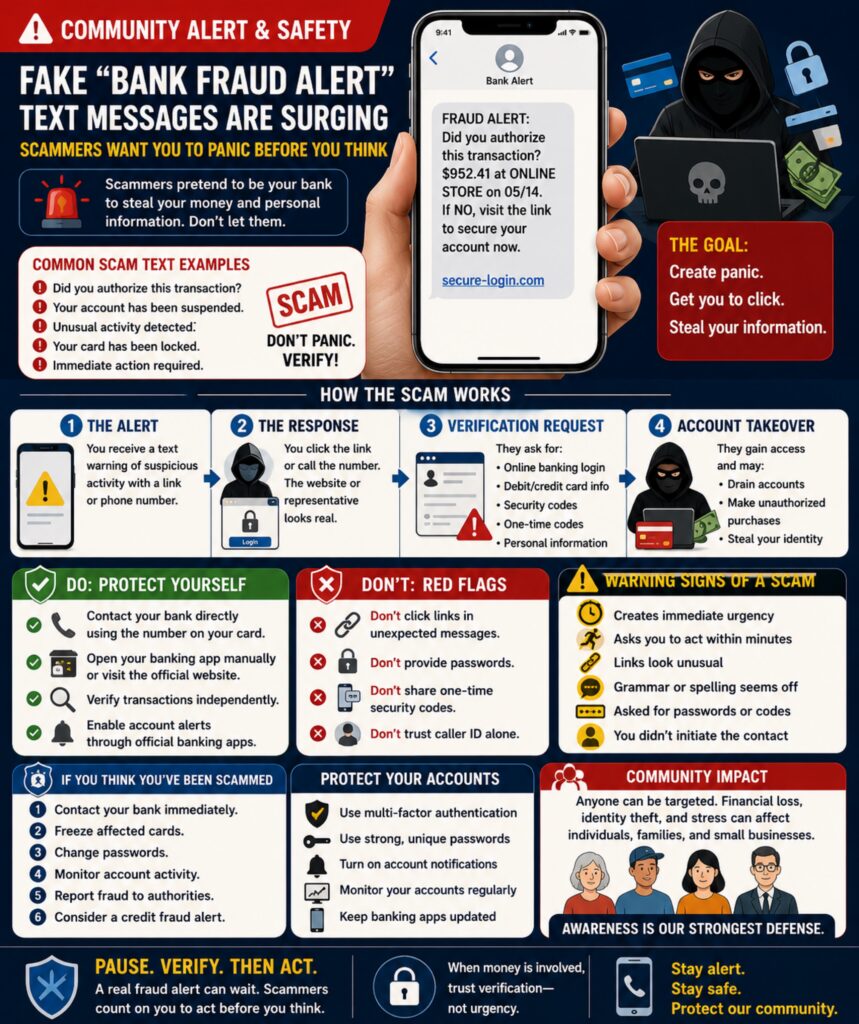
Fake “Account Locked” Messages Are Spiking Across Text & Email
Scammers are sending messages that claim your bank, payment app, email, or...
Scammers are sending messages that claim your bank, payment app, email, or delivery account has been locked due to “suspicious activity.” These messages push urgency and include links that lead to fake login pages designed to steal credentials. A key red flag: legitimate companies do not ask you to verify accounts through random links or texts.
As digital payments, deliveries, and online accounts increase, scammers are exploiting fear and urgency. These fake alerts are one of the fastest-growing fraud tactics right now.
NJ State of Emergency: SNAP Benefits Suspended
As of November 1, 2025, New Jersey has entered a State of Emergency following...
As of November 1, 2025, New Jersey has entered a State of Emergency following the federal government’s suspension of SNAP (Supplemental Nutrition Assistance Program) benefits. This interruption affects hundreds of thousands of residents who rely on SNAP for monthly food access.
What This Means for Residents:
- SNAP EBT card funds may not load on scheduled refill dates.
- Grocery budgets will be directly impacted, especially for families and seniors.
- Food pantries, community centers, and local aid organizations are preparing for increased demand.
Immediate Community Resources:
Resource Type
- Emergency Food Pantries
- Soup Kitchens / Hot Meal Programs
- County Social Service Offices
- NJ 2-1-1 Hotline
Where to Look
- Local Churches
- Salvation Army
- Community Centers
- City Shelters & Outreach Groups
- County Websites & Hotlines
- Call 2-1-1 or visit nj211.org
Notes
- Bring ID
- Hours vary
- Some allow walk-ins, others require sign-in
- Can advise on temporary assistance
- Statewide help directory
What You Can Do If You’re Affected:
- Call 2-1-1 for nearest emergency food resources.
- Check local Facebook / town community groups for pop-up food drives.
- Save receipts and records if benefits resume later (for possible reimbursement programs).
Why This Matters:
This is a real-time hardship situation, not a rumor. Staying informed helps families react quickly, reduces confusion, and directs community support where it’s needed most.
Flash Flood Warnings Are Increasing - Roads Can Become Deadly in Minutes
Communities across the country are experiencing a rise in flash flood warnings...
Communities across the country are experiencing a rise in flash flood warnings due to heavier rainfall, overwhelmed drainage systems, and sudden storms. Unlike slow-moving floods, flash floods can form within minutes, turning streets, underpasses, and familiar routes into dangerous conditions with little visible warning.
Many flood-related injuries and deaths occur when drivers or pedestrians underestimate shallow water, assuming it’s safe to cross. In reality, as little as 6 inches of moving water can knock a person down, and 12–18 inches can carry away most vehicles, including SUVs and trucks.
Why this matters now:
Weather patterns are becoming more unpredictable, and flash flooding is increasingly occurring outside traditional flood zones. Urban areas are especially vulnerable due to pavement runoff and clogged storm drains. Emergency responders consistently report that the majority of flood rescues happen because people try to travel during active warnings.
Critical Safety Guidance:
Never drive or walk through flooded streets - “Turn Around, Don’t Drown.”
Avoid underpasses, low-lying roads, and areas near creeks or storm drains during heavy rain.
Pay attention to emergency alerts, even if conditions look calm where you are. Flooding can occur upstream and rush in suddenly.
If water begins rising around your vehicle, exit immediately and move to higher ground if it is safe to do so.
Community Impact:
Flash floods disrupt emergency services, delay response times, damage homes and businesses, and put first responders at risk. Staying informed and adjusting travel plans during warnings helps protect not just individuals, but the entire community.
Safety Takeaway:
If you can’t see the road beneath the water, it’s already unsafe. When flash flood alerts are active, delay travel and prioritize safety over convenience.
The Great Plastic Debate, Is Your Bottle Hiding a Secret?
We've all been there grabbing a plastic water bottle on the go for a quick...
We've all been there grabbing a plastic water bottle on the go for a quick dose of hydration. It's convenient, it's cheap, and it gets the job done. But have you ever stopped to think about what's really in that bottle and I'm not just talking about the water? The truth is, that innocent-looking plastic bottle might be hiding some secrets you'll want to know about.
First up, let's talk about what the bottle is made of: PET plastic. It's designed for single use, but many of us reuse them. Here's the kicker: with every reuse, especially if you're washing it or leaving it in a warm car, that plastic can start to break down. This process can release chemicals like bisphenol A (BPA) and other similar compounds that are known as endocrine disruptors. While many bottles are now labeled "BPA-free," the substitutes might not be much better, and research is still catching up on their long-term effects.
And if that's not enough to make you think twice, consider this: microplastics. These tiny plastic particles are everywhere, and bottled water is no exception. Recent studies have found that a single liter of bottled water can contain hundreds of thousands of these microscopic fragments. While we don't fully understand the health implications of ingesting these particles, some research suggests they could pass into our bloodstream and organs. It's a brand new frontier of health concerns, and one that's hard to ignore.
So, what's the takeaway? That plastic bottle is more than just a container. It's a complex piece of the puzzle, with potential health risks and a heavy environmental toll. If you're a fan of the plastic bottle, it might be time to consider a change. Opting for a reusable glass or stainless steel bottle is the best way to avoid these issues and ensure your hydration habit is as clean and healthy as possible.
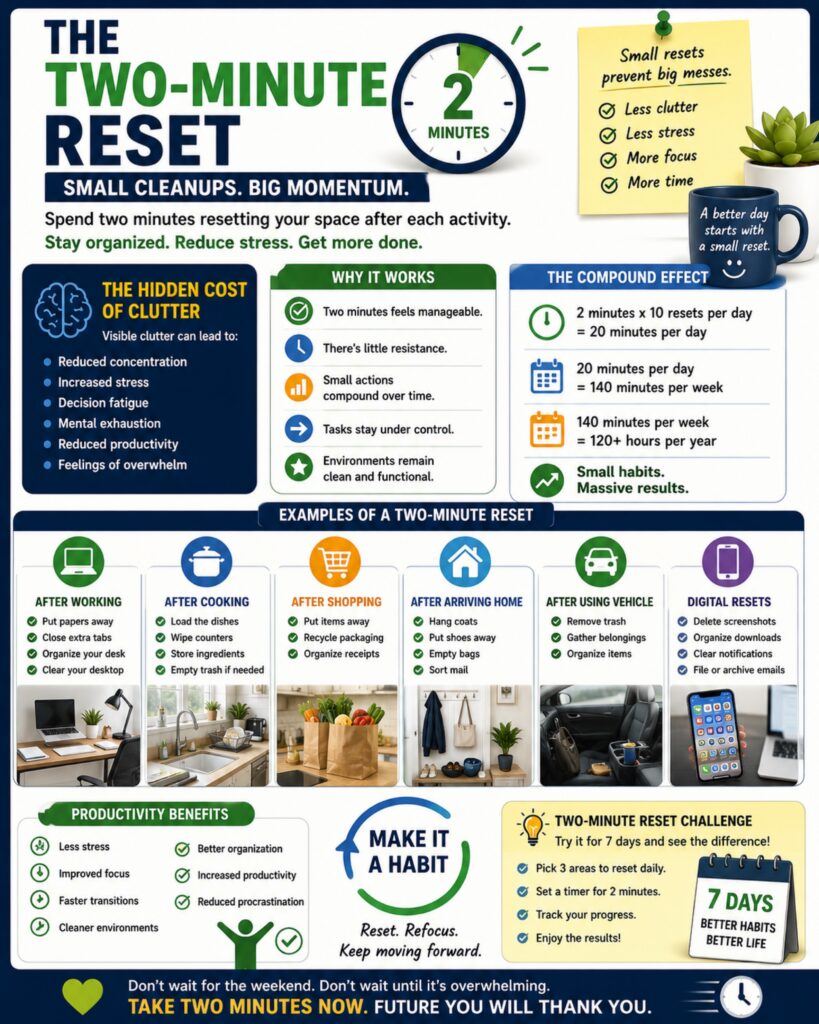
The “Two-Minute Reset” - A Tiny Habit That Instantly Improves Your Day
The Two-Minute Reset is a micro-habit: when you feel overwhelmed, pause for two...
The Two-Minute Reset is a micro-habit: when you feel overwhelmed, pause for two minutes to reset your space or your mind. It could be clearing your desk, organizing your tabs, taking a breath, drinking water, stretching, or jotting a quick plan. Small resets prevent big stress.
Card Skimming Devices Are Increasing - Protect Your Payments at ATMs and Gas Pumps
Communities are seeing a rise in card skimming and shimming devices placed on...
Communities are seeing a rise in card skimming and shimming devices placed on ATMs, gas pumps, parking meters, and self-checkout kiosks. These devices are designed to steal card information when you swipe or insert your card. Some are external overlays that fit over the card slot, while others are internal “shimmers” that are nearly invisible and capture data from chip cards.
Criminals often install these devices in high-traffic areas or at unattended machines. In some cases, tiny hidden cameras or fake keypad overlays are used to capture PIN numbers, allowing scammers to create duplicate cards and drain bank accounts within hours.
Why this matters now:
As more people rely on debit cards for everyday purchases and fuel costs rise, card use at gas pumps and ATMs has increased. Many older pumps still lack advanced security features, making them easy targets. Fraud cases often spike during travel seasons, holidays, and large public events.
Common Warning Signs:
- Card slot feels loose, bulky, or difficult to insert
- Keypad appears thicker than normal or hard to press
- Visible adhesive residue or mismatched colors around the reader
- Unusual attachments or misaligned components
- Machines located in poorly lit or isolated areas
Critical Safety Guidance:
- Use ATMs located inside banks or well-lit, high-traffic areas.
- Choose gas pumps closest to the building — these are less likely to be tampered with.
- Cover the keypad when entering your PIN.
- Use contactless payment or mobile wallets when available.
- Monitor bank statements regularly and set up transaction alerts.
- Report suspicious devices immediately to the business or authorities.
Community Impact:
Card skimming not only causes financial loss for individuals but also increases fraud investigations, raises banking costs, and affects local businesses. When multiple victims are targeted in one area, it can indicate organized criminal activity within the community.
Safety Takeaway:
Before you swipe or insert your card, take a second to look and touch. If something feels off, it probably is. Choosing safer machines and payment methods can prevent major financial loss.
Heat Safety Alert: Extreme Temperatures Are Causing a Rise in Heat Illness Emergencies
As temperatures continue climbing across many cities and communities, hospitals...
As temperatures continue climbing across many cities and communities, hospitals and emergency responders are reporting increasing cases of heat exhaustion, dehydration, heat stroke, and dangerous overheating — especially among seniors, children, outdoor workers, individuals without air conditioning, and people with medical conditions.
Health experts warn that extreme heat can become life-threatening much faster than many people realize. Even short periods inside parked vehicles, poorly ventilated apartments, or direct sunlight can rapidly raise body temperature to dangerous levels.
Warning Signs of Heat Exhaustion:
- Heavy sweating
- Dizziness
- Weakness or fatigue
- Headache
- Muscle cramps
- Nausea
- Pale or clammy skin
- Rapid heartbeat
Signs of Dangerous Heat Stroke:
- Confusion or disorientation
- Fainting
- Body temperature above 103°F
- Hot, dry skin or excessive sweating
- Seizures
- Loss of consciousness
Heat stroke is a medical emergency and requires immediate assistance.
Important Heat Safety Tips:
- Drink water consistently throughout the day, even if you are not thirsty.
- Avoid excessive caffeine or alcohol during extreme heat.
- Wear lightweight, breathable clothing.
- Limit outdoor activity during peak afternoon hours.
- Never leave children, elderly individuals, or pets inside vehicles.
- Use fans, cooling centers, shaded areas, or air-conditioned public spaces whenever possible.
- Check on elderly neighbors, family members, and vulnerable individuals regularly.
Medication & Heat Risk Warning:
Some medications may increase sensitivity to heat or dehydration, including:
- Blood pressure medications
- Diuretics
- Certain antidepressants
- Antihistamines
- Diabetes medications
Individuals taking prescription medications should consult healthcare professionals regarding heat-related risks.
Community Resources:
Many communities are opening:
- Cooling centers
- Public hydration stations
- Emergency wellness check programs
- Extended public library and recreation center hours
Local emergency management officials recommend staying informed through official weather alerts and community announcements during heat advisories.
Prevention Matters:
Most severe heat-related illnesses are preventable with early awareness, hydration, and quick action. Recognizing symptoms early and helping vulnerable individuals can save lives during periods of extreme heat.
Stay alert. Stay hydrated. Protect yourself and your community.
Berries & Digestion
Looking for an easy way to boost your health? Look no further than berries!
...
Looking for an easy way to boost your health? Look no further than berries!
Adding a handful of these delicious fruits to your daily routine can make a big difference. Berries like blueberries, raspberries, and strawberries are packed with powerful antioxidants that help protect your body from cell damage.
They can help lower bad cholesterol and reduce blood pressure. Their nutrients are linked to improved memory and a slower rate of cognitive decline. Berries are high in fiber, which is essential for a healthy gut.
So next time you're at the store, grab a carton of mixed berries. Add them to your yogurt, oatmeal, or just snack on them plain. Your body will thank you!
Local Cooling & Warming Centers Are Active During Extreme Weather
During periods of extreme heat or cold, cities and counties activate cooling...
During periods of extreme heat or cold, cities and counties activate cooling centers and warming centers to protect residents from weather related health risks. These centers provide a safe, temperature controlled space, water, restrooms, and sometimes medical support. Availability often changes based on weather alerts, so checking local city or county announcements is key.
Why this matters now:
Extreme weather events are becoming more frequent, and many residents especially seniors, unhoused individuals, and families without reliable heating or cooling depend on these services for safety.
Unattended Package Thefts Are Increasing - Porch Piracy Surges During Peak Delivery Seasons
Communities nationwide are seeing a rise in porch piracy - the theft of packages...
Communities nationwide are seeing a rise in porch piracy - the theft of packages left unattended at homes and apartment buildings. With online shopping continuing to grow and delivery frequency increasing, more packages are being left at doorsteps for extended periods, especially during holidays, sales events, and high-demand shipping seasons.
Thieves often follow delivery vehicles, monitor neighborhoods, or scan apartment complexes for visible boxes. Many thefts occur within minutes of delivery — sometimes before homeowners even receive notification alerts.
Why this matters now:
The shift toward remote work, food delivery, subscription boxes, and same-day shipping has dramatically increased doorstep drop-offs. Combined with rising retail costs and high-demand products, packages are becoming attractive targets.
Common Risk Factors:
- Packages left in visible locations
- Deliveries scheduled while residents are at work
- Apartment complexes with open-access entryways
- No doorbell cameras or notification systems
- Delayed pickup from mailrooms or front desks
Practical Safety Guidance:
- Use delivery tracking alerts and retrieve packages promptly.
- Request signature confirmation for high-value items.
- Schedule deliveries for times when someone is home.
- Use secure lockers, pickup hubs, or alternate delivery locations.
- Install doorbell cameras or visible surveillance signage.
- Ask trusted neighbors to collect packages if you are away.
Community Impact:
Package theft not only affects individuals but also burdens local law enforcement and increases insurance claims. In apartment complexes and dense neighborhoods, coordinated theft can impact dozens of residents in a short period.
Safety Takeaway:
If you’re expecting a package, plan for it. Visibility and timing matter. A small adjustment in delivery habits can prevent costly losses.
AI Voice-Cloning Scams Are Increasing - “Emergency Calls” May Not Be Real
Law enforcement agencies are reporting a rise in AI-generated voice cloning...
Law enforcement agencies are reporting a rise in AI-generated voice cloning scams, where criminals use artificial intelligence to mimic the voice of a loved one. Victims receive urgent phone calls claiming a family member has been in an accident, arrested, kidnapped, or stranded and needs immediate financial help. The voice sounds real, emotional, and convincing — because it is generated using publicly available audio from social media videos, voicemails, or online content.
These scams are especially dangerous because they target fear and urgency. The caller often pressures the victim not to hang up, not to contact other family members, and to send money through wire transfers, gift cards, or cryptocurrency.
Why this matters now:
AI voice tools have become more accessible and realistic, requiring only a short audio sample to replicate someone’s speech pattern. As more people share voice recordings online through videos, podcasts, and social platforms, scammers have more material to exploit.
Common Red Flags:
- The caller demands immediate payment.
- They insist you stay on the phone and not contact anyone else.
- Payment is requested via gift cards, wire transfer, or crypto.
- The story involves secrecy (“Don’t tell mom/dad.”).
- The number appears unfamiliar or spoofed.
Critical Safety Guidance:
- Hang up immediately and contact the person directly using a known number.
- Establish a family safe word - something only close contacts would know.
- Do not send money or share financial details without verifying independently.
- Slow down. Scammers rely on panic.
- Report suspicious calls to local authorities or consumer protection agencies.
Community Impact:
These scams are targeting seniors, parents, and families across communities. Financial losses can be devastating, and emotional distress can be significant. Awareness is the strongest defense.
Safety Takeaway:
If a call creates panic and demands immediate money, pause. Verify first. AI can copy a voice - but it can’t replace verification.
Why Your Drink Belongs in Glass
Tired of worrying about what's in your water bottle besides the water?
...
Tired of worrying about what's in your water bottle besides the water?
As we become more conscious about what we put in our bodies, the container holding our drinks is just as important as the drink itself. That's where glass comes in, and here's why it's making a big comeback.
In an age where we are constantly questioning the materials we use and their impact on our health and the environment, glass bottles are making a powerful comeback. Once a standard, glass fell out of favor with the rise of cheaper, lighter, and more convenient plastic. However, as the downsides of plastic and aluminum become clearer, the benefits of glass are shining through, making it a superior choice for both personal well-being and a healthier planet.
The most significant advantage of glass is its purity and inert nature. Unlike plastic and even aluminum, which often require internal linings, glass is completely non-porous and non-reactive. This means that it will not absorb odors, flavors, or colors from the liquids it holds. Your water will taste like water, not like yesterday's juice or coffee. More importantly, glass does not leach any harmful chemicals into its contents. There's no risk of BPA, phthalates, or other endocrine disrupting compounds migrating from the container into your beverage, even when exposed to heat. This makes glass the safest and most stable option for storing food and drinks, giving you peace of mind that what you're consuming is truly pure.
From an environmental standpoint, glass is a champion of sustainability. It is made from abundant, natural resources like sand, soda ash, and limestone. What truly sets it apart is its infinite recyclability. Glass can be recycled over and over again without any loss in quality or purity, creating a true closed loop system. While plastic is also recyclable, it often "downcycles" into lower quality products, and a large portion of it ends up in landfills. Aluminum, while highly recyclable, still requires a protective lining. With glass, a recycled bottle can be melted down and reformed into a brand new bottle in as little as 30 days, using significantly less energy than manufacturing from raw materials. This makes glass a powerful tool in the fight against pollution and waste.
Beyond its health and environmental benefits, glass offers a number of practical advantages. Its non-porous surface makes it incredibly easy to clean and sterilize, a major benefit for reusable containers. It is also highly durable and resistant to scratches, maintaining its clarity and aesthetic appeal over time. Furthermore, glass's ability to withstand high temperatures makes it safe for use in microwaves and dishwashers, and it can even be used to store hot liquids without any concern. In a world full of compromises, the choice to use glass is one that offers a clean, safe, and sustainable solution, proving that sometimes, the best innovations are the ones that have been around for centuries.
Battery Drain Is Worse Than Ever — Here’s the Simple Fix
Phone batteries are draining faster due to constant background activity from...
Phone batteries are draining faster due to constant background activity from apps, location tracking, AI features, and push notifications. A simple life hack making the rounds: force-close unused apps + disable background refresh for non-essential apps, then restart your phone once a week. Users report noticeable battery life improvements without changing devices.
Why this matters now:
More people rely on their phones for payments, navigation, work, and alerts. With extreme weather, travel, and emergency notifications increasing, battery life has become a daily survival issue, not just a convenience.
Food as Medicine
A holistic approach to ‘Food as Medicine’ focuses on using whole,...
A holistic approach to ‘Food as Medicine’ focuses on using whole, nutrient-dense foods to support the body’s natural healing processes, addressing physical, mental, and emotional health rather than just treating symptoms.
Investment & Crypto Scams
Scammers lure victims with promises of guaranteed returns through fake...
Scammers lure victims with promises of guaranteed returns through fake investments or crypto trading platforms. They may impersonate financial advisors or create convincing websites. Legitimate investments never promise risk-free profits. Always research platforms, verify licensing, and avoid sending funds to unknown wallets or unregulated brokers.
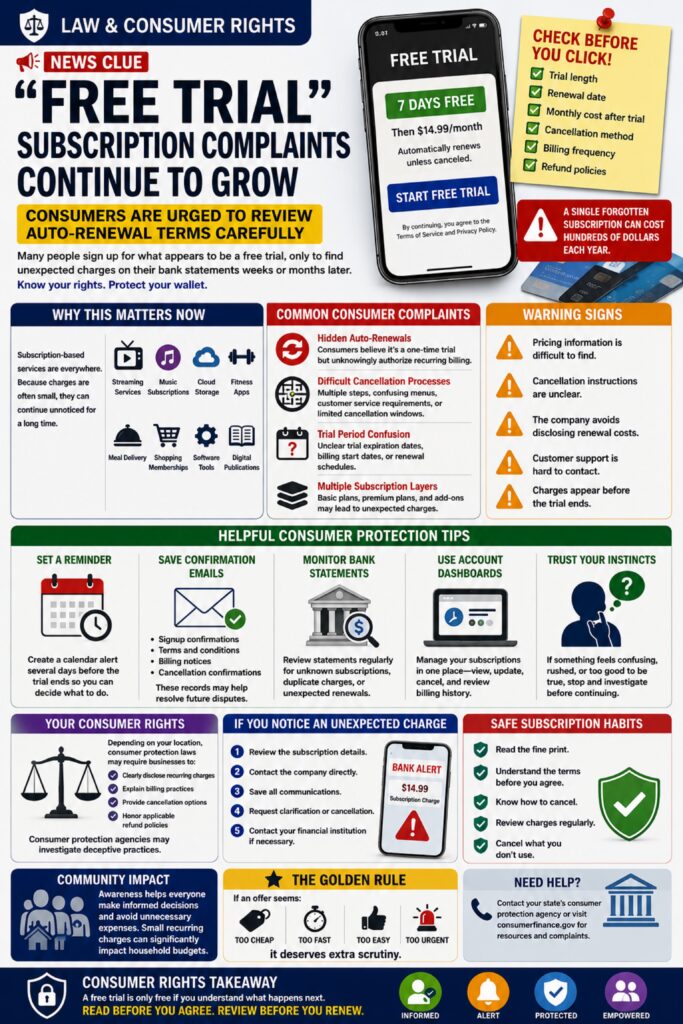
Auto-Renewal Traps Are Increasing - Turn Off Renewal Before Free Trials End
Many apps, streaming services, fitness programs, and AI tools now offer free...
Many apps, streaming services, fitness programs, and AI tools now offer free trials that automatically convert into paid subscriptions if not canceled in time. With more digital services competing for attention, consumers are signing up for multiple trials and forgetting to cancel — resulting in unexpected charges.
A simple life hack gaining popularity: turn off auto-renewal immediately after starting a free trial. You still keep access for the full trial period, but you eliminate the risk of being charged if you forget to cancel.
Why this matters now:
Subscription-based services are expanding rapidly across entertainment, productivity, health, and AI platforms. Companies rely on auto-renewal to retain customers, knowing many users overlook cancellation deadlines. As prices increase and billing cycles shorten, even one forgotten trial can lead to recurring monthly charges.
How the Hack Works:
- Start the free trial as usual.
- Immediately go into account or subscription settings.
- Turn off auto-renew or cancel the subscription.
- Continue using the trial until it expires without being charged.
Benefits:
- Prevents surprise charges
- Reduces subscription creep
- Encourages intentional spending
- Saves money without changing habits
- Gives you full control over digital services
Extra Tips:
- Take a screenshot of the trial end date for reference.
- Use calendar reminders labeled “Trial Ends Tomorrow.”
- Review active subscriptions monthly for unused services.
Real-World Impact:
With the average household managing multiple digital subscriptions, this simple habit can save hundreds of dollars per year. It also reduces financial stress and eliminates the frustration of disputing unwanted charges.
Life Hack Takeaway:
Enjoy the free trial - just disable auto-renew on day one. Control the subscription before it controls your wallet.
Pong
Released in 1972 by Atari, Pong was the first commercially successful video...
Released in 1972 by Atari, Pong was the first commercially successful video game. Designed by Allan Alcorn as a training exercise, it simulated table tennis with simple two-dimensional graphics. The game’s popularity helped establish the video game industry, with its first arcade machine installed in Andy Capp’s Tavern in Sunnyvale, California
Background App Refresh Is Quietly Draining Your Phone Battery
Many apps continue running and updating in the background, even when you’re...
Many apps continue running and updating in the background, even when you’re not using them. A trending life hack right now: turn off background app refresh for non-essential apps. People are reporting noticeable battery improvements without changing usage habits.
Why this matters now:
With increased reliance on phones for payments, navigation, work, emergency alerts, and QR codes, battery life has become critical. This small settings change can add hours of use.
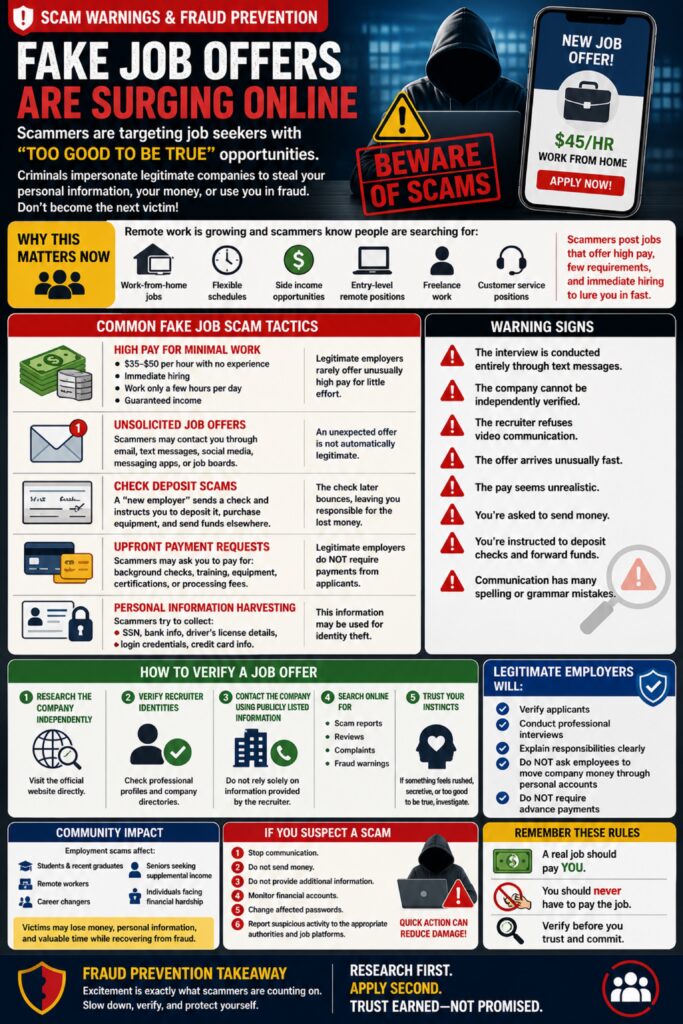
Fake Job Offers Are Surging Online — Scammers Are Targeting Job Seekers With “Too Good To Be True” Opportunities
As more employers embrace remote work, online recruiting, and digital hiring...
As more employers embrace remote work, online recruiting, and digital hiring platforms, scammers are increasingly impersonating legitimate companies to trick job seekers into revealing personal information, sending money, or performing fraudulent financial transactions.
These fake job scams often appear highly professional. Criminals may create convincing websites, copy real company logos, use fake recruiter profiles, conduct online interviews, and even provide fraudulent employment paperwork.
The scam works because job seekers are often excited, hopeful, and eager to respond quickly when presented with an attractive opportunity.
Unfortunately, many victims don’t discover the deception until after sensitive information or money has already been lost.
🚨 Why This Matters Now
Remote work opportunities continue to grow.
People frequently search for:
* Work-from-home jobs
* Flexible schedules
* Side income opportunities
* Entry-level remote positions
* Freelance work
* Administrative jobs
* Customer service positions
Scammers know this.
They intentionally target individuals seeking employment by advertising positions that offer unusually high pay, minimal qualifications, or immediate hiring.
⚠️ Common Fake Job Scam Tactics
💰 High Pay for Minimal Work
Examples:
* $35–$50 per hour with no experience
* Immediate hiring
* Work only a few hours per day
* Guaranteed income
Legitimate employers rarely offer unusually high compensation for little effort.
📧 Unsolicited Job Offers
Scammers may contact victims through:
* Email
* Text messages
* Social media
* Messaging apps
* Job boards
Receiving an unexpected offer does not automatically mean it is legitimate.
🏦 Check Deposit Scams
A “new employer” sends a check and instructs the victim to:
* Deposit it
* Purchase equipment
* Send funds elsewhere
The check later bounces, leaving the victim responsible for the lost money.
💳 Upfront Payment Requests
Legitimate employers generally do not require applicants to pay for:
* Background checks
* Training
* Equipment
* Certifications
* Processing fees
Requests for payment should immediately raise concern.
🔐 Personal Information Harvesting
Scammers often attempt to collect:
* Social Security numbers
* Bank account information
* Driver’s license details
* Login credentials
* Credit card information
This information may later be used for identity theft.
🚩 Warning Signs**
Be cautious if:
❌ The interview is conducted entirely through text messages.
❌ The company cannot be independently verified.
❌ The recruiter refuses video communication.
❌ The offer arrives unusually quickly.
❌ The pay seems unrealistic.
❌ You’re asked to send money.
❌ You’re instructed to deposit checks and forward funds.
❌ Communication contains numerous spelling or grammar mistakes.
🛡️ How To Verify A Job Offer
Before accepting:
Step 1
Research the company independently.
Visit the official website directly.
Step 2
Verify recruiter identities.
Check professional profiles and company directories.
Step 3
Contact the company using publicly listed contact information.
Do not rely solely on information provided by the recruiter.
Step 4
Search online for:
* Scam reports
* Reviews
* Complaints
* Fraud warnings
Step 5
Trust your instincts.
If something feels rushed, secretive, or unusually generous, investigate further.
💡 Remember These Rules
Legitimate employers:
✔ Verify applicants
✔ Conduct professional interviews
✔ Explain responsibilities clearly
✔ Do not ask employees to move company money through personal accounts
✔ Do not require advance payments
🌎 Community Impact
Employment scams affect:
* Students
* Recent graduates
* Remote workers
* Career changers
* Seniors seeking supplemental income
* Individuals facing financial hardship
Victims may lose money, personal information, and valuable time while recovering from fraud.
🚔 If You Suspect A Scam
Immediately:
1. Stop communication.
2. Do not send money.
3. Do not provide additional information.
4. Monitor financial accounts.
5. Change affected passwords.
6. Report suspicious activity to appropriate authorities and job platforms.
Quick action can significantly reduce damage.
🎯 Fraud Prevention Takeaway
A real job should pay you.
You should never have to pay the job.
When an opportunity seems unusually easy, unusually fast, or unusually profitable, take time to verify before proceeding.
Remember:
Excitement is exactly what scammers are counting on. Slow down, verify, and protect yourself.
💼🔍🛡️⚠️ Research first. Apply second. Trust earned—not promised.
Proper Infant Seat Harness Use
This infographic shows the correct way to secure an infant in a rear-facing car...
This infographic shows the correct way to secure an infant in a rear-facing car seat using a 5-point harness system. Key safety tips include placing the chest clip at armpit level, ensuring the harness is snug (no slack above the clip), keeping the harness straps at or below shoulder level, and avoiding bulky clothing or blankets beneath the straps. It also highlights the importance of following the car seat’s manual for head positioning and handle placement.
💡Illuminating Light
Light is a form of electromagnetic radiation visible to the human eye, traveling...
Light is a form of electromagnetic radiation visible to the human eye, traveling in waves at approximately 299,792 kilometers per second (186,282 miles per second) in a vacuum. It exhibits dual properties, behaving as both a wave and a particle (photon), which is fundamental to quantum mechanics. Light can be reflected, refracted, absorbed, or scattered depending on the medium it interacts with. The visible spectrum of light ranges from violet to red, each color corresponding to a specific wavelength, while ultraviolet and infrared light fall outside human vision. Understanding light has led to major scientific advancements, including the development of optics, lasers, fiber-optic communications, and modern imaging technologies.
Private Vs Public Citizen
The key difference between a private citizen and a public citizen lies in their...
The key difference between a private citizen and a public citizen lies in their role and exposure to public affairs. A private citizen is an ordinary individual not holding public office or performing official government duties, enjoying broader privacy rights under the law. A public citizen, such as elected officials, government employees, or high-profile public figures, has greater influence on public policy and societal matters but is subject to more public scrutiny and reduced privacy protections in legal contexts.
Clean Green
Ever get a headache from the smell of a freshly scrubbed bathroom? Or worry...
Ever get a headache from the smell of a freshly scrubbed bathroom? Or worry about your curious pet licking up a spill of floor cleaner? We’ve all been there. For years, we've associated that strong, chemical scent with "clean." But what if a truly clean home didn't have to come at the expense of your health or the environment? Making the switch to eco-friendly cleaning products isn't just a trend; it’s a simple, powerful change you can make for a healthier life.
It's about more than just a green colored label. True eco-friendly products are different from conventional cleaners in a few key ways. They skip the stuff that can irritate your skin, mess with your breathing, or harm aquatic life, like phosphates, chlorine, and ammonia. Instead, they use ingredients from plants and minerals that are much safer for your family, pets, and the planet. When these cleaners go down the drain, their ingredients break down naturally without polluting our waterways. That’s a huge win for marine life and our ecosystems. Many green brands also use concentrated formulas, so you just add water. This means less plastic packaging and a smaller carbon footprint from shipping lighter products. Plus, many brands offer refillable bottles, so you can reuse the same container over and over.
A Cleaner Home, a Healthier You!
Think about it, the air in your home is what you and your family breathe every single day. By using non-toxic products, you're not just cleaning surfaces you're improving your indoor air quality. This is especially important for households with young children, people with allergies or asthma, and pets who spend their lives close to the floor. You can finally clean with confidence, knowing you aren't leaving behind any harmful residue.
You don't need to empty your cleaning cabinet all at once. Start by reading the labels. Look for certifications like EPA Safer Choice or the Leaping Bunny logo, which means the product is cruelty-free. These labels are your signal that a product meets high standards for safety and effectiveness.
You can also try a DIY solution. You’d be amazed at what a simple mix of vinegar, baking soda, and a little essential oil can clean. These common ingredients can tackle everything from greasy counters to clogged drains. Another option is to find a brand you love. There are so many amazing companies now that are transparent about their ingredients and committed to sustainability. Do a quick search online, or check out your local grocery store's natural products section. Switching to eco-friendly cleaning products is a simple step with a huge impact. It’s about creating a space that feels truly clean and safe, from the air you breathe to the surfaces you touch.
What do you clean your home with?
S.M.A.R.T.
Breaking big goals into smaller, actionable steps makes them more achievable and...
Breaking big goals into smaller, actionable steps makes them more achievable and less overwhelming. Using the SMART method Specific, Measurable, Achievable, Relevant, and Time bound helps clarify what needs to be done, track progress, and maintain motivation until the goal is reached.
Did you know chewing gum is illegal in Singapore 🤔
Since 1992, it has been illegal to import, sell, or possess chewing gum in...
Since 1992, it has been illegal to import, sell, or possess chewing gum in Singapore, with some exceptions for therapeutic gum. The law was enacted to maintain cleanliness