Categories
Community Alerts and Safety

Social Media Marketplace Scams Continue To Rise — Verify Before You Buy, Sell, or Meet

Online community marketplaces have made it easier than ever to buy, sell, and trade goods locally. From furniture and electronics to vehicles, tools, collectibles, and household items, millions of transactions occur every day through social media groups and marketplace platforms.

Unfortunately, scammers are increasingly exploiting these platforms to target both buyers and sellers.

Law enforcement agencies and consumer protection organizations continue to receive reports involving fake listings, counterfeit payment confirmations, account takeover attempts, shipping fraud, deposit scams, and dangerous in-person meeting situations.

Many scams succeed because victims feel pressured to act quickly before an item is “sold” or because they trust that local marketplace users have already been verified.

🚨 Why This Matters Now

Community marketplaces are growing rapidly because they offer:

* Convenient local transactions
* Lower prices
* Quick sales
* Direct communication
* Wide product selection

Criminals follow where people gather.

As marketplace activity increases, fraudulent listings and scam attempts often increase alongside it.

⚠️ Common Marketplace Scams

💰 Fake Payment Confirmation

A buyer claims payment was sent.

They provide:

* Screenshots
* Emails
* Fake payment notifications

The seller releases the item before confirming funds were actually received.

📦 Shipping Fraud

Scammers request:

* Shipping before payment clears
* Alternative delivery methods
* Off-platform communication

Victims may lose both money and merchandise.

🚗 Vehicle Deposit Scams

Fraudsters advertise:

* Vehicles
* Boats
* RVs
* Motorcycles

At unusually attractive prices.

They request deposits to “hold” the item before the buyer has an opportunity to inspect it.

The vehicle often doesn’t exist.

🎁 Fake Listings

Scammers steal photos from legitimate listings and repost them.

Common targets include:

* Electronics
* Tools
* Appliances
* Gaming systems
* Power equipment

The goal is collecting deposits or advance payments.

🔐 Account Takeover Scams

Criminals may attempt to obtain:

* Verification codes
* Login credentials
* Authentication information

Once obtained, legitimate accounts may be used to scam additional victims.

🚩 Warning Signs

Be cautious if:

❌ The price is dramatically below market value.

❌ The seller refuses in-person meetings.

❌ The buyer wants to communicate outside the platform immediately.

❌ Payment methods seem unusual.

❌ Urgency is heavily emphasized.

❌ The profile appears recently created.

❌ Photos look professionally staged but lack detail.

❌ The seller avoids answering specific questions.

🛡️ Safety Tips For Buyers

Before purchasing:

✔ Research comparable pricing.

✔ Inspect items in person whenever possible.

✔ Meet in public locations.

✔ Verify product condition.

✔ Use secure payment methods.

✔ Trust your instincts.

If something feels wrong, walk away.

🛡️ Safety Tips For Sellers

Before releasing an item:

✔ Verify funds have actually arrived.

✔ Avoid accepting screenshots as proof of payment.

✔ Meet in safe public locations.

✔ Keep communication on the platform.

✔ Never share verification codes.

✔ Bring another person when appropriate.

🚔 Safe Meeting Practices

When meeting a buyer or seller:

Choose:

* Police department exchange zones
* Public parking lots
* Busy retail locations
* Well-lit community areas

Avoid:

* Isolated locations
* Late-night meetings
* Unfamiliar private residences

Personal safety is always more important than completing a transaction.

🌎 Community Impact

Marketplace scams affect:

* Families
* Students
* Seniors
* Small business owners
* Collectors
* Local residents

Financial losses can range from a few dollars to thousands, while identity theft consequences may persist much longer.

💡 Remember The Golden Rule

If an offer seems:

* Too cheap
* Too fast
* Too easy
* Too urgent

It deserves extra scrutiny.

Scammers often rely on excitement and urgency to bypass caution.

🎯 Safety Takeaway

A legitimate buyer or seller will understand your need to verify information and prioritize safety.

Never let pressure replace good judgment.

Remember:
Verify the person. Verify the payment. Verify the product. Then proceed.

🛒🔍🛡️⚠️ Safe transactions start with smart decisions.
Categories
Community Alerts and Safety

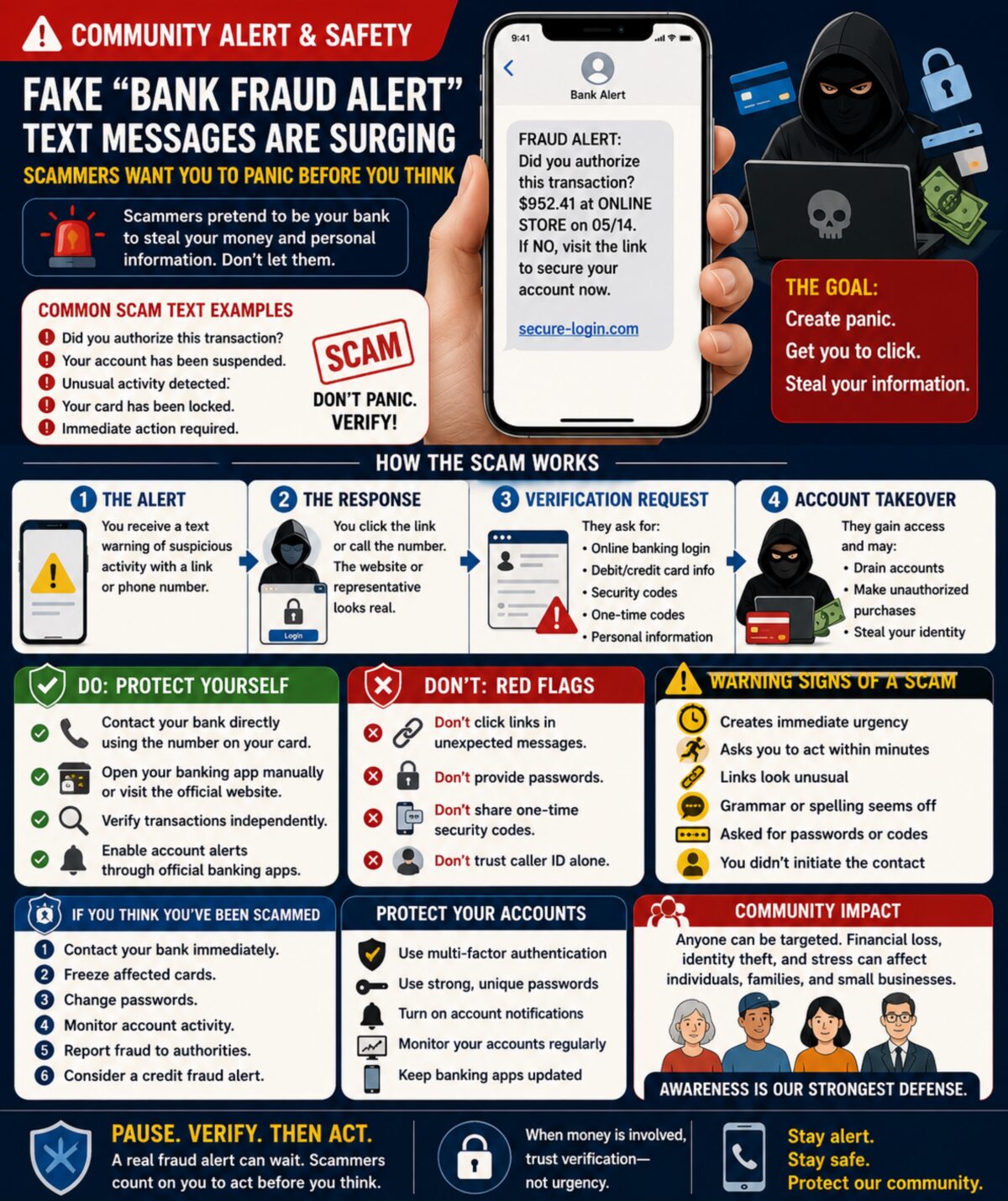
Fake “Bank Fraud Alert” Text Messages Are Surging — Scammers Want You to Panic Before You Think

Communities nationwide are seeing a sharp increase in fraud alert impersonation scams, where criminals send text messages claiming to be from a bank, credit union, payment app, or credit card company.

The messages often appear urgent and alarming:

* “Did you authorize this transaction?”
* “Your account has been suspended.”
* “Unusual activity detected.”
* “Your card has been locked.”
* “Immediate action required.”

The goal is simple: create panic.

Scammers know that when people believe their money is at risk, they are more likely to react quickly without carefully verifying the message.

🚨 Why This Matters Now

Financial institutions are increasingly using legitimate fraud alerts to protect customers.

Unfortunately, criminals are exploiting that familiarity.

Modern scam texts often:

* Look professionally designed
* Use bank-like language
* Mimic legitimate fraud departments
* Include realistic links
* Use spoofed phone numbers

Some even arrive within existing message threads, making them appear more trustworthy.

⚠️ How the Scam Typically Works

Step 1 — The Alert

The victim receives a text warning of suspicious activity.

A link or phone number is provided.

Step 2 — The Response

The victim clicks the link or calls the number.

The website or representative appears legitimate.

Step 3 — Verification Request

The scammer requests:

* Online banking credentials
* Debit card information
* Security codes
* One-time authentication codes
* Personal information

Many victims believe they are speaking with legitimate bank representatives.

Step 4 — Account Takeover

Once access is obtained:

* Accounts may be drained
* Cards may be compromised
* Personal information may be stolen
* New fraud may be committed using the victim’s identity

🛡️ Critical Safety Guidance

If you receive a fraud alert:

DO:

✔ Contact your bank directly using the number on your card.

✔ Open your banking app manually.

✔ Log in through official channels.

✔ Verify transactions independently.

✔ Enable account alerts through official banking apps.

DON’T:

❌ Click links in unexpected messages.

❌ Provide passwords.

❌ Provide one-time security codes.

❌ Share authentication texts.

❌ Trust caller ID alone.

📱 Warning Signs of a Scam

Be suspicious if:

* The message creates immediate urgency.
* It asks you to act within minutes.
* Links look unusual.
* Grammar seems odd.
* You are asked for passwords.
* You are asked for verification codes.

Legitimate banks generally do not request sensitive authentication information through unsolicited texts.

🏘️ Community Impact

These scams affect:

* Seniors
* Young adults
* Small business owners
* Online shoppers
* Mobile banking users

Financial losses can range from a few dollars to entire account balances.

Beyond monetary losses, victims often spend months restoring accounts, replacing cards, updating passwords, and repairing identity theft damage.

🔒 How To Protect Yourself

Experts recommend:

* Multi-factor authentication
* Strong unique passwords
* Account activity notifications
* Banking app security features
* Regular account monitoring

Awareness remains one of the most effective defenses.

🚔 What To Do If You Fall Victim

If you believe you’ve interacted with a scam:

1. Contact your bank immediately.
2. Freeze affected cards.
3. Change passwords.
4. Monitor account activity.
5. Report fraud to relevant authorities.
6. Enable fraud alerts on credit files if necessary.

The faster you respond, the greater the chance of limiting financial damage.

🔍 Safety Takeaway

Scammers want you to react emotionally.

Protect yourself by slowing down.

Pause. Verify. Then act.

A real fraud alert can wait long enough for you to confirm it through official channels.

📱🛡️💳 When money is involved, trust verification—not urgency.

Categories
Community Alerts and Safety

Beat the Heat: Surviving a Heat Wave

We all love summer, but when a heat wave strikes, the weather goes from “beach day” to dangerous incredibly fast. Extreme heat is actually one of the leading weather-related killers, yet many of us don’t take it seriously enough until we are already feeling sick.

Let’s get a clue on how to spot the red flags of heat illness, and exactly what to do (and what not to do) when the mercury rises.

The Big Red Flags: Heat Exhaustion vs. Heat Stroke

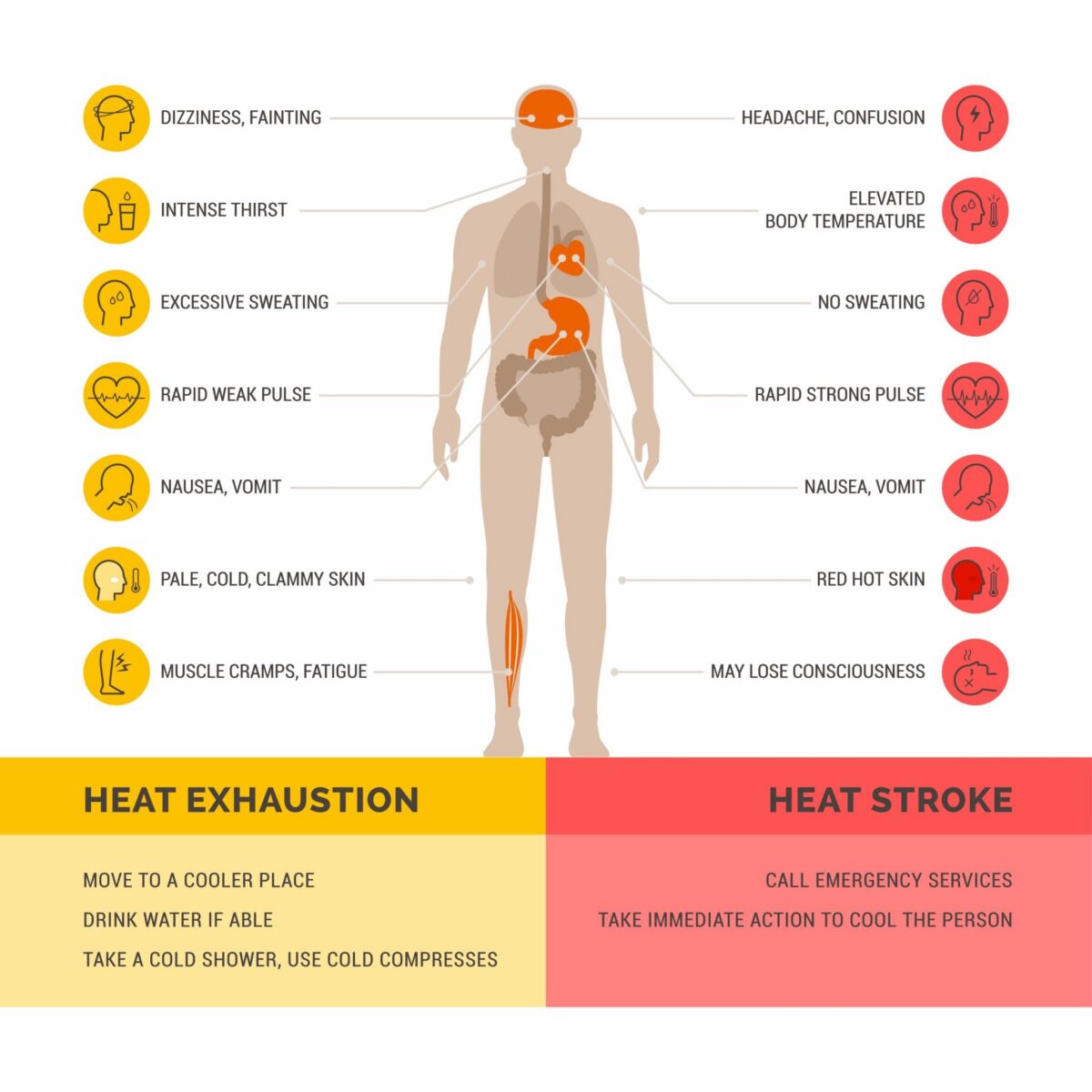
Your body cools itself by sweating, but when it’s too hot or humid, that built-in air conditioner can fail. This leads to two main stages of heat illness: Heat Exhaustion (the warning phase) and Heat Stroke (a true medical emergency).

Understanding the visual differences between these two states can quite literally save a life.

Heat Exhaustion: The person is sweating heavily, has pale, cold, clammy skin, and might feel faint or nauseous. Their body is struggling, but still trying to fight the heat.

Heat Stroke: This happens when the body’s internal temperature spikes past 103°F (39.4°C). The skin becomes red, hot, and completely dry (sweat stops). Most importantly, they will experience confusion, dizziness, or even loss of consciousness. If you see these signs, call 911 immediately.

The “Do’s” and “Don’ts” of Heat Wave Safety
When the thermometer pushes into triple digits, how you react matters. Here is your quick checklist of what to prioritize and what to avoid entirely.

What to DO:

Drink before you are thirsty: By the time you feel thirsty, you are already slightly dehydrated. Sip water or electrolyte-rich drinks consistently throughout the day.

Find AC or public cooling centers: If your home doesn’t have air conditioning, spend the hottest parts of the day at a library, mall, or community cooling center. Just a few hours in AC can drastically reduce your body’s heat stress.

Check on high-risk neighbors: Check in twice a day on elderly neighbors, friends with chronic illnesses, or those who live alone to ensure they are keeping cool.

Dress like you’re in the tropics: Wear loose, lightweight, light-colored clothing. Dark colors absorb heat, and tight clothes trap it against your skin.

What NOT to Do:

Don’t rely solely on electric fans in extreme heat: When temperatures climb above 95°F (35°C), blowing hot air across your skin actually heats you up faster rather than cooling you down. Use wet towels or cool showers instead.

Don’t leave anyone in a parked car: Not even for “just a minute,” and not even with the windows cracked. A car’s interior can heat up by 20 degrees in just 10 minutes, making it a death trap for children and pets.

Don’t drink alcohol or heavy caffeine: Both of these are diuretics (substances that make you pass fluids faster), which accelerate dehydration. Stick to water or sports drinks.

Don’t exercise at noon: Save your outdoor workouts, heavy yard work, or long walks for early dawn or late dusk when the sun’s rays are least direct.

Stay safe, keep hydrated, and help your community stay cool this summer!

Categories
Community Alerts and Safety

Protecting Our Pets: The Hidden Dangers of Summer Heat Waves

Our pets love a good sunny day just as much as we do, but when a summer heat wave hits, the outdoor world becomes dangerous for them incredibly fast. Because dogs and cats don’t sweat through their skin the way humans do, they have a much harder time regulating their body temperature. Dogs rely almost entirely on panting to release heat, which becomes highly inefficient when the air around them is thick, hot, and humid. Because our furry companions can’t tell us when they are pushing past their limits, it is up to us to get a clue, recognize the subtle warning signs of heat stress, and adjust our routines to keep them safe.

Catching the early red flags of a heat-related illness can quite literally be a lifesaver. You should monitor your pet closely during high temperatures for frantic, heavy panting that sounds harsh or loud, along with excessive drooling of thick, ropey saliva. Another clear warning sign is the color of their gums; lifting your dog’s lip should reveal a healthy pink, so if you see bright red, dark purple, or completely pale, dry gums, their circulatory system is in serious trouble. If the heat stress progresses, pets will become lethargic, stumble, appear disoriented, or even begin vomiting, which are major indicators of heat stroke that require immediate veterinary attention.

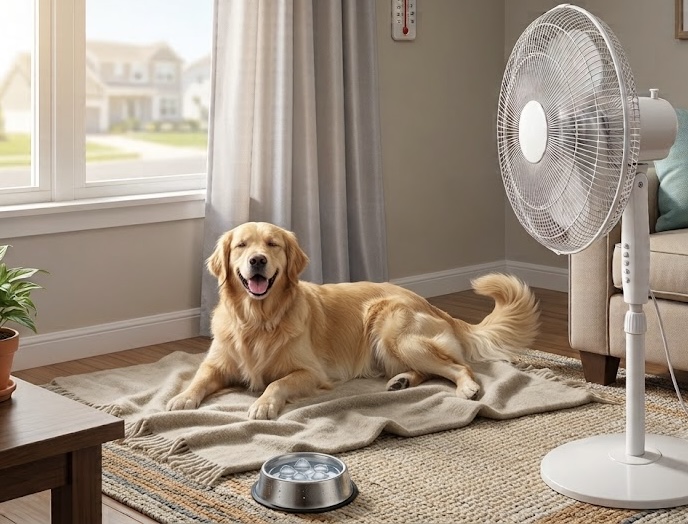
If you ever need to cool down an overheating pet, the method you use matters just as much as how fast you act. You should apply cool or lukewarm water to their belly, armpits, and paw pads, or wrap them in damp towels while running a fan nearby. It is a common instinct to reach for ice or submerge an overheated dog in an ice-filled bath, but this is actually highly dangerous. Ice-cold water causes the blood vessels near the surface of the skin to constrict sharply, which effectively traps the intense heat inside their vital organs and makes the internal heat stroke even worse. Stick to cool water and call your vet immediately while you work on lowering their temperature.

Beyond the air temperature, summer brings a massive hidden hazard right to the ground we walk on. Asphalt and concrete absorb and retain an incredible amount of solar energy, meaning that on a sunny 85°F day, the pavement can easily skyrocket to a scorching 130°F. This is hot enough to severely burn and blister a dog’s sensitive paw pads in just a few minutes of walking. Before heading outside, always perform the seven-second test by pressing the back of your bare hand firmly against the pavement. If you cannot comfortably keep it there for a full seven seconds, it is far too hot for your pet, and you should shift your walks to the grass or wait until the early morning or late evening when the ground has cooled.

Keeping pets safe during a heat wave also means avoiding a few common summer mistakes that well-meaning owners often make. First, you should never shave a double-coated dog breed, such as a Husky, Shepherd, or Golden Retriever, because their dense undercoat actually acts as a natural insulation system that keeps them cool in the summer and protects their skin from severe sunburn. Second, if you leave the house for errands, always leave the air conditioning running at a safe temperature for the pets staying behind, and absolutely never leave a pet inside a parked car. Even with the windows cracked on a mild day, a vehicle’s interior acts like a greenhouse, soaring past 100°F in a mere ten minutes and creating a fatal trap before you even realize it.

Categories
Community Alerts and Safety

Fake Delivery Notifications Are Increasing — One Click Can Lead to Identity Theft

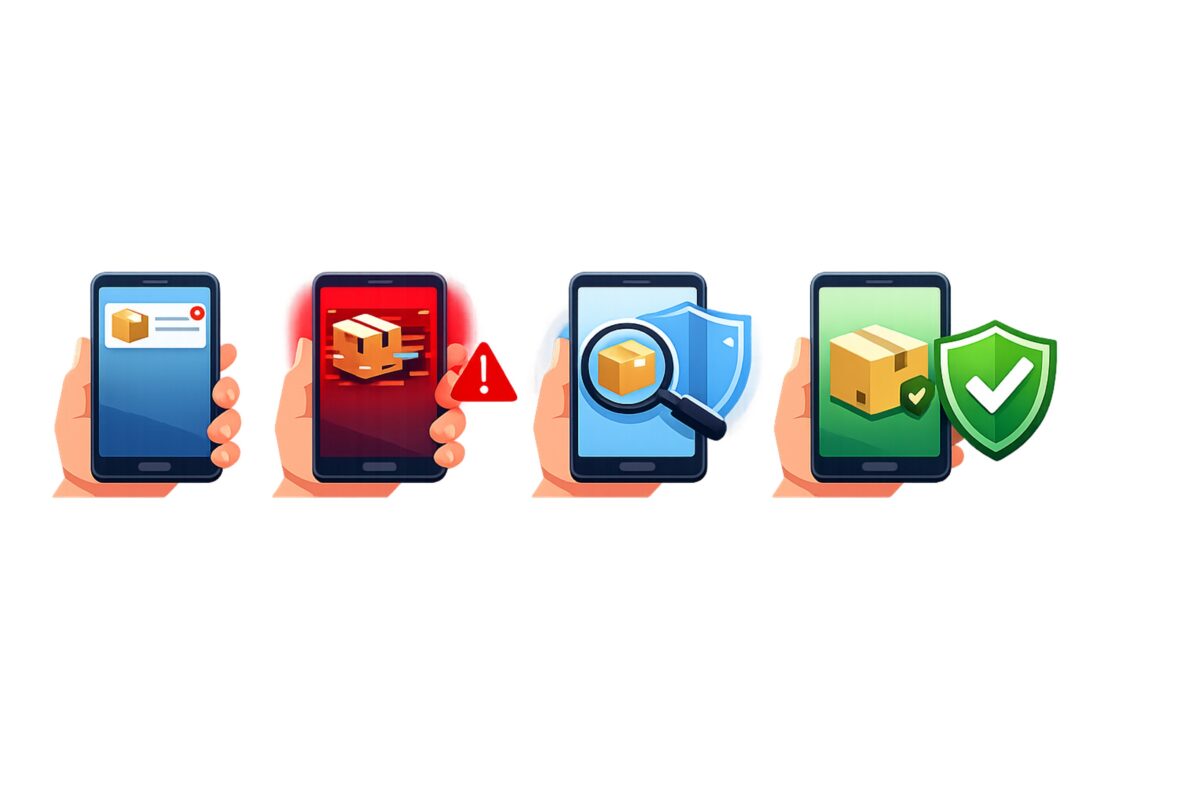
Communities across the country are reporting a significant increase in fake package delivery notifications sent through text messages, emails, and messaging apps. These messages often claim that a package could not be delivered, requires address verification, has unpaid shipping fees, or is waiting for pickup.

At first glance, these notifications appear legitimate. They may use company logos, professional formatting, tracking numbers, and urgent language designed to create concern. The goal is simple: convince the recipient to click a fraudulent link.

Once clicked, victims may be directed to a fake website that requests:

* Credit card information
* Personal identification details
* Account login credentials
* Banking information
* Payment for fake shipping fees

Some websites also attempt to install malware or collect information that can later be used for identity theft and financial fraud.

🚨 Why This Matters Now

Online shopping, food delivery services, subscription boxes, and same-day shipping continue to grow. As more people receive packages regularly, scammers are exploiting the fact that many recipients are often expecting a delivery.

Criminals know that when someone receives a message claiming there is a problem with a package, they are more likely to react quickly without verifying the source.

These scams frequently increase during:

* Holiday shopping seasons
* Major sales events
* Back-to-school periods
* Tax refund season
* Severe weather disruptions affecting deliveries

⚠️ Common Warning Signs

* Messages from unfamiliar phone numbers or email addresses
* Links that do not match the official delivery company’s website
* Requests for small “redelivery” or “processing” fees
* Urgent warnings that a package will be returned immediately
* Spelling errors, awkward wording, or unusual formatting
* Requests for passwords, account credentials, or financial information

🛡️ Critical Safety Guidance

* Never click links in unexpected delivery messages.
* Verify package status directly through the retailer or official delivery app.
* Type official websites into your browser manually instead of using provided links.
* Enable package tracking notifications through trusted retailer apps.
* Use multifactor authentication on shopping and email accounts.
* Report suspicious messages as spam or phishing attempts.

🏘️ Community Impact

Delivery scams affect people of all ages, but seniors and individuals who frequently shop online are often targeted most aggressively. Beyond financial losses, victims may spend months resolving identity theft issues, replacing cards, changing passwords, and recovering compromised accounts.

These scams also reduce public trust in legitimate delivery notifications, making it harder for consumers to distinguish between genuine updates and fraudulent messages.

📱 What To Do If You Clicked a Suspicious Link

If you accidentally click a suspicious delivery link:

* Close the website immediately.
* Do not enter any information.
* Run a security scan on your device.
* Change passwords for affected accounts.
* Monitor bank and credit card activity.
* Contact your financial institution if payment information was entered.

Acting quickly can significantly reduce potential damage.

🔍 Safety Takeaway

A legitimate package company will never pressure you into making immediate payments through random text links. When a delivery message creates urgency, pause, verify, and confirm through official channels before taking action.

Remember:
Track through trusted apps, not unexpected links. A few seconds of verification can prevent months of fraud recovery. 🚚🛡️📦

Categories
Community Alerts and Safety

Fake Parking Ticket QR Codes Are Appearing on Cars — Scammers Are Targeting Drivers Digitally

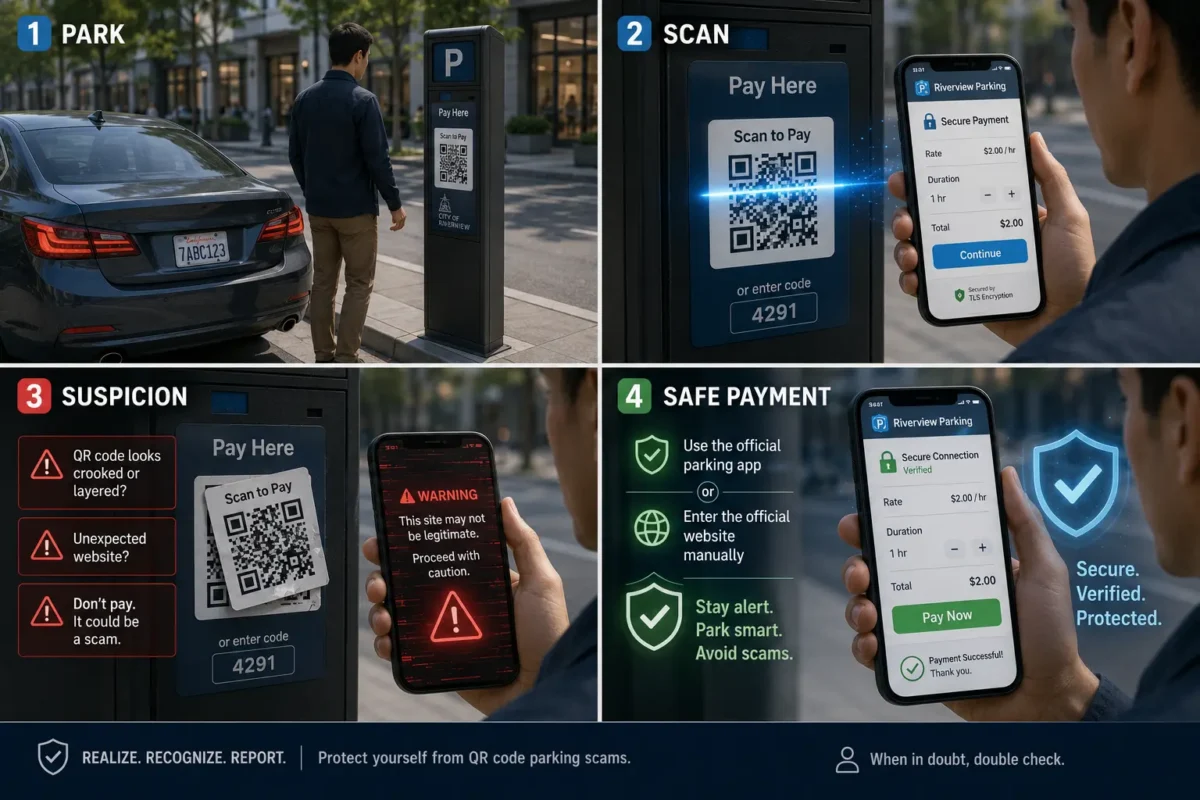
Communities in multiple cities are reporting an increase in fake parking tickets and fraudulent QR code stickers being placed on vehicles, parking meters, and public pay stations. These scams are designed to trick drivers into scanning a code that leads to a fake payment page where criminals can steal credit card information, login credentials, or personal data.

In many cases, the fake QR codes are carefully placed over legitimate payment systems, making them difficult to notice at first glance. Some scammers also leave realistic-looking “violation notices” on windshields that pressure drivers to pay immediately to avoid additional fines or towing.

Because QR code payments have become common for parking apps, transit systems, and digital receipts, many people scan without closely checking the destination link. Criminals are exploiting that trust.

🚨 Why This Matters Now
As cities continue modernizing parking systems and reducing physical kiosks, QR code payment systems are becoming more widespread. At the same time, mobile payment usage has surged, creating new opportunities for scammers to target drivers quickly and anonymously.

Large public events, downtown areas, tourist zones, transportation hubs, and college campuses are especially vulnerable because drivers are often distracted, rushed, or unfamiliar with local parking systems.

⚠️ Common Warning Signs
– QR code stickers placed unevenly or layered over another code
– Payment pages with unusual URLs or misspelled web addresses
– Requests for unnecessary personal information
– Urgent language demanding immediate payment
– Websites lacking secure payment indicators
– “Violation notices” without official city branding or contact details

🛡️ Critical Safety Guidance
– Always inspect QR codes before scanning them.
– Compare suspicious stickers to nearby official parking signs or meters.
– Use official parking apps downloaded directly from app stores whenever possible.
– Manually type the official website if unsure.
– Avoid entering payment information on unfamiliar websites opened through QR scans.
– Report suspicious stickers or fake notices to parking authorities or local law enforcement.

🏙️ Community Impact
These scams affect not only individual victims but also public trust in digital payment systems. Fraudulent parking schemes can lead to stolen financial information, unauthorized charges, and identity theft. In busy cities, a single fake QR code can target dozens or even hundreds of drivers in one day.

As communities increasingly rely on contactless payment technology, public awareness becomes one of the strongest defenses against digital fraud.

🔍 Safety Takeaway
Before you scan, pause and inspect. A quick look at a QR code or payment link can prevent financial loss and identity theft.

Categories
Community Alerts and Safety

Heat Safety Alert: Extreme Temperatures Are Causing a Rise in Heat Illness Emergencies

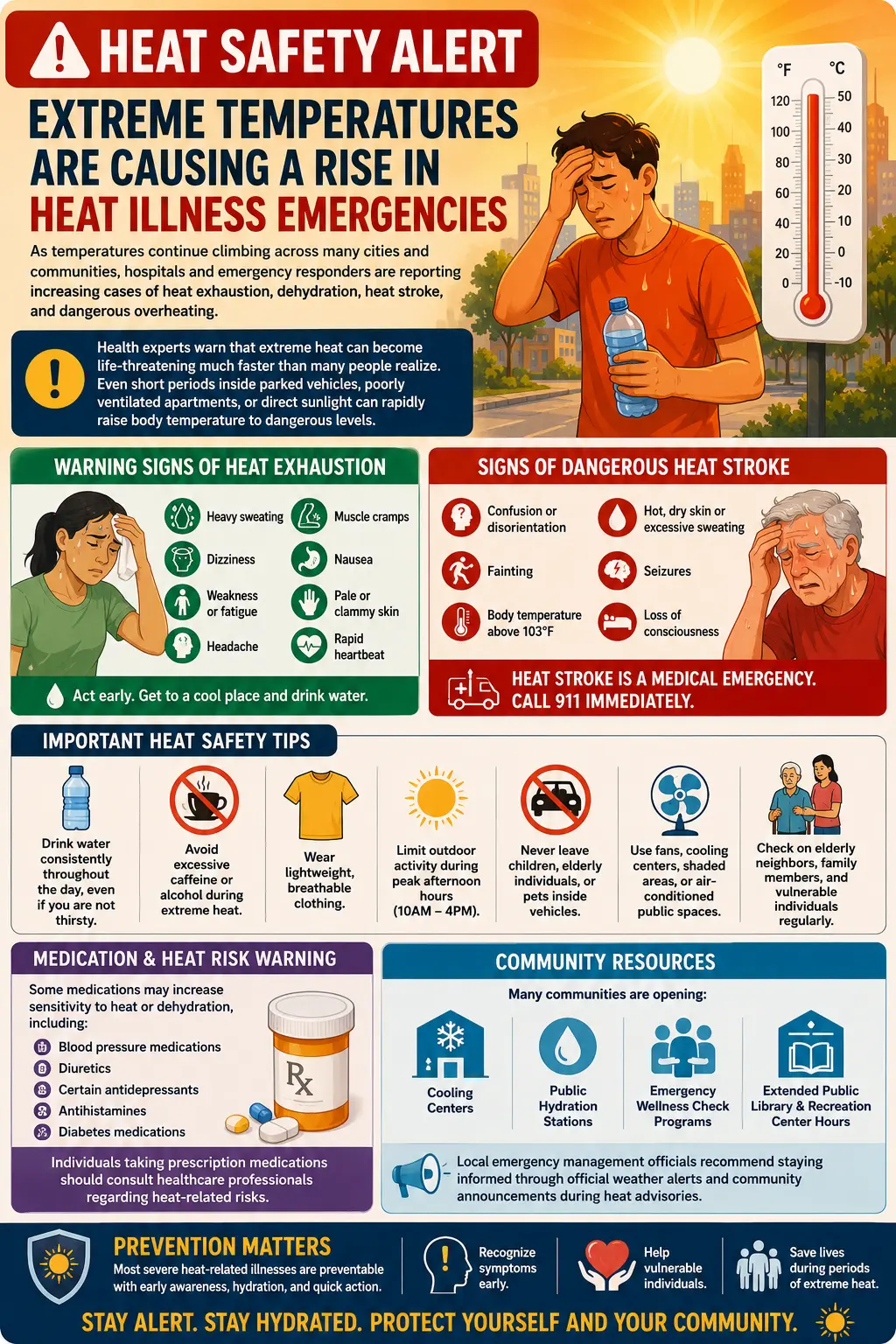
As temperatures continue climbing across many cities and communities, hospitals and emergency responders are reporting increasing cases of heat exhaustion, dehydration, heat stroke, and dangerous overheating — especially among seniors, children, outdoor workers, individuals without air conditioning, and people with medical conditions.

Health experts warn that extreme heat can become life-threatening much faster than many people realize. Even short periods inside parked vehicles, poorly ventilated apartments, or direct sunlight can rapidly raise body temperature to dangerous levels.

Warning Signs of Heat Exhaustion:
– Heavy sweating
– Dizziness
– Weakness or fatigue
– Headache
– Muscle cramps
– Nausea
– Pale or clammy skin
– Rapid heartbeat

Signs of Dangerous Heat Stroke:
– Confusion or disorientation
– Fainting
– Body temperature above 103°F
– Hot, dry skin or excessive sweating
– Seizures
– Loss of consciousness
Heat stroke is a medical emergency and requires immediate assistance.

Important Heat Safety Tips:
– Drink water consistently throughout the day, even if you are not thirsty.
– Avoid excessive caffeine or alcohol during extreme heat.
– Wear lightweight, breathable clothing.
– Limit outdoor activity during peak afternoon hours.
– Never leave children, elderly individuals, or pets inside vehicles.
– Use fans, cooling centers, shaded areas, or air-conditioned public spaces whenever possible.
– Check on elderly neighbors, family members, and vulnerable individuals regularly.

Medication & Heat Risk Warning:
Some medications may increase sensitivity to heat or dehydration, including:
– Blood pressure medications
– Diuretics
– Certain antidepressants
– Antihistamines
– Diabetes medications

Individuals taking prescription medications should consult healthcare professionals regarding heat-related risks.

Community Resources:
Many communities are opening:
– Cooling centers
– Public hydration stations
– Emergency wellness check programs
– Extended public library and recreation center hours

Local emergency management officials recommend staying informed through official weather alerts and community announcements during heat advisories.

Prevention Matters:
Most severe heat-related illnesses are preventable with early awareness, hydration, and quick action. Recognizing symptoms early and helping vulnerable individuals can save lives during periods of extreme heat.

Stay alert. Stay hydrated. Protect yourself and your community.

Categories
Community Alerts and Safety

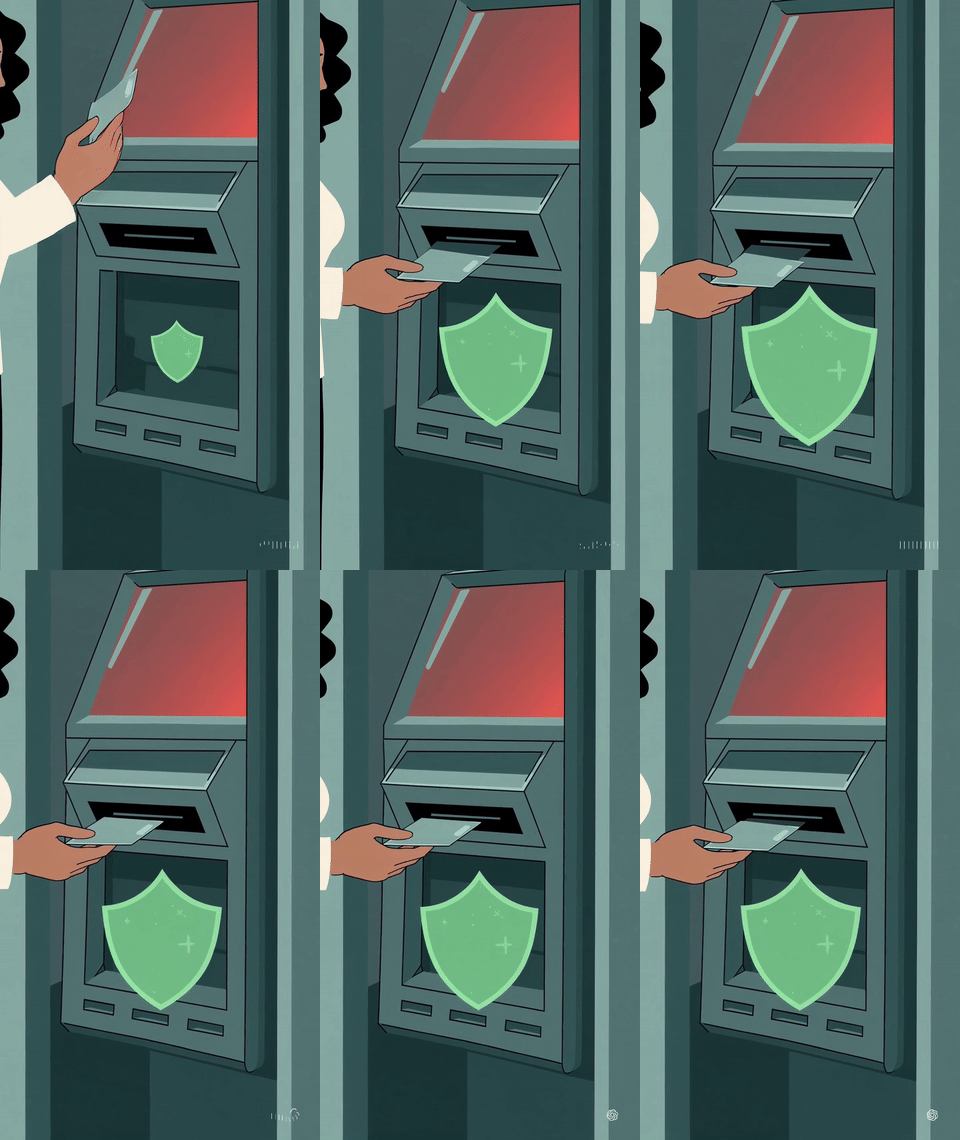
Card Skimming Devices Are Increasing – Protect Your Payments at ATMs and Gas Pumps

Communities are seeing a rise in card skimming and shimming devices placed on ATMs, gas pumps, parking meters, and self-checkout kiosks. These devices are designed to steal card information when you swipe or insert your card. Some are external overlays that fit over the card slot, while others are internal “shimmers” that are nearly invisible and capture data from chip cards.

Criminals often install these devices in high-traffic areas or at unattended machines. In some cases, tiny hidden cameras or fake keypad overlays are used to capture PIN numbers, allowing scammers to create duplicate cards and drain bank accounts within hours.

Why this matters now:
As more people rely on debit cards for everyday purchases and fuel costs rise, card use at gas pumps and ATMs has increased. Many older pumps still lack advanced security features, making them easy targets. Fraud cases often spike during travel seasons, holidays, and large public events.

Common Warning Signs:
– Card slot feels loose, bulky, or difficult to insert
– Keypad appears thicker than normal or hard to press
– Visible adhesive residue or mismatched colors around the reader
– Unusual attachments or misaligned components
– Machines located in poorly lit or isolated areas

Critical Safety Guidance:
– Use ATMs located inside banks or well-lit, high-traffic areas.
– Choose gas pumps closest to the building — these are less likely to be tampered with.
– Cover the keypad when entering your PIN.
– Use contactless payment or mobile wallets when available.
– Monitor bank statements regularly and set up transaction alerts.
– Report suspicious devices immediately to the business or authorities.

Community Impact:
Card skimming not only causes financial loss for individuals but also increases fraud investigations, raises banking costs, and affects local businesses. When multiple victims are targeted in one area, it can indicate organized criminal activity within the community.

Safety Takeaway:
Before you swipe or insert your card, take a second to look and touch. If something feels off, it probably is. Choosing safer machines and payment methods can prevent major financial loss.

Categories
Community Alerts and Safety

Fake Charity Scams Surge After Disasters – Verify Before You Donate

Following natural disasters, emergencies, and major community crises, fraudulent charity campaigns often emerge within hours. Scammers create fake donation pages, impersonate legitimate nonprofits, and spread emotional appeals through social media, text messages, and email. These scams exploit generosity during moments when communities are most eager to help.

Fraudsters frequently use stolen photos, copied logos, and urgent messaging to appear credible. They may claim to support disaster victims, injured first responders, displaced families, or rebuilding efforts. Donations are often requested through peer-to-peer payment apps, cryptocurrency, wire transfers, or unofficial links that bypass legitimate charity platforms.

Why this matters now:
With extreme weather events, global crises, and local emergencies becoming more frequent, communities are seeing a rapid rise in online fundraising campaigns. While many are legitimate, the speed and emotional nature of disaster response create ideal conditions for scams to spread before they can be verified.

Common Red Flags:
– Donation requests that pressure immediate action
– Links that do not match official charity websites
– Requests for payment via gift cards, crypto, or direct transfer
– Social media accounts with little history or recent creation dates
– Poor spelling, inconsistent branding, or copied images
– Claims that funds cannot be traced or receipts will not be provided

Critical Safety Guidance:
– Donate directly through verified nonprofit websites rather than third-party links.
– Confirm charities using trusted resources such as official registries or watchdog organizations.
– Be cautious of emotional appeals that demand urgent action without verifiable details.
– Avoid sharing unverified donation campaigns, even if they appear well-intentioned.
– Report suspected fraud to consumer protection agencies or platform moderators.

Community Impact:
Fake charity scams divert funds away from real victims and relief efforts, undermining trust and slowing recovery. When communities lose confidence in donation campaigns, legitimate aid organizations may struggle to receive the support they need.

Safety Takeaway:
Generosity should never be rushed. Verify before you donate — ensuring your help reaches those who truly need it.

Categories
Community Alerts and Safety

Street Racing & Reckless Driving Incidents Are Rising – Community Safety at Risk

Many communities are reporting an increase in street racing, stunt driving, and reckless speeding, particularly during late-night hours and weekends. These activities often occur on wide streets, industrial zones, highways, and even residential areas where drivers exploit low traffic and open road conditions.

Street racing is not just a nuisance — it poses serious risks to pedestrians, cyclists, residents, and other motorists. High speeds, sudden lane changes, blocked intersections, and spectators gathering near roadways create unpredictable and dangerous conditions. In residential neighborhoods, the noise alone can disrupt sleep, increase stress, and reduce quality of life for families and seniors.

Why this matters now:
Warmer weather, social media coordination, and modified vehicles have contributed to a resurgence of organized and spontaneous racing events. Some participants share locations in real time, drawing crowds and increasing risks for entire neighborhoods.

Common Warning Signs:
– Groups of vehicles gathering late at night in parking lots or wide intersections
– Revving engines, tire squeals, or loud exhaust noises
– Spectators standing near roadways with phones recording
– Vehicles blocking intersections to create makeshift race lanes
– Sudden bursts of high-speed traffic in otherwise quiet areas

Safety Risks to the Community:
– Increased likelihood of crashes and pedestrian injuries
– Delayed emergency response due to blocked roads
– Property damage from loss of vehicle control
– Elevated stress and sleep disruption for residents
– Potential for violence or confrontations in crowded race gatherings

Practical Safety Guidance:
– Avoid approaching or filming street racing events – crowds can quickly become unsafe.
– Report dangerous driving activity to local non-emergency lines when safe to do so.
– Teach teens and young drivers about the legal and life-threatening consequences of racing.
– Advocate for traffic calming measures such as speed humps, signage, and increased lighting.
– Stay alert when driving at night, especially near industrial zones or wide intersections.

Community Impact:
Street racing incidents strain law enforcement resources, endanger first responders, and create lasting safety concerns for neighborhoods. Preventing harm requires awareness, responsible reporting, and community cooperation.

Safety Takeaway:
Reckless driving isn’t entertainment – it’s a community hazard. Staying aware and avoiding high-risk areas helps protect lives.