
Categories
Community Services and Resources

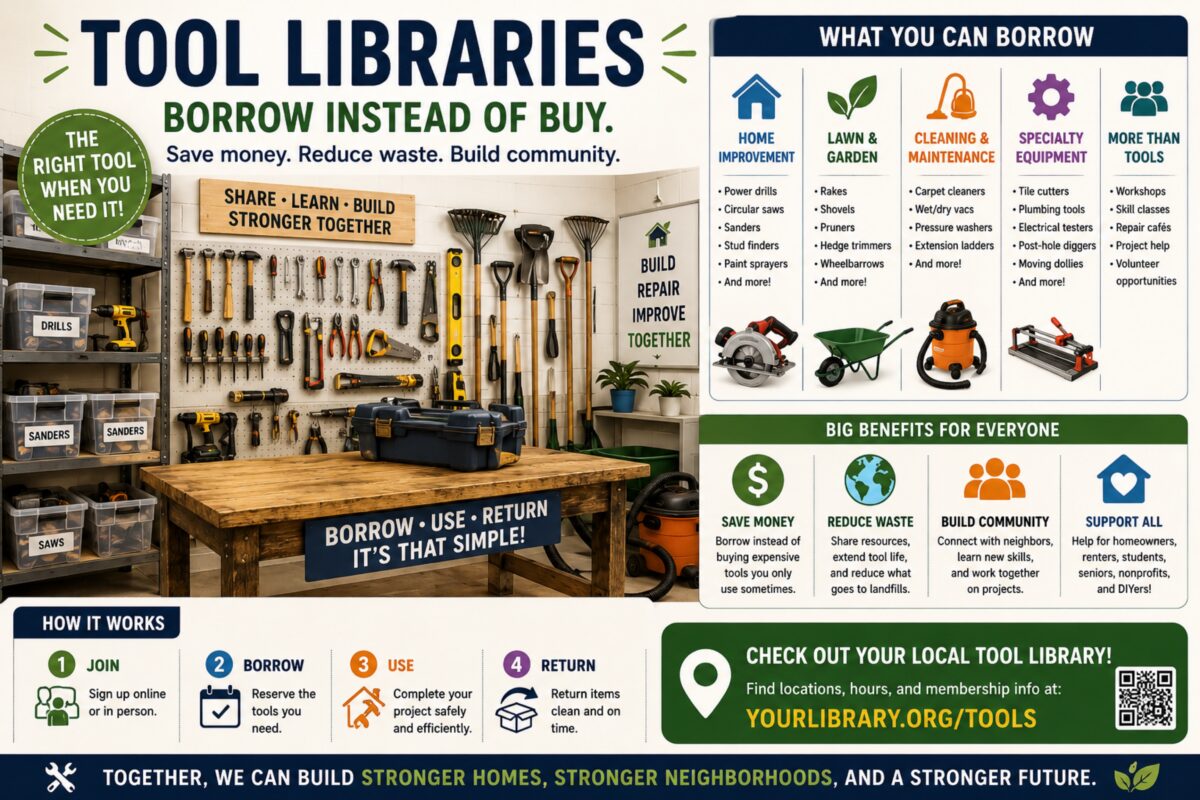
Community Tool Libraries Are Expanding — Borrow Instead of Buy

A growing number of communities are launching or expanding Tool Libraries, allowing residents to borrow tools, equipment, and home improvement supplies just like checking out books from a traditional library.

These programs are helping residents save money, complete projects, learn new skills, and reduce waste by sharing resources that are often only used a few times per year.

Many households own expensive tools that spend most of their lives sitting unused in garages, sheds, basements, or storage units. Tool libraries provide an alternative by making those same resources available to the community when needed.

🔨 Why This Matters Now

As the cost of living continues to rise, many families are looking for practical ways to reduce expenses.

At the same time:

* Home improvement projects remain popular.
* More people are repairing instead of replacing.
* Communities are embracing sustainability initiatives.
* Interest in DIY projects continues to grow.

Tool-sharing programs address all of these needs simultaneously.

🛠️ Items Commonly Available

Depending on the organization, tool libraries may offer:

Home Improvement

* Power drills
* Impact drivers
* Circular saws
* Jigsaws
* Sanders
* Stud finders
* Paint sprayers

Lawn & Garden

* Rakes
* Shovels
* Pruners
* Hedge trimmers
* Wheelbarrows
* Garden tillers

Cleaning & Maintenance

* Carpet cleaners
* Wet/dry vacuums
* Pressure washers
* Extension ladders

Specialty Equipment

* Tile cutters
* Plumbing tools
* Electrical testing equipment
* Moving dollies
* Post-hole diggers

Some locations even provide workshops, training sessions, and project guidance.

💰 Financial Benefits

Many tools cost:

* $50–$100 for occasional-use hand tools
* $200–$500 for power equipment
* $1,000+ for specialized tools

Borrowing instead of purchasing can save hundreds or even thousands of dollars annually.

For homeowners, renters, community groups, and nonprofits, these savings can be substantial.

🌎 Environmental Benefits

Tool-sharing programs also help:

* Reduce manufacturing demand
* Lower waste generation
* Extend equipment lifespan
* Reduce storage needs
* Promote responsible consumption

A single shared tool may replace dozens of individually owned tools.

👥 Community Benefits

Tool libraries often become more than equipment lending programs.

They frequently foster:

* Neighborhood collaboration
* Skill sharing
* Volunteer opportunities
* Community improvement projects
* DIY education
* Environmental stewardship

Many communities report stronger neighborhood connections when residents share resources and knowledge.

📚 Additional Resources Often Offered

Some organizations provide:

* Repair cafés
* Home maintenance classes
* Gardening workshops
* Safety training
* Volunteer mentor programs
* Community build days

These services help residents develop practical skills while strengthening community engagement.

🏘️ Who Benefits Most?

Tool libraries are particularly useful for:

* First-time homeowners
* Renters
* Seniors
* Students
* Community organizations
* Small nonprofits
* DIY enthusiasts
* Low-income households

They provide access to resources that might otherwise be financially out of reach.

🔍 Resource Takeaway

You may not need to own every tool you use.

Many communities now offer ways to borrow equipment, save money, reduce waste, and build stronger neighborhoods through resource sharing.

Remember:
Sometimes the smartest purchase is not purchasing at all. Borrow, build, save, and share. 🔨🏡🌎🤝

Categories
Community Services and Resources

Cooling & Warming Centers Are Expanding – Know Where to Go During Extreme Temperatures

Cities and counties across the country are expanding access to cooling centers in extreme heat and warming centers during severe cold to protect residents from dangerous weather conditions. These facilities – often located in libraries, community centers, schools, faith-based buildings, and senior centers – provide safe, climate-controlled spaces for individuals who lack adequate heating or air conditioning.

Extreme temperatures can pose serious health risks, including heat exhaustion, heat stroke, hypothermia, and frostbite. Vulnerable populations – such as seniors, young children, people with medical conditions, outdoor workers, and individuals experiencing homelessness – are especially at risk.

Why this matters now:
Climate variability and extreme weather events are increasing in frequency and intensity. Heat waves and cold snaps are affecting regions that historically experienced milder conditions, leaving many residents unprepared. Power outages and rising utility costs can further limit access to safe indoor temperatures.

Services Often Provided at Centers:
– Air-conditioned or heated indoor spaces
– Drinking water and basic refreshments
– Seating and rest areas
– Phone charging stations
– Access to restrooms
– Information about local assistance programs
– Transportation assistance in some areas

How to Find a Center:
– Check your city or county government website.
– Call local non-emergency services or community hotlines.
-Visit libraries, community centers, or senior centers for posted information.
– Follow official social media accounts for emergency location updates.

Practical Safety Guidance:
– Plan ahead during heat waves or cold advisories.
– Check on neighbors, especially seniors or those living alone.
– Bring necessary medications, water bottles, and identification when visiting centers.
-Use public transportation or community ride programs if available.

Community Impact:
Cooling and warming centers reduce emergency room visits, prevent weather-related deaths, and provide essential relief during extreme conditions. They also serve as hubs for connecting residents with broader social services and support networks.

Resource Takeaway:
When temperatures become dangerous, you don’t have to face it alone. Knowing where your local cooling or warming center is located can protect your health and save lives.

Categories
Community Services and Resources

Utility Assistance Programs Are Expanding During High Energy Costs

With energy prices remaining high, many states and local agencies are expanding utility assistance programs to help residents cover heating, cooling, and electricity bills. Support may include bill credits, emergency shut-off protections, payment plans, and energy-efficiency assistance. Availability and eligibility can change quickly, so checking official state or utility websites is important.

Why this matters now:
Extreme temperatures and rising energy costs are putting pressure on household budgets, especially for seniors, families, and people with fixed incomes.

Categories
Community Services and Resources

Public Assistance Offices Are Expanding Online & Appointment-Only Services

Many local government offices that handle public assistance, such as housing support, food benefits, unemployment services, and utility aid, are shifting to online portals and appointment-only visits. Walk-in availability is becoming limited, while digital applications, document uploads, and scheduled appointments are now the fastest way to receive help.

Why this matters now:
High demand for assistance, staffing shortages, and increased digital modernization mean people who rely on walk-ins may face delays. Knowing to check official websites first can save hours or even days.

Categories
Community Services and Resources

Local Cooling & Warming Centers Are Active During Extreme Weather

During periods of extreme heat or cold, cities and counties activate cooling centers and warming centers to protect residents from weather related health risks. These centers provide a safe, temperature controlled space, water, restrooms, and sometimes medical support. Availability often changes based on weather alerts, so checking local city or county announcements is key.

Why this matters now:
Extreme weather events are becoming more frequent, and many residents especially seniors, unhoused individuals, and families without reliable heating or cooling depend on these services for safety.

Categories
Community Services and Resources

Ever feel like you’re navigating life alone?

The good news is, you’re not. Every community is full of services and resources designed to help its residents thrive. These aren’t just for people in a crisis; they’re for everyone, and using them strengthens the entire community.

These community services are the glue that holds a neighborhood together, working to improve the well-being of everyone. They are incredibly diverse, from local food banks and housing assistance to public libraries and after school programs. They also include health clinics, community gardens, and even civic groups like neighborhood watches. These resources provide a vital safety net and help ensure that everyone has a chance to succeed, regardless of their background or circumstances.

When we use and support these services, we’re not just helping ourselves we’re building a stronger community. For example, community centers and libraries create spaces where people can meet and build relationships, which helps fight isolation and fosters a sense of belonging. Access to health services and wellness programs helps people stay healthy, both physically and mentally. Additionally, educational resources and job training programs empower individuals with the skills they need to grow, find better jobs, and achieve their personal goals.

Finding these resources is easier than you might think. You can start by simply asking around or checking your local government’s website. A fantastic resource is 2-1-1, a confidential phone service that connects you to essential community services. You can also look for volunteer centers in your area to find ways to give back and help others. Volunteering is a great way to not only contribute but also to meet new people and learn new skills. Whether you’re in need of a little help or looking to lend a hand, remember that community services are there for you. Let’s make our communities a better place, together!

Categories
Community Services and Resources

Federally Qualified Health Centers (FQHCs)

Federally Qualified Health Centers (FQHCs) are nonprofit, community-based clinics that provide comprehensive primary care including medical, dental, behavioral, and preventive services to underserved populations, including low‑income, uninsured, and immigrant communities. These centers serve patients regardless of ability to pay, with at least 51% of their governing board made up of patients. In 2025, they remain vital safety‑net providers handling thousands of visits annually and bridging gaps in healthcare equity.