
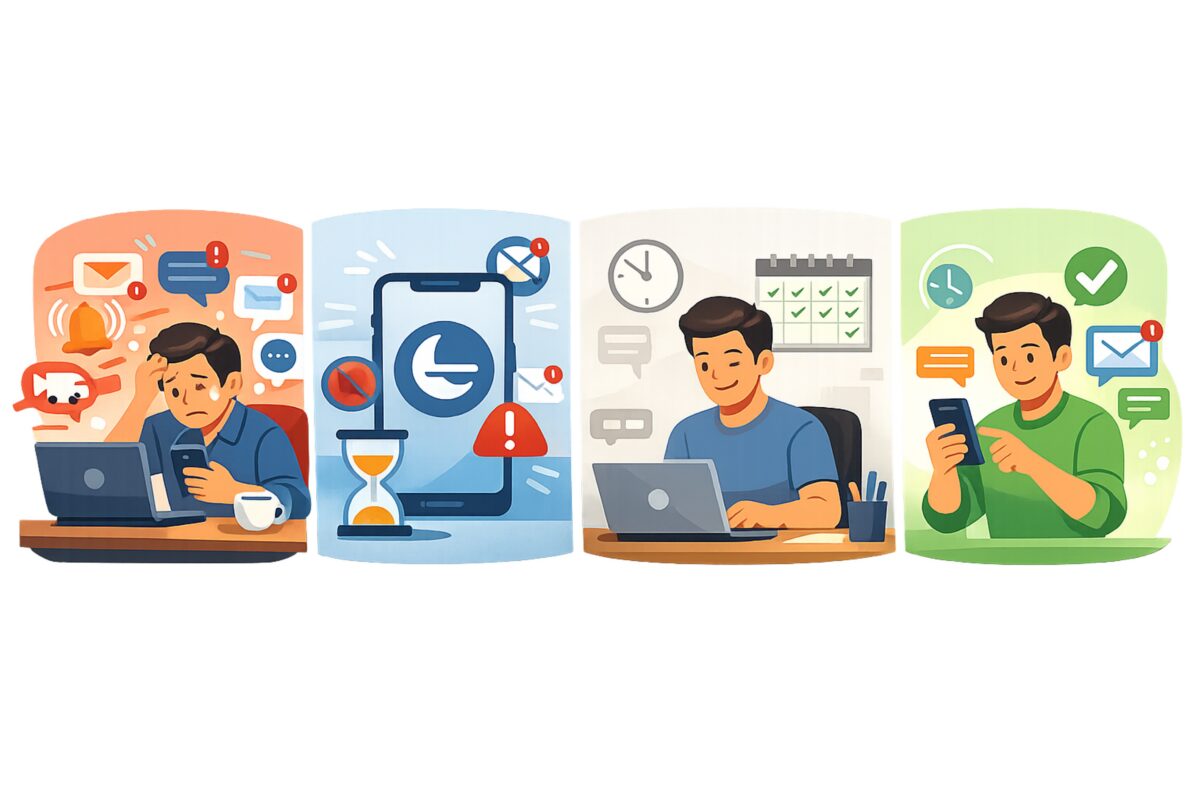
As smartphones, messaging apps, social media platforms, email services, delivery notifications, banking alerts, AI assistants, and workplace collaboration tools continue to multiply, many people are experiencing what productivity experts call notification fatigue.
The average person receives dozens—sometimes hundreds—of alerts each day. While each notification may seem harmless on its own, constant interruptions can significantly impact concentration, productivity, and mental clarity.
Researchers have found that every interruption forces the brain to shift attention away from the task at hand. Even brief distractions can create a “switching cost,” requiring additional time and mental energy to regain focus. Over the course of a day, these interruptions can add up to hours of lost productivity.
📱 Why This Matters Now
Modern life is increasingly connected.
Many people now manage:
* Work emails
* Team chats
* Social media messages
* Banking notifications
* Delivery updates
* Calendar reminders
* News alerts
* AI assistant notifications
* Smart home alerts
Because all of these compete for attention simultaneously, people often find themselves reacting instead of focusing.
This constant state of interruption has been linked to:
* Reduced concentration
* Increased stress
* Mental fatigue
* Lower productivity
* More mistakes
* Difficulty completing deep work
⚠️ Common Signs of Notification Fatigue
* Constantly checking your phone
* Forgetting what you were working on
* Starting multiple tasks without finishing them
* Feeling mentally exhausted by mid-afternoon
* Difficulty concentrating on reading or learning
* Increased stress when notifications appear
Many people don’t realize how much these interruptions affect them until they intentionally reduce them.
💡 The Productivity Hack: Batch Checking
Instead of responding to every alert immediately, productivity experts recommend batch checking.
This means reviewing messages, emails, and notifications during specific times rather than throughout the day.
Example schedule:
* Morning check
* Midday check
* Afternoon check
* End-of-day check
This allows uninterrupted blocks of focus while still staying informed.
⏱️ Additional Productivity Tips
* Disable non-essential notifications.
* Turn off social media alerts.
* Use “Do Not Disturb” during focused work.
* Place your phone face-down while working.
* Create dedicated focus periods.
* Use notification summaries instead of real-time alerts.
* Separate work apps from personal apps when possible.
🧠 Mental Benefits
Reducing interruptions may help:
* Improve focus
* Increase productivity
* Reduce stress
* Improve memory retention
* Increase creativity
* Improve decision-making
* Reduce mental exhaustion
Many people report feeling calmer within days of reducing unnecessary notifications.
🚀 Real-World Impact
The goal is not to disconnect from technology.
The goal is to control when technology gets your attention rather than allowing it to control your day.
Small changes to notification settings often produce immediate improvements in productivity and mental clarity.
🔍 Productivity Takeaway
Every notification asks your brain to stop what it’s doing.
The fewer unnecessary interruptions you allow, the more time, energy, and focus you regain.
Remember:
Protect your attention like a valuable resource—because it is. 📱🎯🧠⚡