
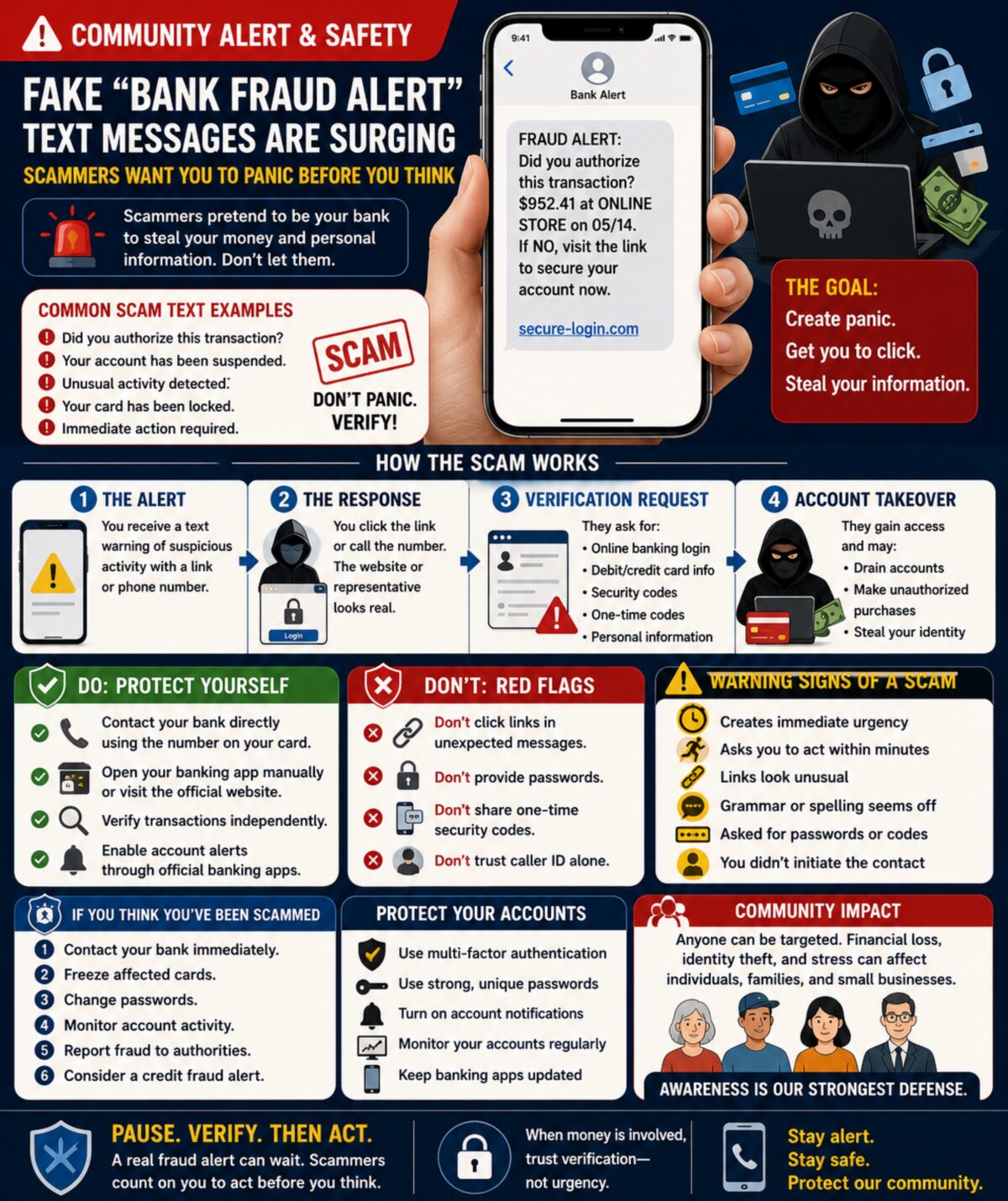
Communities nationwide are seeing a sharp increase in fraud alert impersonation scams, where criminals send text messages claiming to be from a bank, credit union, payment app, or credit card company.
The messages often appear urgent and alarming:
* “Did you authorize this transaction?”
* “Your account has been suspended.”
* “Unusual activity detected.”
* “Your card has been locked.”
* “Immediate action required.”
The goal is simple: create panic.
Scammers know that when people believe their money is at risk, they are more likely to react quickly without carefully verifying the message.
🚨 Why This Matters Now
Financial institutions are increasingly using legitimate fraud alerts to protect customers.
Unfortunately, criminals are exploiting that familiarity.
Modern scam texts often:
* Look professionally designed
* Use bank-like language
* Mimic legitimate fraud departments
* Include realistic links
* Use spoofed phone numbers
Some even arrive within existing message threads, making them appear more trustworthy.
⚠️ How the Scam Typically Works
Step 1 — The Alert
The victim receives a text warning of suspicious activity.
A link or phone number is provided.
Step 2 — The Response
The victim clicks the link or calls the number.
The website or representative appears legitimate.
Step 3 — Verification Request
The scammer requests:
* Online banking credentials
* Debit card information
* Security codes
* One-time authentication codes
* Personal information
Many victims believe they are speaking with legitimate bank representatives.
Step 4 — Account Takeover
Once access is obtained:
* Accounts may be drained
* Cards may be compromised
* Personal information may be stolen
* New fraud may be committed using the victim’s identity
🛡️ Critical Safety Guidance
If you receive a fraud alert:
DO:
✔ Contact your bank directly using the number on your card.
✔ Open your banking app manually.
✔ Log in through official channels.
✔ Verify transactions independently.
✔ Enable account alerts through official banking apps.
DON’T:
❌ Click links in unexpected messages.
❌ Provide passwords.
❌ Provide one-time security codes.
❌ Share authentication texts.
❌ Trust caller ID alone.
📱 Warning Signs of a Scam
Be suspicious if:
* The message creates immediate urgency.
* It asks you to act within minutes.
* Links look unusual.
* Grammar seems odd.
* You are asked for passwords.
* You are asked for verification codes.
Legitimate banks generally do not request sensitive authentication information through unsolicited texts.
🏘️ Community Impact
These scams affect:
* Seniors
* Young adults
* Small business owners
* Online shoppers
* Mobile banking users
Financial losses can range from a few dollars to entire account balances.
Beyond monetary losses, victims often spend months restoring accounts, replacing cards, updating passwords, and repairing identity theft damage.
🔒 How To Protect Yourself
Experts recommend:
* Multi-factor authentication
* Strong unique passwords
* Account activity notifications
* Banking app security features
* Regular account monitoring
Awareness remains one of the most effective defenses.
🚔 What To Do If You Fall Victim
If you believe you’ve interacted with a scam:
1. Contact your bank immediately.
2. Freeze affected cards.
3. Change passwords.
4. Monitor account activity.
5. Report fraud to relevant authorities.
6. Enable fraud alerts on credit files if necessary.
The faster you respond, the greater the chance of limiting financial damage.
🔍 Safety Takeaway
Scammers want you to react emotionally.
Protect yourself by slowing down.
Pause. Verify. Then act.
A real fraud alert can wait long enough for you to confirm it through official channels.
📱🛡️💳 When money is involved, trust verification—not urgency.