
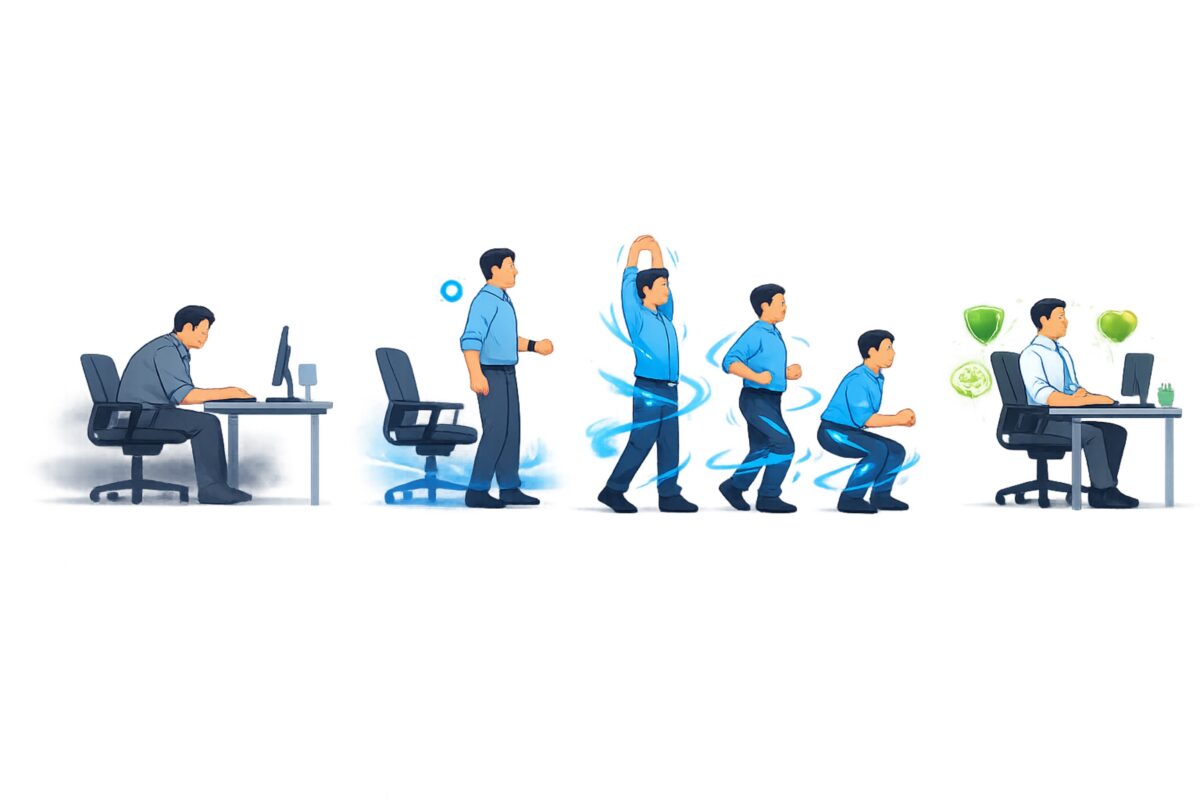
Health professionals are increasingly warning about the effects of prolonged sitting, a growing concern as more people work remotely, spend hours on computers, stream entertainment, and rely on mobile devices throughout the day. While many people focus on exercise, research suggests that long periods of uninterrupted sitting may have negative effects on health even for individuals who regularly work out.
To combat this, wellness experts are promoting what are known as “movement snacks” — short bursts of physical activity lasting anywhere from 30 seconds to 5 minutes throughout the day. These small movement breaks can help improve circulation, reduce muscle stiffness, boost energy levels, and support overall health without requiring a full workout.
Unlike traditional exercise sessions, movement snacks are designed to fit naturally into everyday routines. Examples include standing up and stretching during phone calls, walking while listening to podcasts, taking stairs instead of elevators, or performing a few bodyweight movements between tasks.
🚶 Why This Matters Now
Modern lifestyles are becoming increasingly sedentary.
Many people now spend:
* 8–10 hours working at desks
* Additional hours driving or commuting
* Even more time using phones, tablets, televisions, and computers
The result is that some individuals may spend the majority of their waking hours seated.
Health researchers have linked prolonged sedentary behavior to:
* Reduced circulation
* Increased fatigue
* Back and neck discomfort
* Poor posture
* Elevated stress levels
* Increased risk of metabolic health issues
* Lower energy and productivity
As workplaces continue to embrace remote and hybrid models, movement throughout the day is becoming an increasingly important wellness strategy.
⚠️ Common Signs You’re Sitting Too Much
* Tight hips or lower back discomfort
* Stiff neck and shoulders
* Feeling sluggish in the afternoon
* Frequent headaches
* Poor posture
* Reduced concentration
* Feeling tired despite getting enough sleep
Many people attribute these symptoms to stress or aging when inactivity may be contributing significantly.
💡 Examples of “Movement Snacks”
Health experts recommend incorporating simple movement throughout the day, such as:
* Standing and stretching every 30–60 minutes
* Taking a short walk around the office or home
* Performing a few squats or calf raises
* Walking during phone calls
* Using a standing desk periodically
* Doing light mobility exercises between meetings
* Parking farther away from destinations
* Choosing stairs when available
Even a minute or two of movement can help break up long periods of sitting.
🧠 Mental Wellness Benefits
Movement doesn’t just affect the body.
Brief activity breaks may help:
* Improve focus and concentration
* Reduce mental fatigue
* Improve mood
* Lower stress levels
* Increase productivity
* Promote better sleep quality
Many people report feeling more alert and energized after even a short movement break.
❤️ Long-Term Health Benefits
Regular movement throughout the day may support:
* Better cardiovascular health
* Improved circulation
* Healthier blood sugar regulation
* Reduced muscle stiffness
* Better posture
* Increased mobility
* Greater overall physical resilience
Combined with proper sleep, hydration, nutrition, and exercise, frequent movement creates a stronger foundation for long-term wellness.
🏃 Practical Wellness Guidance
Try setting a recurring timer every hour.
When it goes off:
1. Stand up.
2. Stretch.
3. Walk for one minute.
4. Resume your activity.
This simple habit can add dozens of minutes of healthy movement to your day without requiring extra gym time.
🔍 Wellness Takeaway
You don’t need a one-hour workout to improve your health.
Small amounts of movement performed consistently throughout the day can have a surprisingly positive impact on physical health, mental clarity, energy levels, and overall well-being.
Remember:
The body was built to move. Even a few minutes of activity can help counteract hours of sitting. 🚶💙🧠💪