
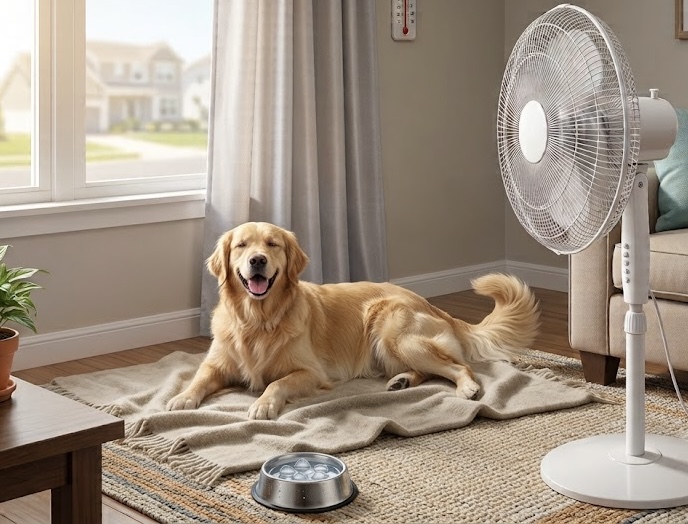
Our pets love a good sunny day just as much as we do, but when a summer heat wave hits, the outdoor world becomes dangerous for them incredibly fast. Because dogs and cats don’t sweat through their skin the way humans do, they have a much harder time regulating their body temperature. Dogs rely almost entirely on panting to release heat, which becomes highly inefficient when the air around them is thick, hot, and humid. Because our furry companions can’t tell us when they are pushing past their limits, it is up to us to get a clue, recognize the subtle warning signs of heat stress, and adjust our routines to keep them safe.
Catching the early red flags of a heat-related illness can quite literally be a lifesaver. You should monitor your pet closely during high temperatures for frantic, heavy panting that sounds harsh or loud, along with excessive drooling of thick, ropey saliva. Another clear warning sign is the color of their gums; lifting your dog’s lip should reveal a healthy pink, so if you see bright red, dark purple, or completely pale, dry gums, their circulatory system is in serious trouble. If the heat stress progresses, pets will become lethargic, stumble, appear disoriented, or even begin vomiting, which are major indicators of heat stroke that require immediate veterinary attention.
If you ever need to cool down an overheating pet, the method you use matters just as much as how fast you act. You should apply cool or lukewarm water to their belly, armpits, and paw pads, or wrap them in damp towels while running a fan nearby. It is a common instinct to reach for ice or submerge an overheated dog in an ice-filled bath, but this is actually highly dangerous. Ice-cold water causes the blood vessels near the surface of the skin to constrict sharply, which effectively traps the intense heat inside their vital organs and makes the internal heat stroke even worse. Stick to cool water and call your vet immediately while you work on lowering their temperature.
Beyond the air temperature, summer brings a massive hidden hazard right to the ground we walk on. Asphalt and concrete absorb and retain an incredible amount of solar energy, meaning that on a sunny 85°F day, the pavement can easily skyrocket to a scorching 130°F. This is hot enough to severely burn and blister a dog’s sensitive paw pads in just a few minutes of walking. Before heading outside, always perform the seven-second test by pressing the back of your bare hand firmly against the pavement. If you cannot comfortably keep it there for a full seven seconds, it is far too hot for your pet, and you should shift your walks to the grass or wait until the early morning or late evening when the ground has cooled.
Keeping pets safe during a heat wave also means avoiding a few common summer mistakes that well-meaning owners often make. First, you should never shave a double-coated dog breed, such as a Husky, Shepherd, or Golden Retriever, because their dense undercoat actually acts as a natural insulation system that keeps them cool in the summer and protects their skin from severe sunburn. Second, if you leave the house for errands, always leave the air conditioning running at a safe temperature for the pets staying behind, and absolutely never leave a pet inside a parked car. Even with the windows cracked on a mild day, a vehicle’s interior acts like a greenhouse, soaring past 100°F in a mere ten minutes and creating a fatal trap before you even realize it.