
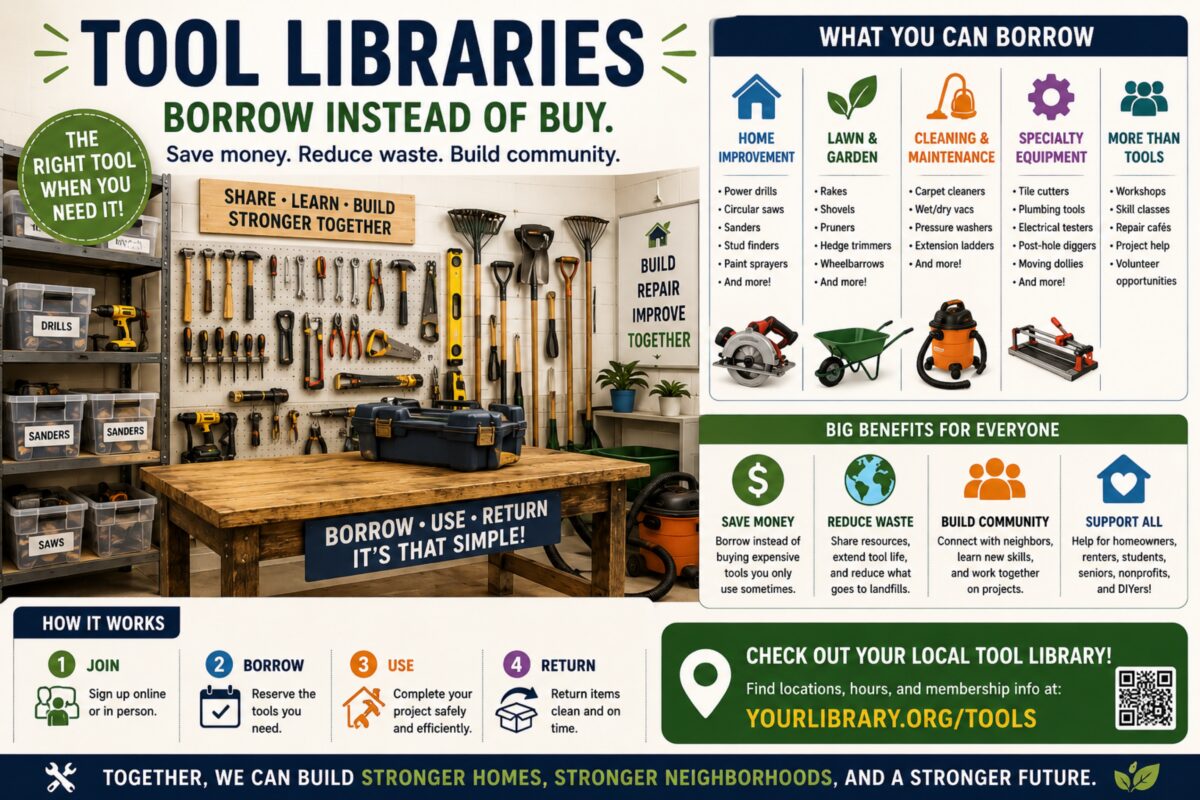
A growing number of communities are launching or expanding Tool Libraries, allowing residents to borrow tools, equipment, and home improvement supplies just like checking out books from a traditional library.
These programs are helping residents save money, complete projects, learn new skills, and reduce waste by sharing resources that are often only used a few times per year.
Many households own expensive tools that spend most of their lives sitting unused in garages, sheds, basements, or storage units. Tool libraries provide an alternative by making those same resources available to the community when needed.
🔨 Why This Matters Now
As the cost of living continues to rise, many families are looking for practical ways to reduce expenses.
At the same time:
* Home improvement projects remain popular.
* More people are repairing instead of replacing.
* Communities are embracing sustainability initiatives.
* Interest in DIY projects continues to grow.
Tool-sharing programs address all of these needs simultaneously.
🛠️ Items Commonly Available
Depending on the organization, tool libraries may offer:
Home Improvement
* Power drills
* Impact drivers
* Circular saws
* Jigsaws
* Sanders
* Stud finders
* Paint sprayers
Lawn & Garden
* Rakes
* Shovels
* Pruners
* Hedge trimmers
* Wheelbarrows
* Garden tillers
Cleaning & Maintenance
* Carpet cleaners
* Wet/dry vacuums
* Pressure washers
* Extension ladders
Specialty Equipment
* Tile cutters
* Plumbing tools
* Electrical testing equipment
* Moving dollies
* Post-hole diggers
Some locations even provide workshops, training sessions, and project guidance.
💰 Financial Benefits
Many tools cost:
* $50–$100 for occasional-use hand tools
* $200–$500 for power equipment
* $1,000+ for specialized tools
Borrowing instead of purchasing can save hundreds or even thousands of dollars annually.
For homeowners, renters, community groups, and nonprofits, these savings can be substantial.
🌎 Environmental Benefits
Tool-sharing programs also help:
* Reduce manufacturing demand
* Lower waste generation
* Extend equipment lifespan
* Reduce storage needs
* Promote responsible consumption
A single shared tool may replace dozens of individually owned tools.
👥 Community Benefits
Tool libraries often become more than equipment lending programs.
They frequently foster:
* Neighborhood collaboration
* Skill sharing
* Volunteer opportunities
* Community improvement projects
* DIY education
* Environmental stewardship
Many communities report stronger neighborhood connections when residents share resources and knowledge.
📚 Additional Resources Often Offered
Some organizations provide:
* Repair cafés
* Home maintenance classes
* Gardening workshops
* Safety training
* Volunteer mentor programs
* Community build days
These services help residents develop practical skills while strengthening community engagement.
🏘️ Who Benefits Most?
Tool libraries are particularly useful for:
* First-time homeowners
* Renters
* Seniors
* Students
* Community organizations
* Small nonprofits
* DIY enthusiasts
* Low-income households
They provide access to resources that might otherwise be financially out of reach.
🔍 Resource Takeaway
You may not need to own every tool you use.
Many communities now offer ways to borrow equipment, save money, reduce waste, and build stronger neighborhoods through resource sharing.
Remember:
Sometimes the smartest purchase is not purchasing at all. Borrow, build, save, and share. 🔨🏡🌎🤝