
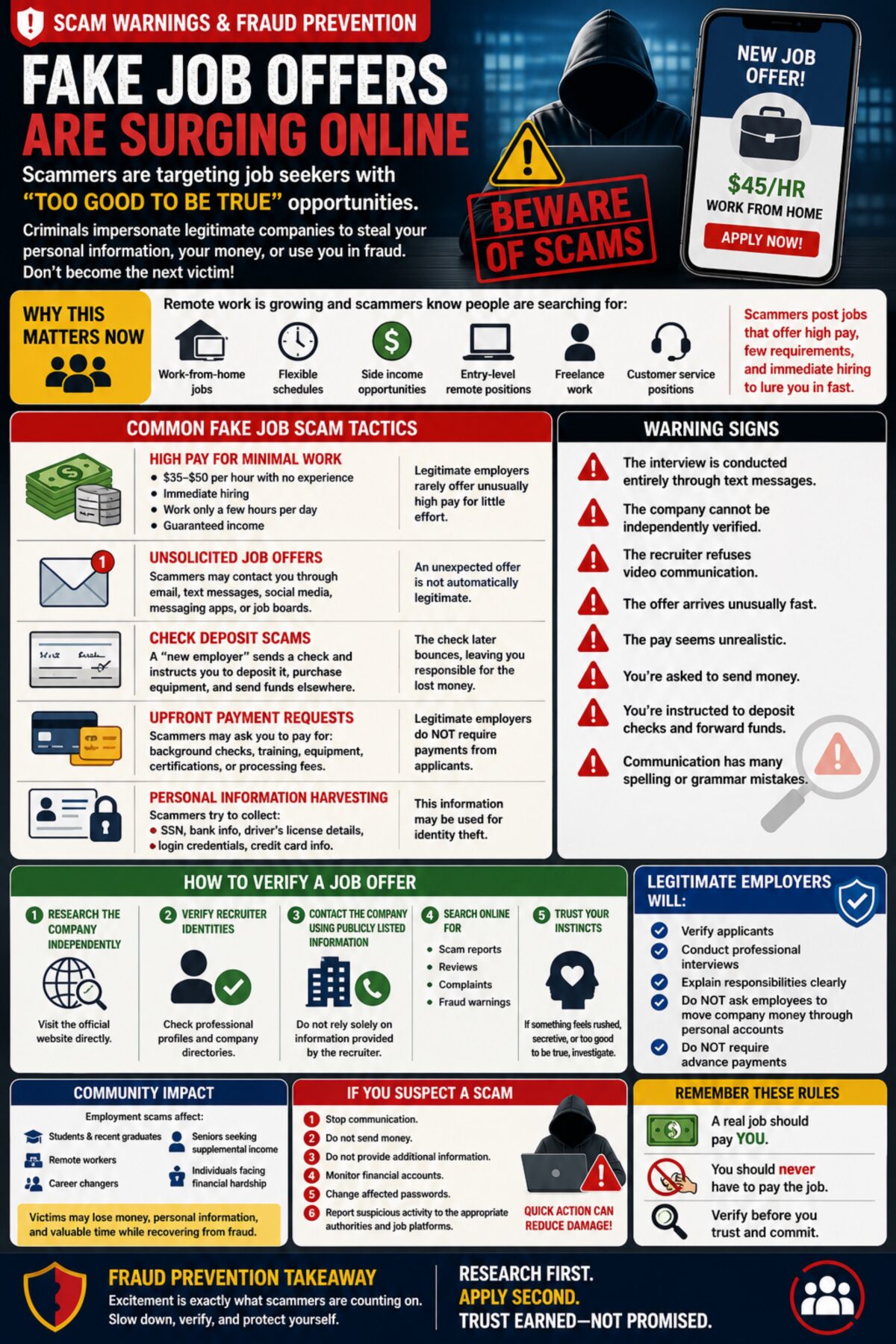
As more employers embrace remote work, online recruiting, and digital hiring platforms, scammers are increasingly impersonating legitimate companies to trick job seekers into revealing personal information, sending money, or performing fraudulent financial transactions.
These fake job scams often appear highly professional. Criminals may create convincing websites, copy real company logos, use fake recruiter profiles, conduct online interviews, and even provide fraudulent employment paperwork.
The scam works because job seekers are often excited, hopeful, and eager to respond quickly when presented with an attractive opportunity.
Unfortunately, many victims don’t discover the deception until after sensitive information or money has already been lost.
🚨 Why This Matters Now
Remote work opportunities continue to grow.
People frequently search for:
* Work-from-home jobs
* Flexible schedules
* Side income opportunities
* Entry-level remote positions
* Freelance work
* Administrative jobs
* Customer service positions
Scammers know this.
They intentionally target individuals seeking employment by advertising positions that offer unusually high pay, minimal qualifications, or immediate hiring.
⚠️ Common Fake Job Scam Tactics
💰 High Pay for Minimal Work
Examples:
* $35–$50 per hour with no experience
* Immediate hiring
* Work only a few hours per day
* Guaranteed income
Legitimate employers rarely offer unusually high compensation for little effort.
📧 Unsolicited Job Offers
Scammers may contact victims through:
* Email
* Text messages
* Social media
* Messaging apps
* Job boards
Receiving an unexpected offer does not automatically mean it is legitimate.
🏦 Check Deposit Scams
A “new employer” sends a check and instructs the victim to:
* Deposit it
* Purchase equipment
* Send funds elsewhere
The check later bounces, leaving the victim responsible for the lost money.
💳 Upfront Payment Requests
Legitimate employers generally do not require applicants to pay for:
* Background checks
* Training
* Equipment
* Certifications
* Processing fees
Requests for payment should immediately raise concern.
🔐 Personal Information Harvesting
Scammers often attempt to collect:
* Social Security numbers
* Bank account information
* Driver’s license details
* Login credentials
* Credit card information
This information may later be used for identity theft.
🚩 Warning Signs**
Be cautious if:
❌ The interview is conducted entirely through text messages.
❌ The company cannot be independently verified.
❌ The recruiter refuses video communication.
❌ The offer arrives unusually quickly.
❌ The pay seems unrealistic.
❌ You’re asked to send money.
❌ You’re instructed to deposit checks and forward funds.
❌ Communication contains numerous spelling or grammar mistakes.
🛡️ How To Verify A Job Offer
Before accepting:
Step 1
Research the company independently.
Visit the official website directly.
Step 2
Verify recruiter identities.
Check professional profiles and company directories.
Step 3
Contact the company using publicly listed contact information.
Do not rely solely on information provided by the recruiter.
Step 4
Search online for:
* Scam reports
* Reviews
* Complaints
* Fraud warnings
Step 5
Trust your instincts.
If something feels rushed, secretive, or unusually generous, investigate further.
💡 Remember These Rules
Legitimate employers:
✔ Verify applicants
✔ Conduct professional interviews
✔ Explain responsibilities clearly
✔ Do not ask employees to move company money through personal accounts
✔ Do not require advance payments
🌎 Community Impact
Employment scams affect:
* Students
* Recent graduates
* Remote workers
* Career changers
* Seniors seeking supplemental income
* Individuals facing financial hardship
Victims may lose money, personal information, and valuable time while recovering from fraud.
🚔 If You Suspect A Scam
Immediately:
1. Stop communication.
2. Do not send money.
3. Do not provide additional information.
4. Monitor financial accounts.
5. Change affected passwords.
6. Report suspicious activity to appropriate authorities and job platforms.
Quick action can significantly reduce damage.
🎯 Fraud Prevention Takeaway
A real job should pay you.
You should never have to pay the job.
When an opportunity seems unusually easy, unusually fast, or unusually profitable, take time to verify before proceeding.
Remember:
Excitement is exactly what scammers are counting on. Slow down, verify, and protect yourself.
💼🔍🛡️⚠️ Research first. Apply second. Trust earned—not promised.