
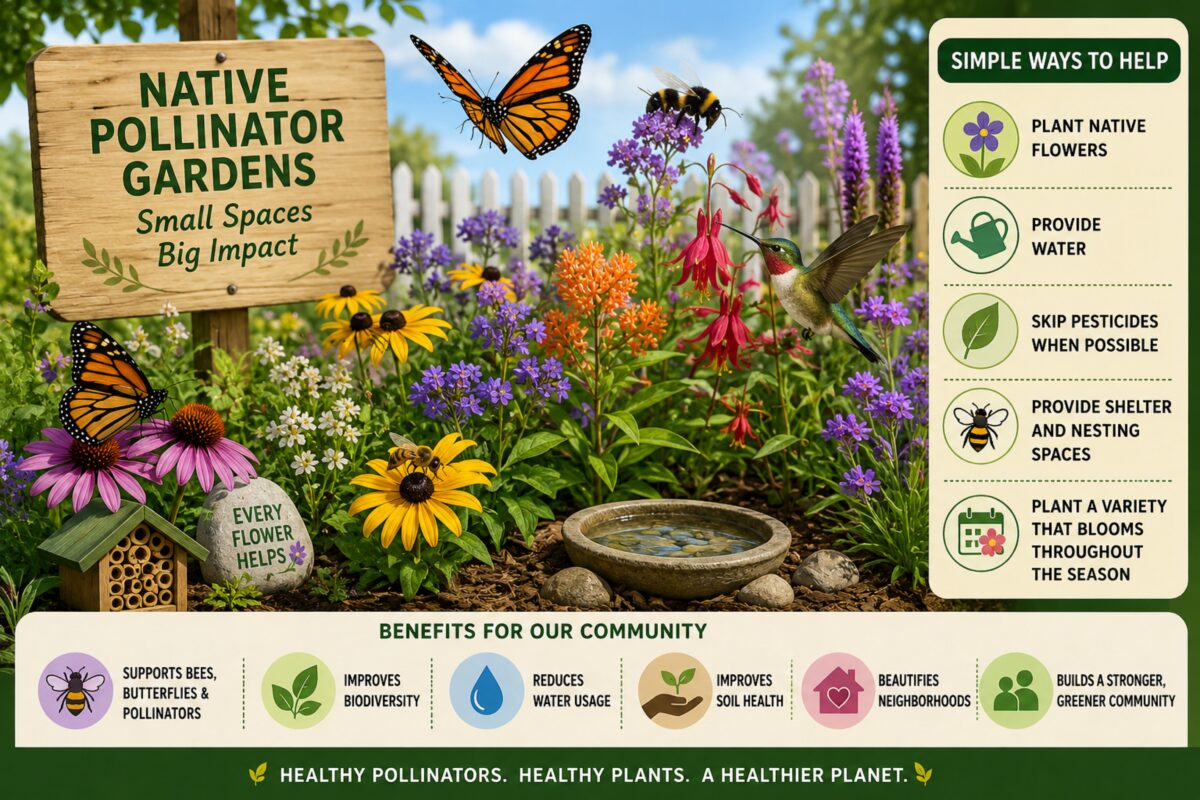
Communities across the country are increasingly embracing native pollinator gardens as a simple way to support local ecosystems. Homeowners, schools, parks, businesses, and community groups are replacing portions of traditional lawns with native flowers, grasses, and plants that provide food and shelter for bees, butterflies, hummingbirds, and other important pollinators.
Pollinators play a critical role in the environment. They help fertilize plants, support food production, and contribute to healthy ecosystems. However, habitat loss, pesticide exposure, extreme weather, and urban development have placed growing pressure on many pollinator populations.
The encouraging news is that even small actions can make a meaningful difference. A pollinator-friendly garden doesn’t require acres of land. A flower bed, balcony planter, school courtyard, or community green space can become a valuable habitat resource.
🌼 Why This Matters Now
Environmental organizations and conservation groups are reporting increased interest in sustainable landscaping and biodiversity initiatives.
Communities are looking for practical ways to:
* Support local wildlife
* Improve environmental resilience
* Reduce water consumption
* Beautify neighborhoods
* Promote ecological education
Native plants are particularly valuable because they evolved alongside local pollinators and often require less maintenance, fertilizer, and irrigation than non-native ornamental species.
🐝 Benefits of Native Pollinator Gardens
Native gardens may help:
* Support bees and butterflies
* Improve biodiversity
* Strengthen local ecosystems
* Reduce water usage
* Improve soil health
* Create wildlife habitat
* Increase neighborhood beautification
* Encourage environmental stewardship
Many communities are now incorporating pollinator-friendly landscaping into parks, schools, municipal properties, and community development projects.
🦋 Pollinators Need More Than Flowers
Healthy pollinator habitats provide:
* Nectar sources
* Pollen sources
* Shelter from weather
* Nesting opportunities
* Water sources
* Diverse seasonal blooms
Plant diversity is often more important than simply planting a large number of flowers.
🌱 Simple Ways Residents Can Help
Even small actions can contribute:
* Plant native flowers
* Leave some areas less manicured
* Reduce unnecessary pesticide use
* Add a shallow water source
* Support community garden projects
* Participate in local conservation efforts
* Plant species that bloom at different times of year
Small habitats can create important environmental “stepping stones” that help pollinators move through urban and suburban areas.
🌎 Community Impact
Pollinator-friendly spaces contribute to healthier local ecosystems and create opportunities for environmental education. Schools, libraries, parks, and community organizations are increasingly using pollinator gardens as hands-on learning spaces that connect residents with nature.
These projects also encourage community involvement, beautify neighborhoods, and foster environmental awareness among future generations.
🌻 Outdoors & Environment Takeaway
You don’t need a large property to support nature.
A few native plants can provide food, shelter, and habitat for countless pollinators while making your community greener, healthier, and more resilient.
Remember:
Small gardens can create big environmental change. Every flower helps. 🐝🦋🌻🌎