
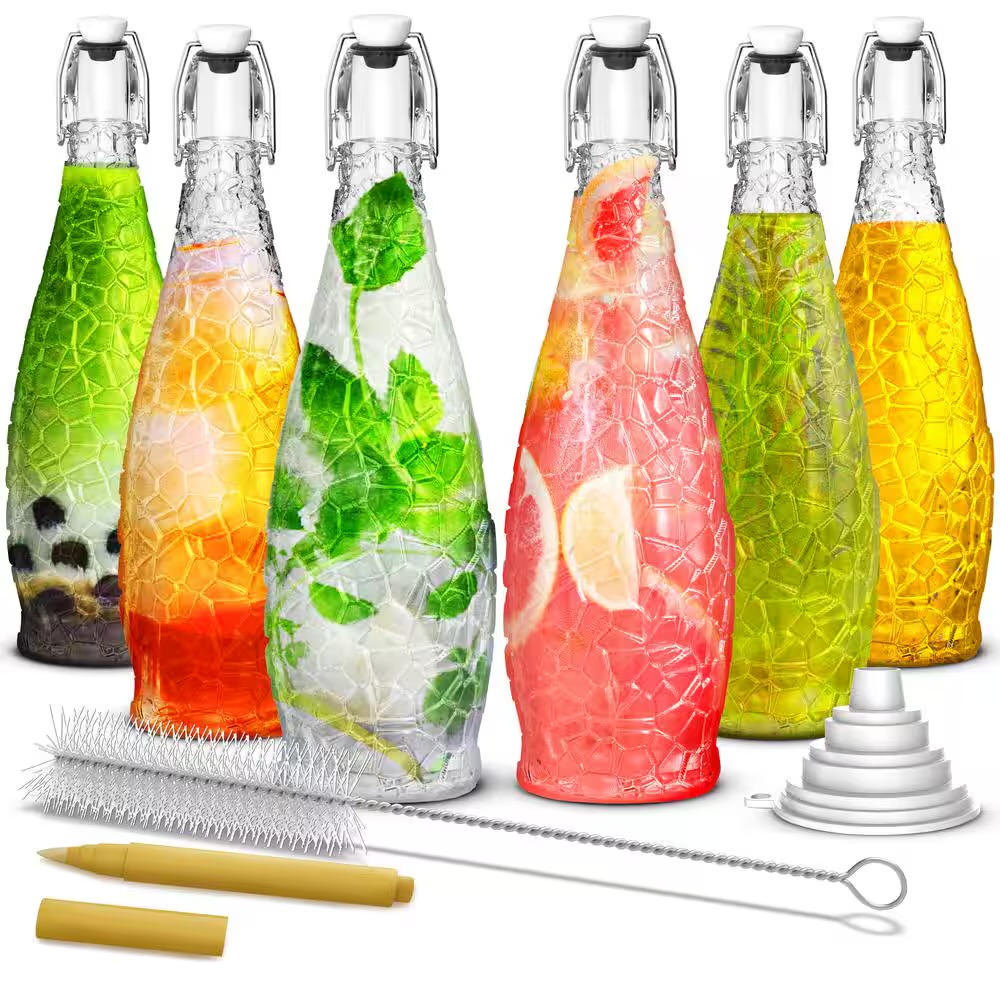
Tired of worrying about what’s in your water bottle besides the water?
As we become more conscious about what we put in our bodies, the container holding our drinks is just as important as the drink itself. That’s where glass comes in, and here’s why it’s making a big comeback.
In an age where we are constantly questioning the materials we use and their impact on our health and the environment, glass bottles are making a powerful comeback. Once a standard, glass fell out of favor with the rise of cheaper, lighter, and more convenient plastic. However, as the downsides of plastic and aluminum become clearer, the benefits of glass are shining through, making it a superior choice for both personal well-being and a healthier planet.
The most significant advantage of glass is its purity and inert nature. Unlike plastic and even aluminum, which often require internal linings, glass is completely non-porous and non-reactive. This means that it will not absorb odors, flavors, or colors from the liquids it holds. Your water will taste like water, not like yesterday’s juice or coffee. More importantly, glass does not leach any harmful chemicals into its contents. There’s no risk of BPA, phthalates, or other endocrine disrupting compounds migrating from the container into your beverage, even when exposed to heat. This makes glass the safest and most stable option for storing food and drinks, giving you peace of mind that what you’re consuming is truly pure.
From an environmental standpoint, glass is a champion of sustainability. It is made from abundant, natural resources like sand, soda ash, and limestone. What truly sets it apart is its infinite recyclability. Glass can be recycled over and over again without any loss in quality or purity, creating a true closed loop system. While plastic is also recyclable, it often “downcycles” into lower quality products, and a large portion of it ends up in landfills. Aluminum, while highly recyclable, still requires a protective lining. With glass, a recycled bottle can be melted down and reformed into a brand new bottle in as little as 30 days, using significantly less energy than manufacturing from raw materials. This makes glass a powerful tool in the fight against pollution and waste.
Beyond its health and environmental benefits, glass offers a number of practical advantages. Its non-porous surface makes it incredibly easy to clean and sterilize, a major benefit for reusable containers. It is also highly durable and resistant to scratches, maintaining its clarity and aesthetic appeal over time. Furthermore, glass’s ability to withstand high temperatures makes it safe for use in microwaves and dishwashers, and it can even be used to store hot liquids without any concern. In a world full of compromises, the choice to use glass is one that offers a clean, safe, and sustainable solution, proving that sometimes, the best innovations are the ones that have been around for centuries.
2 replies on “Why Your Drink Belongs in Glass”
Glass isn’t just making a comeback, t’s reclaiming its place as the gold standard for safe, pure, and eco-friendly hydration. Unlike plastic or aluminum, glass keeps your drinks free from unwanted flavors and chemicals, all while being infinitely recyclable. Sometimes the smartest choice for the future is one we’ve trusted for centuries.
Pure taste. Zero toxins. 100% recyclable. Glass bottles are back and better for your health and the planet.
You’ve hit on some great points!
It’s so true that glass has this classic quality that just can’t be beaten when it comes to purity. I’ve definitely noticed a difference in taste, especially with water. There’s just a clean, crispness to it that you don’t get with other materials.
Plus, knowing it’s a better choice for the environment makes it a win-win.