
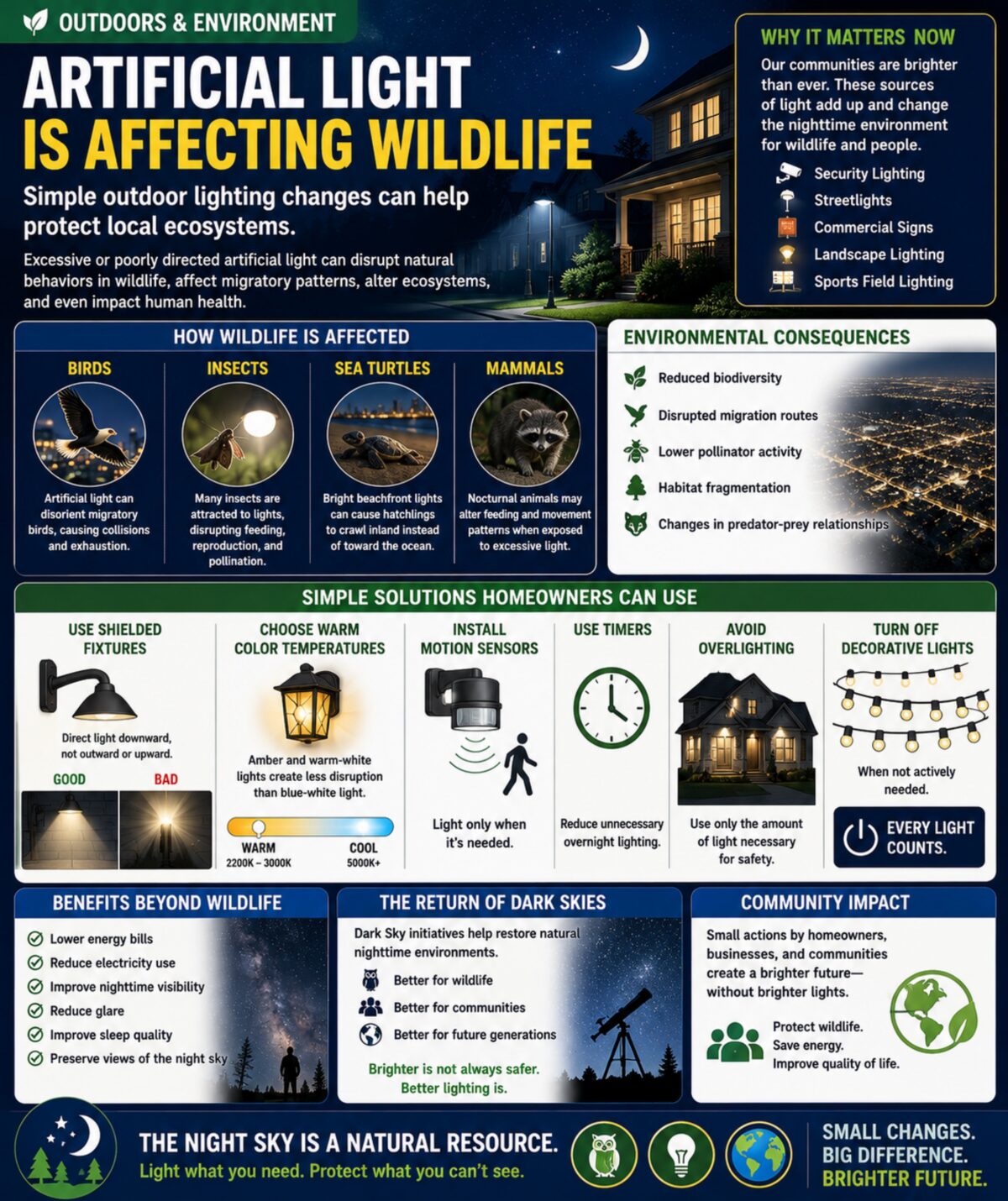
As communities continue to grow, scientists and environmental organizations are paying closer attention to a lesser-known environmental issue: light pollution.
While outdoor lighting improves safety, visibility, and security, excessive or poorly directed artificial light can disrupt natural behaviors in wildlife, affect migratory patterns, alter ecosystems, and even impact human sleep cycles.
From bright residential floodlights to commercial signage and urban skyglow, artificial light is increasingly changing nighttime environments that many species have depended on for thousands of years.
The good news is that small adjustments to outdoor lighting can significantly reduce environmental impacts while still maintaining safety and visibility.
🌙 Why This Matters Now
Modern communities are brighter than ever.
Sources of nighttime illumination include:
* Security lighting
* Streetlights
* Parking lot lighting
* Decorative landscape lighting
* Commercial signage
* Digital billboards
* Sports field lighting
As development expands, truly dark nighttime environments are becoming increasingly rare.
Researchers are now studying how these changes affect both wildlife and human health.
🦉 How Wildlife Is Affected
Many species rely on darkness to:
* Hunt
* Navigate
* Reproduce
* Migrate
* Avoid predators
Artificial light can interfere with these natural behaviors.
Examples include:
Birds
Migratory birds often use natural nighttime cues for navigation.
Bright city lights can disorient them, causing collisions with buildings and exhaustion during migration.
Insects
Many insects are naturally attracted to light sources.
This can disrupt feeding patterns, reproduction, and pollination activities.
Sea Turtles
Young sea turtles use moonlight and natural horizons to locate the ocean.
Artificial beachfront lighting can cause hatchlings to move in the wrong direction.
Mammals
Nocturnal animals often alter feeding and movement patterns when exposed to excessive nighttime lighting.
🌎 Environmental Consequences
Light pollution may contribute to:
* Reduced biodiversity
* Disrupted migration routes
* Lower pollinator activity
* Habitat fragmentation
* Changes in predator-prey relationships
Because ecosystems are interconnected, even small disruptions can create larger environmental effects over time.
💡 Simple Solutions Homeowners Can Use
Environmental experts recommend:
Use Shielded Fixtures
Direct light downward rather than outward or upward.
Choose Warm Color Temperatures
Amber and warm-white lights generally create less disruption than bright blue-white lighting.
Install Motion Sensors
Only illuminate areas when needed.
Use Timers
Reduce unnecessary overnight lighting.
Avoid Overlighting
Use only the amount of light necessary for safety.
Turn Off Decorative Lighting
When not actively needed.
🏡 Benefits Beyond Wildlife
Reducing unnecessary lighting can also:
✔ Lower energy bills
✔ Reduce electricity consumption
✔ Improve nighttime visibility
✔ Reduce glare
✔ Improve sleep quality
✔ Preserve views of the night sky
🌌 The Return of Dark Skies
Communities worldwide are participating in “Dark Sky” initiatives designed to reduce light pollution and restore natural nighttime environments.
Residents often discover that properly designed lighting actually improves visibility by reducing glare and creating more balanced illumination.
Many people are surprised to learn that brighter does not always mean safer.
🌱 Community Impact
Small actions taken by individual homeowners, businesses, and municipalities can collectively create meaningful environmental improvements.
By making thoughtful lighting choices, communities can:
* Protect wildlife
* Save energy
* Improve quality of life
* Preserve natural ecosystems
* Maintain safer outdoor environments
🔍 Outdoors & Environment Takeaway
Darkness is an important part of nature.
Protecting nighttime environments doesn’t require turning off every light—it simply means using light more wisely.
Remember:
The night sky is a natural resource. Small lighting changes can make a big difference for wildlife, communities, and future generations.
🌙🦉💡🌎 Light what you need. Protect what you can’t see.