
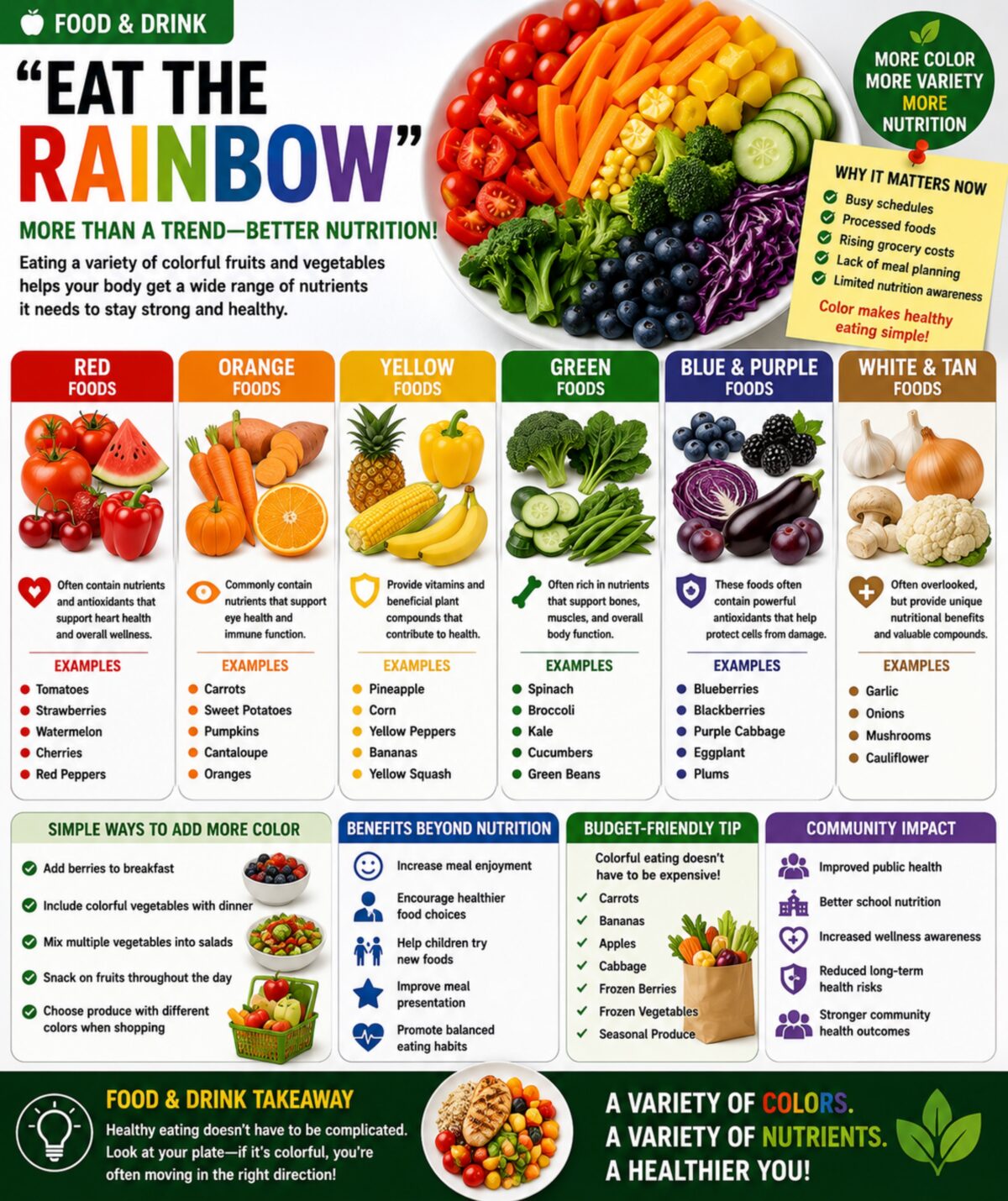
Nutrition experts continue to encourage a simple guideline that is gaining popularity among families, schools, wellness programs, and healthcare providers:
Eat the Rainbow.
The idea is straightforward: consume fruits and vegetables of many different colors throughout the week. Different colors often indicate different vitamins, minerals, antioxidants, and plant compounds that support various functions within the body.
While no single food contains everything the body needs, a colorful plate naturally increases nutritional variety and may help people consume a broader range of beneficial nutrients.
The concept is simple enough for children to understand and practical enough for adults to apply during grocery shopping and meal planning.
🌈 Why This Matters Now
Many people struggle to meet recommended fruit and vegetable intake goals.
Common barriers include:
* Busy schedules
* Processed convenience foods
* Rising grocery costs
* Lack of meal planning
* Limited nutritional awareness
The “Eat the Rainbow” approach simplifies healthy eating by focusing on color variety instead of complicated nutrition calculations.
🔴 Red Foods
Examples:
* Tomatoes
* Strawberries
* Watermelon
* Cherries
* Red peppers
Often associated with nutrients and antioxidants that support heart health and overall wellness.
🟠 Orange Foods
Examples:
* Carrots
* Sweet potatoes
* Pumpkins
* Cantaloupe
* Oranges
Commonly contain nutrients that support eye health and immune function.
🟡 Yellow Foods
Examples:
* Pineapple
* Corn
* Yellow peppers
* Bananas
* Yellow squash
Often provide vitamins and beneficial plant compounds that contribute to overall health.
🟢 Green Foods
Examples:
* Spinach
* Broccoli
* Kale
* Cucumbers
* Green beans
Often rich in nutrients that support bones, muscles, and overall body function.
🔵🟣 Blue & Purple Foods
Examples:
* Blueberries
* Blackberries
* Purple cabbage
* Eggplant
* Plums
These foods often contain powerful antioxidants that help protect cells from damage.
⚪ White & Tan Foods
Examples:
* Garlic
* Onions
* Mushrooms
* Cauliflower
Though often overlooked, these foods provide unique nutritional benefits and valuable compounds.
🍽️ Simple Ways To Add More Color
Try:
* Adding berries to breakfast
* Including colorful vegetables with dinner
* Mixing multiple vegetables into salads
* Snacking on fruits throughout the day
* Choosing produce with different colors during grocery shopping
Small additions can significantly improve dietary variety over time.
🧠 Benefits Beyond Nutrition
Colorful meals may also:
✔ Increase meal enjoyment
✔ Encourage healthier food choices
✔ Help children try new foods
✔ Improve meal presentation
✔ Promote balanced eating habits
Many people naturally consume more fruits and vegetables when focusing on color diversity.
🛒 Budget-Friendly Tip
You don’t need exotic ingredients.
Affordable options often include:
* Carrots
* Bananas
* Apples
* Cabbage
* Frozen berries
* Frozen vegetables
* Seasonal produce
Nutritional variety can be achieved without significantly increasing grocery costs.
🌎 Community Impact
Healthy eating habits contribute to:
* Improved public health
* Better school nutrition
* Increased wellness awareness
* Reduced long-term health risks
* Stronger community health outcomes
Simple nutrition education can create lasting positive effects across generations.
🔍 Food & Drink Takeaway
Healthy eating doesn’t have to be complicated.
Sometimes the easiest nutrition guide is also the most visual:
Look at your plate.
If it contains a variety of colors, you’re often moving in the right direction.
🌈🥦🍓🥕🍇 More color. More variety. More nutrition.