
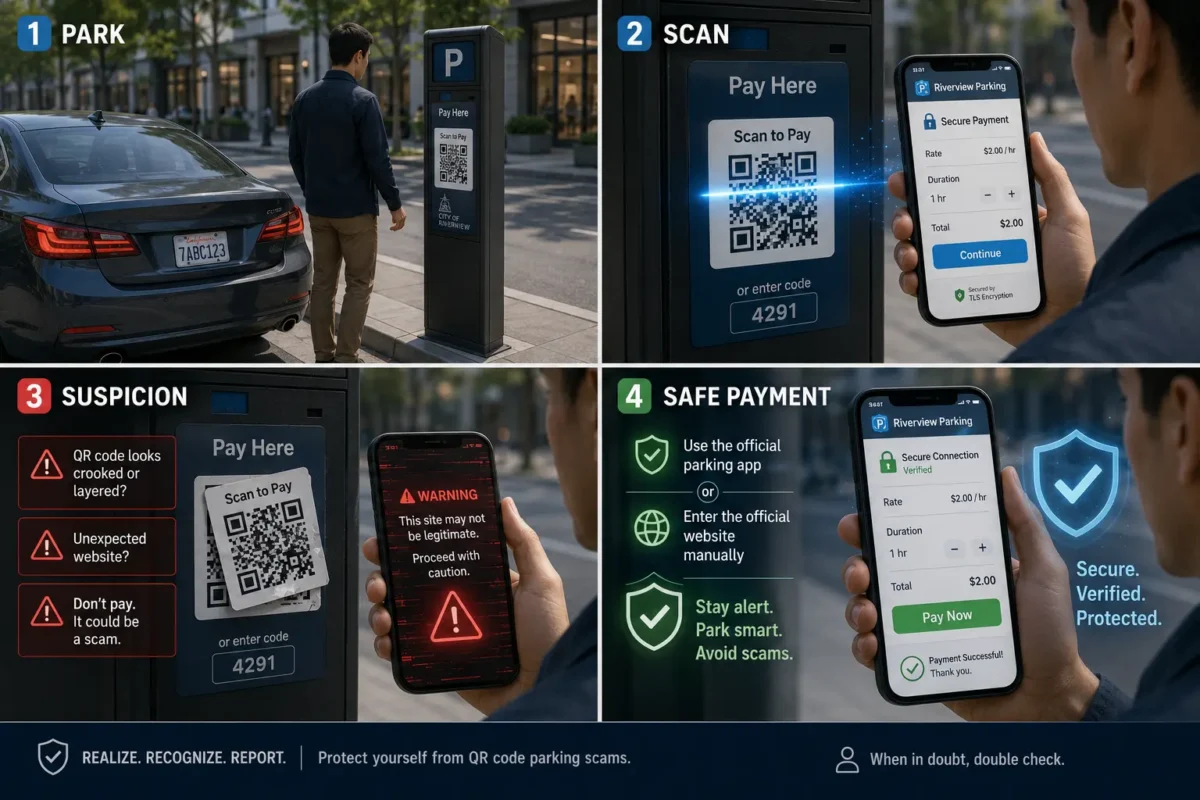
Communities in multiple cities are reporting an increase in fake parking tickets and fraudulent QR code stickers being placed on vehicles, parking meters, and public pay stations. These scams are designed to trick drivers into scanning a code that leads to a fake payment page where criminals can steal credit card information, login credentials, or personal data.
In many cases, the fake QR codes are carefully placed over legitimate payment systems, making them difficult to notice at first glance. Some scammers also leave realistic-looking “violation notices” on windshields that pressure drivers to pay immediately to avoid additional fines or towing.
Because QR code payments have become common for parking apps, transit systems, and digital receipts, many people scan without closely checking the destination link. Criminals are exploiting that trust.
🚨 Why This Matters Now
As cities continue modernizing parking systems and reducing physical kiosks, QR code payment systems are becoming more widespread. At the same time, mobile payment usage has surged, creating new opportunities for scammers to target drivers quickly and anonymously.
Large public events, downtown areas, tourist zones, transportation hubs, and college campuses are especially vulnerable because drivers are often distracted, rushed, or unfamiliar with local parking systems.
⚠️ Common Warning Signs
– QR code stickers placed unevenly or layered over another code
– Payment pages with unusual URLs or misspelled web addresses
– Requests for unnecessary personal information
– Urgent language demanding immediate payment
– Websites lacking secure payment indicators
– “Violation notices” without official city branding or contact details
🛡️ Critical Safety Guidance
– Always inspect QR codes before scanning them.
– Compare suspicious stickers to nearby official parking signs or meters.
– Use official parking apps downloaded directly from app stores whenever possible.
– Manually type the official website if unsure.
– Avoid entering payment information on unfamiliar websites opened through QR scans.
– Report suspicious stickers or fake notices to parking authorities or local law enforcement.
🏙️ Community Impact
These scams affect not only individual victims but also public trust in digital payment systems. Fraudulent parking schemes can lead to stolen financial information, unauthorized charges, and identity theft. In busy cities, a single fake QR code can target dozens or even hundreds of drivers in one day.
As communities increasingly rely on contactless payment technology, public awareness becomes one of the strongest defenses against digital fraud.
🔍 Safety Takeaway
Before you scan, pause and inspect. A quick look at a QR code or payment link can prevent financial loss and identity theft.