
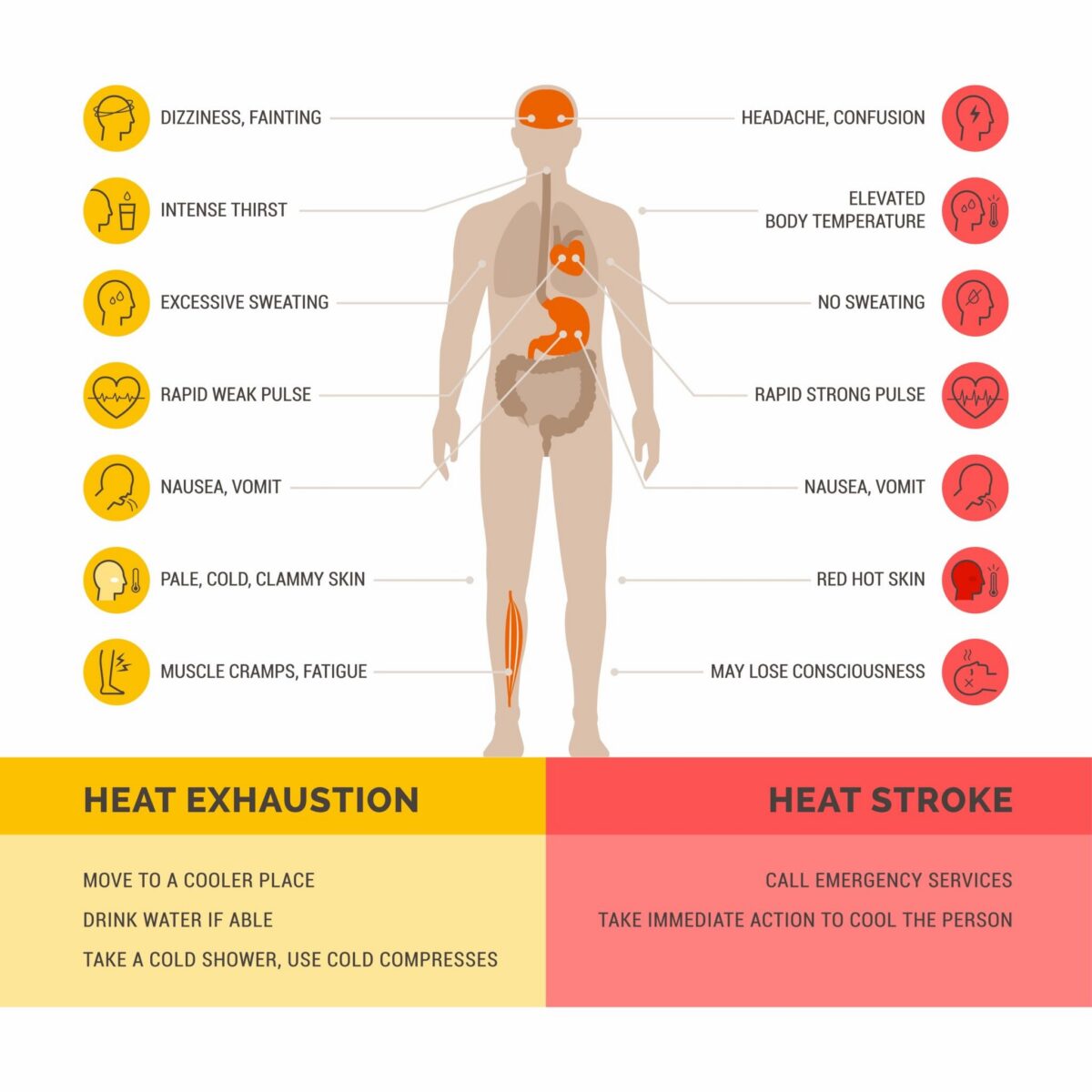
We all love summer, but when a heat wave strikes, the weather goes from “beach day” to dangerous incredibly fast. Extreme heat is actually one of the leading weather-related killers, yet many of us don’t take it seriously enough until we are already feeling sick.
Let’s get a clue on how to spot the red flags of heat illness, and exactly what to do (and what not to do) when the mercury rises.
The Big Red Flags: Heat Exhaustion vs. Heat Stroke
Your body cools itself by sweating, but when it’s too hot or humid, that built-in air conditioner can fail. This leads to two main stages of heat illness: Heat Exhaustion (the warning phase) and Heat Stroke (a true medical emergency).
Understanding the visual differences between these two states can quite literally save a life.
Heat Exhaustion: The person is sweating heavily, has pale, cold, clammy skin, and might feel faint or nauseous. Their body is struggling, but still trying to fight the heat.
Heat Stroke: This happens when the body’s internal temperature spikes past 103°F (39.4°C). The skin becomes red, hot, and completely dry (sweat stops). Most importantly, they will experience confusion, dizziness, or even loss of consciousness. If you see these signs, call 911 immediately.
The “Do’s” and “Don’ts” of Heat Wave Safety
When the thermometer pushes into triple digits, how you react matters. Here is your quick checklist of what to prioritize and what to avoid entirely.
What to DO:
Drink before you are thirsty: By the time you feel thirsty, you are already slightly dehydrated. Sip water or electrolyte-rich drinks consistently throughout the day.
Find AC or public cooling centers: If your home doesn’t have air conditioning, spend the hottest parts of the day at a library, mall, or community cooling center. Just a few hours in AC can drastically reduce your body’s heat stress.
Check on high-risk neighbors: Check in twice a day on elderly neighbors, friends with chronic illnesses, or those who live alone to ensure they are keeping cool.
Dress like you’re in the tropics: Wear loose, lightweight, light-colored clothing. Dark colors absorb heat, and tight clothes trap it against your skin.
What NOT to Do:
Don’t rely solely on electric fans in extreme heat: When temperatures climb above 95°F (35°C), blowing hot air across your skin actually heats you up faster rather than cooling you down. Use wet towels or cool showers instead.
Don’t leave anyone in a parked car: Not even for “just a minute,” and not even with the windows cracked. A car’s interior can heat up by 20 degrees in just 10 minutes, making it a death trap for children and pets.
Don’t drink alcohol or heavy caffeine: Both of these are diuretics (substances that make you pass fluids faster), which accelerate dehydration. Stick to water or sports drinks.
Don’t exercise at noon: Save your outdoor workouts, heavy yard work, or long walks for early dawn or late dusk when the sun’s rays are least direct.
Stay safe, keep hydrated, and help your community stay cool this summer!