Categories
Everyday Life and Productivity

The “Two-Minute Reset” Is Becoming a Popular Productivity Habit — Small Cleanups Create Big Momentu

Productivity experts, organizers, and workplace coaches are increasingly recommending a simple habit known as the Two-Minute Reset.

The concept is straightforward:

Whenever you finish an activity, spend two minutes restoring the space before moving on to the next task.

Instead of allowing clutter, unfinished items, and distractions to accumulate throughout the day, small resets keep environments organized and reduce mental overload.

Many people underestimate how much visual clutter affects focus, stress levels, and productivity.

A desk covered with paperwork, a kitchen filled with dishes, an overflowing inbox, or a vehicle full of miscellaneous items can create a constant background reminder of unfinished work.

The Two-Minute Reset prevents these small problems from becoming large ones.

⏰ Why This Matters Now

Modern life is busier than ever.

People often move rapidly between:

* Work tasks
* Meetings
* Emails
* Household chores
* Social activities
* Parenting responsibilities
* Personal projects

Because we’re constantly switching activities, small messes and unfinished tasks tend to accumulate faster than we realize.

By the end of the day, many people feel overwhelmed—not because of one major problem—but because of dozens of small unfinished ones.

🧠 The Hidden Mental Cost of Clutter

Researchers have found that visible clutter can contribute to:

* Reduced concentration
* Increased stress
* Decision fatigue
* Mental exhaustion
* Reduced productivity
* Feelings of overwhelm

Even when you’re not actively thinking about the clutter, your brain is still processing it.

A cleaner environment often supports clearer thinking.

🏠 Examples of a Two-Minute Reset

After Working

* Put papers away
* Close unnecessary tabs
* Organize your workspace
* Clear your desktop

After Cooking

* Load dishes
* Wipe counters
* Store ingredients
* Empty trash if needed

After Shopping

* Put items away immediately
* Recycle packaging
* Organize receipts

After Arriving Home

* Hang coats
* Put shoes away
* Empty bags
* Sort mail

After Using Your Vehicle

* Remove trash
* Gather belongings
* Organize items before leaving

📱 Digital Resets Matter Too

The same principle applies digitally.

Spend two minutes:

* Deleting unnecessary screenshots
* Organizing downloads
* Clearing notifications
* Filing documents
* Archiving emails

Digital clutter can become just as overwhelming as physical clutter.

🚀 Why It Works

The habit succeeds because:

* Two minutes feels manageable.
* There’s little resistance.
* Small actions compound over time.
* Tasks stay under control.
* Environments remain functional.

The goal isn’t perfection.

The goal is preventing small problems from becoming large ones.

💡 Productivity Benefits

People who consistently perform small resets often report:

✔ Less stress

✔ Improved focus

✔ Faster task transitions

✔ Cleaner environments

✔ Better organization

✔ Increased productivity

✔ Reduced procrastination

🔄 The Compound Effect

Two minutes may not sound significant.

But:

* 2 minutes × 10 resets per day = 20 minutes
* 20 minutes per day = 140 minutes per week
* 140 minutes per week = over 120 hours annually

Small habits create powerful long-term results.

🎯 Productivity Takeaway

Don’t wait for a massive cleaning session.

Don’t wait for the weekend.

Don’t wait until things become overwhelming.

Take two minutes now.

Future you will thank you.

Remember:
Small resets create big momentum. A cleaner space often leads to a clearer mind. ⏰🧹💡📈
Categories
Community Alerts and Safety

Fake “Bank Fraud Alert” Text Messages Are Surging — Scammers Want You to Panic Before You Think

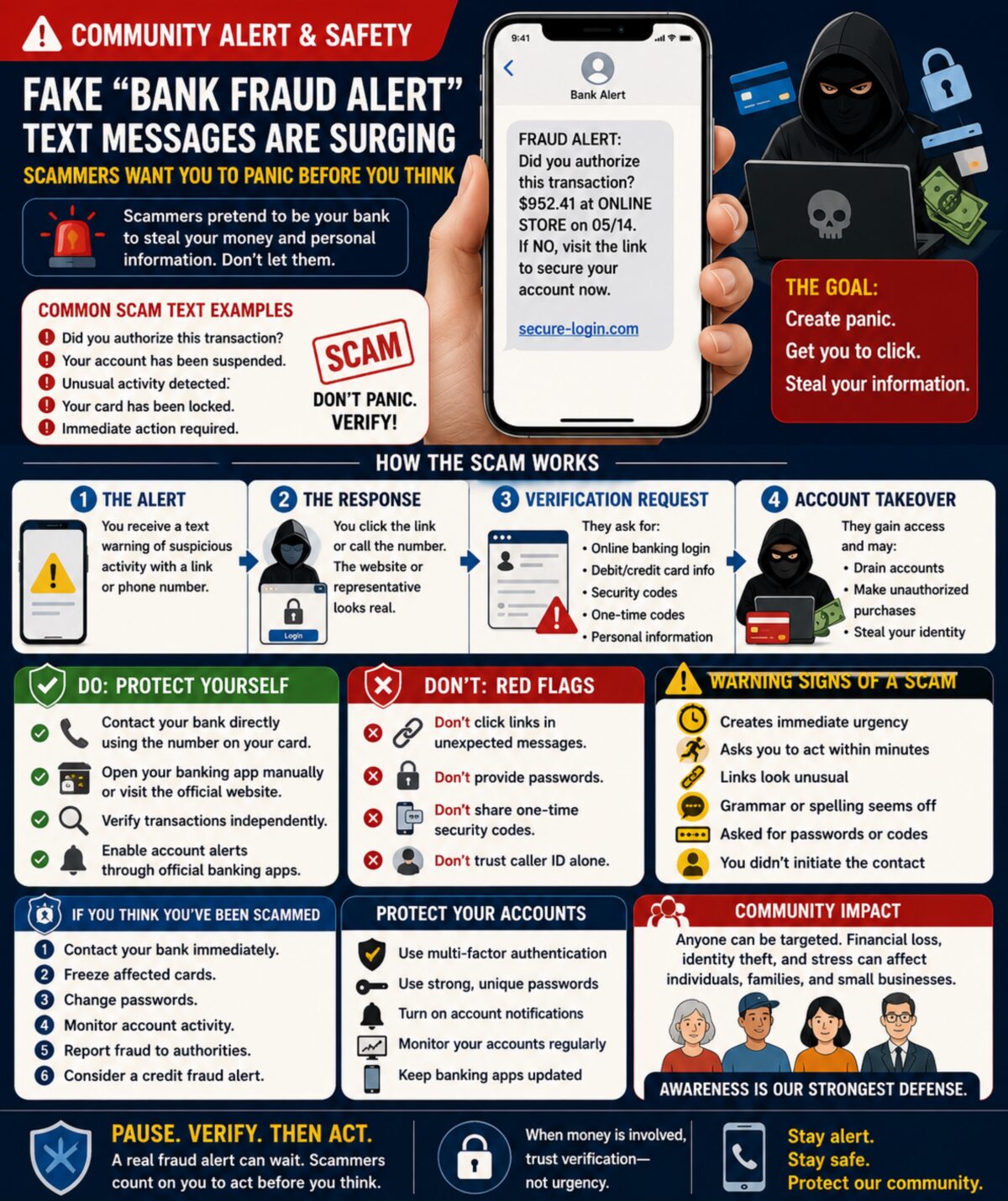
Communities nationwide are seeing a sharp increase in fraud alert impersonation scams, where criminals send text messages claiming to be from a bank, credit union, payment app, or credit card company.

The messages often appear urgent and alarming:

* “Did you authorize this transaction?”
* “Your account has been suspended.”
* “Unusual activity detected.”
* “Your card has been locked.”
* “Immediate action required.”

The goal is simple: create panic.

Scammers know that when people believe their money is at risk, they are more likely to react quickly without carefully verifying the message.

🚨 Why This Matters Now

Financial institutions are increasingly using legitimate fraud alerts to protect customers.

Unfortunately, criminals are exploiting that familiarity.

Modern scam texts often:

* Look professionally designed
* Use bank-like language
* Mimic legitimate fraud departments
* Include realistic links
* Use spoofed phone numbers

Some even arrive within existing message threads, making them appear more trustworthy.

⚠️ How the Scam Typically Works

Step 1 — The Alert

The victim receives a text warning of suspicious activity.

A link or phone number is provided.

Step 2 — The Response

The victim clicks the link or calls the number.

The website or representative appears legitimate.

Step 3 — Verification Request

The scammer requests:

* Online banking credentials
* Debit card information
* Security codes
* One-time authentication codes
* Personal information

Many victims believe they are speaking with legitimate bank representatives.

Step 4 — Account Takeover

Once access is obtained:

* Accounts may be drained
* Cards may be compromised
* Personal information may be stolen
* New fraud may be committed using the victim’s identity

🛡️ Critical Safety Guidance

If you receive a fraud alert:

DO:

✔ Contact your bank directly using the number on your card.

✔ Open your banking app manually.

✔ Log in through official channels.

✔ Verify transactions independently.

✔ Enable account alerts through official banking apps.

DON’T:

❌ Click links in unexpected messages.

❌ Provide passwords.

❌ Provide one-time security codes.

❌ Share authentication texts.

❌ Trust caller ID alone.

📱 Warning Signs of a Scam

Be suspicious if:

* The message creates immediate urgency.
* It asks you to act within minutes.
* Links look unusual.
* Grammar seems odd.
* You are asked for passwords.
* You are asked for verification codes.

Legitimate banks generally do not request sensitive authentication information through unsolicited texts.

🏘️ Community Impact

These scams affect:

* Seniors
* Young adults
* Small business owners
* Online shoppers
* Mobile banking users

Financial losses can range from a few dollars to entire account balances.

Beyond monetary losses, victims often spend months restoring accounts, replacing cards, updating passwords, and repairing identity theft damage.

🔒 How To Protect Yourself

Experts recommend:

* Multi-factor authentication
* Strong unique passwords
* Account activity notifications
* Banking app security features
* Regular account monitoring

Awareness remains one of the most effective defenses.

🚔 What To Do If You Fall Victim

If you believe you’ve interacted with a scam:

1. Contact your bank immediately.
2. Freeze affected cards.
3. Change passwords.
4. Monitor account activity.
5. Report fraud to relevant authorities.
6. Enable fraud alerts on credit files if necessary.

The faster you respond, the greater the chance of limiting financial damage.

🔍 Safety Takeaway

Scammers want you to react emotionally.

Protect yourself by slowing down.

Pause. Verify. Then act.

A real fraud alert can wait long enough for you to confirm it through official channels.

📱🛡️💳 When money is involved, trust verification—not urgency.

Categories
Tech and Troubleshooting

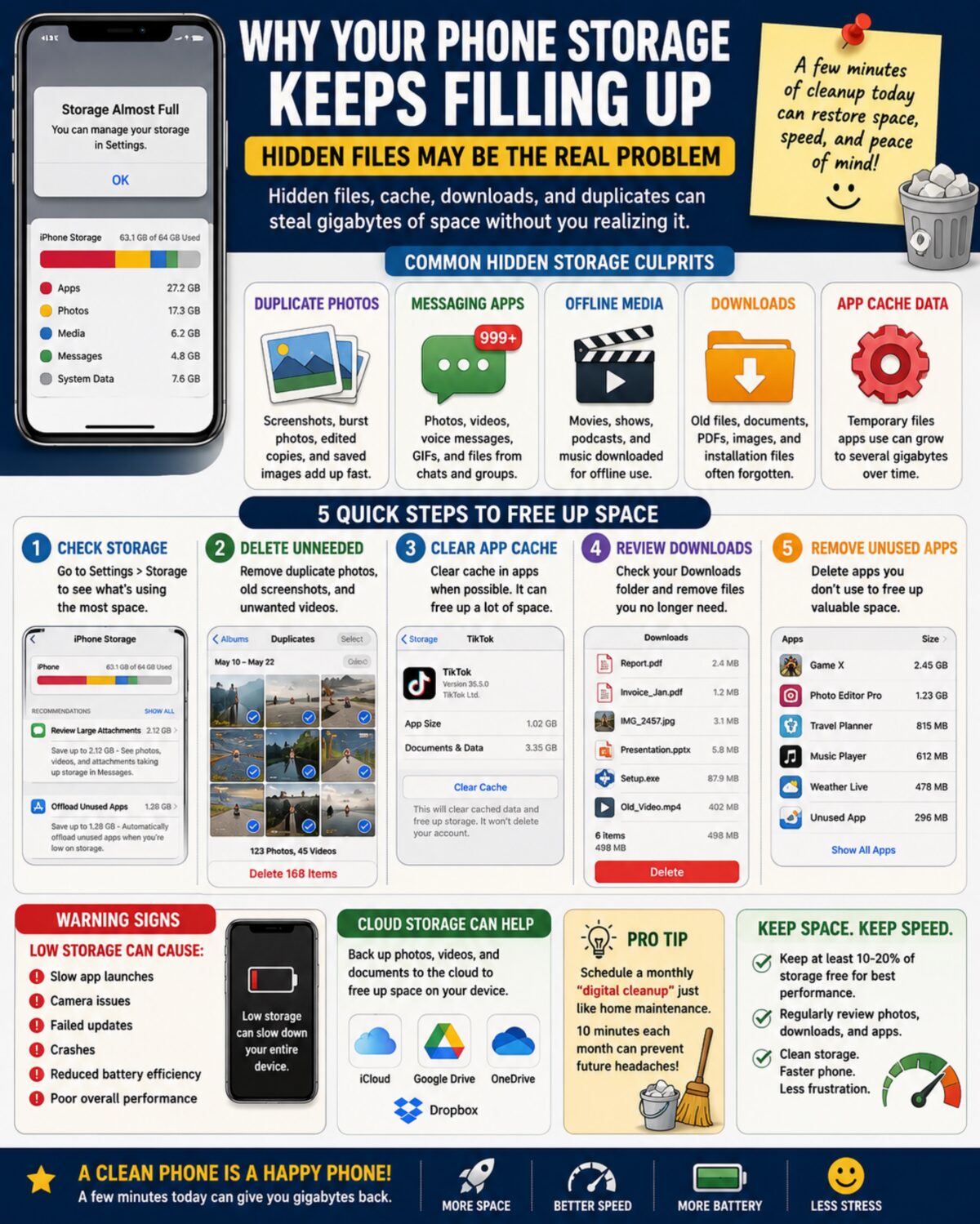
Why Your Phone Storage Keeps Filling Up — Hidden Files May Be the Real Problem

Many smartphone users are experiencing a common frustration: despite deleting photos, apps, and videos, their device continues to display “Storage Almost Full” warnings.

The issue is often caused by hidden storage consumers that accumulate quietly over time. These include cached files, duplicate photos, downloaded attachments, temporary app data, offline media, old backups, and forgotten downloads.

As phones become the primary tool for communication, entertainment, work, banking, photography, and navigation, storage management has become an increasingly important part of device maintenance.

📱 Why This Matters Now

Modern smartphones regularly handle:

* High-resolution photos
* 4K and 8K videos
* Social media content
* Streaming downloads
* AI applications
* Messaging attachments
* Cloud synchronization
* Automatic backups

Many users are surprised to learn that apps often store temporary data that continues growing long after the app has been installed.

Some applications may accumulate several gigabytes of cache data without obvious warning.

⚠️ Common Hidden Storage Culprits

📸 Duplicate Photos

Many people unknowingly save:

* Screenshots
* Burst photos
* Edited copies
* Downloaded images
* Shared images from messaging apps

Thousands of duplicate images can consume significant storage space.

💬 Messaging Apps

Text and messaging platforms often store:

* Photos
* Videos
* Voice messages
* GIFs
* Attachments

Group chats are particularly notorious for consuming storage.

🎥 Offline Media Downloads

Streaming services frequently download:

* Movies
* TV episodes
* Podcasts
* Music playlists

Many users forget these files remain on the device after viewing.

📂 Downloads Folder

Documents, PDFs, images, installation files, and miscellaneous downloads often remain untouched for months or years.

⚙️ App Cache Data

Apps use cache files to improve performance, but these files can grow substantially over time.

Common offenders include:

* Social media apps
* Browsers
* Video streaming platforms
* Shopping apps
* Mapping applications

🛠️ Quick Troubleshooting Steps

Step 1

Open:

Settings → Storage

Review which categories consume the most space.

Step 2

Delete:

* Duplicate photos
* Old screenshots
* Unneeded videos

Video files often provide the fastest storage recovery.

Step 3

Clear app cache where appropriate.

This may free hundreds of megabytes or even multiple gigabytes.

Step 4

Review downloads and remove unnecessary files.

Step 5

Remove unused applications.

Many people have dozens of apps they haven’t opened in months.

☁️ Cloud Storage Considerations

Cloud services can help reduce local storage usage by:

* Backing up photos
* Storing documents
* Syncing files across devices

However, cloud storage should supplement organization—not replace it.

Large amounts of unnecessary data can accumulate in the cloud as well.

🚨 Warning Signs Your Storage Is Affecting Performance

Low storage can contribute to:

* Slow app launches
* Camera problems
* Failed updates
* Crashes
* Reduced battery efficiency
* Poor overall performance

Most devices operate best when a portion of storage remains free.

💡 Pro Tip

Schedule a monthly “digital cleanup” just like routine home maintenance.

Spending 10 minutes each month reviewing photos, downloads, and apps can prevent future storage headaches and keep devices running smoothly.

🔍 Tech Takeaway

Your phone may not be running out of storage because you have too much data.

It may be running out of storage because hidden files have quietly accumulated over time.

A few minutes of cleanup today can restore performance, free space, and extend the useful life of your device.

📱⚡🧹💾 Clean storage. Faster phone. Less frustration.

Categories
Education and Learning

Microlearning Is Changing How People Learn — Small Lessons Are Producing Big Results

Educators, employers, training organizations, and learning platforms are increasingly adopting a strategy known as microlearning — the practice of learning information in short, focused sessions rather than long lectures or study periods.

Instead of spending hours trying to absorb large amounts of information at once, learners consume small lessons that typically take between 2 and 15 minutes to complete. These lessons often focus on a single skill, concept, or objective before moving to the next topic.

As attention spans compete with notifications, busy schedules, and information overload, many experts believe microlearning better matches how modern people consume and retain information.

📚 Why This Matters Now

The amount of information available today is growing at an unprecedented rate.

People are constantly learning:

* New technology
* Workplace skills
* Industry certifications
* Personal finance
* Health information
* AI tools
* Software updates
* Professional development

Traditional learning methods often require large time commitments that many people struggle to maintain.

Microlearning offers a practical alternative by making education more accessible and manageable.

🧠 How the Brain Benefits

Research suggests that smaller learning sessions may help improve:

* Information retention
* Focus and concentration
* Long-term memory formation
* Learning consistency
* Engagement and motivation

When information is broken into smaller segments, the brain often processes and stores it more effectively than during long periods of passive consumption.

This approach is sometimes paired with spaced repetition, where concepts are revisited over time to strengthen memory.

💻 Examples of Microlearning

Microlearning can include:

* A 5-minute instructional video
* A daily language lesson
* A short quiz
* A single tutorial
* Flash cards
* Interactive exercises
* Skill-building challenges
* Daily learning apps

Many successful learners now dedicate just a few minutes per day to continuous education rather than relying solely on lengthy study sessions.

🎯 Benefits for Students

Students may experience:

* Reduced overwhelm
* Better concentration
* Increased engagement
* Improved retention
* More flexible study schedules

Shorter learning sessions can be easier to fit around school, work, extracurricular activities, and family responsibilities.

👨‍💼 Benefits for Professionals

Organizations are increasingly using microlearning for:

* Employee training
* Safety programs
* Compliance education
* Leadership development
* Software onboarding
* Customer service improvement

Employees can learn critical skills without spending hours away from their primary responsibilities.

📱 Technology Is Driving the Trend

Smartphones, tablets, and online learning platforms have made education available almost anywhere.

People now learn while:

* Commuting
* Waiting in line
* Taking breaks
* Traveling
* Exercising
* Between meetings

Learning is becoming less about where you are and more about consistency.

🚀 Practical Learning Tips

If you’re trying to learn something new:

* Focus on one topic at a time.
* Study for 5–15 minutes daily.
* Review information regularly.
* Apply what you learn immediately.
* Track progress over time.
* Prioritize consistency over intensity.

Small daily efforts often outperform occasional marathon study sessions.

🌎 Community Impact

Accessible education helps strengthen communities by improving workforce skills, increasing digital literacy, encouraging lifelong learning, and creating more opportunities for personal and professional growth.

As educational tools become more widely available, microlearning may help bridge gaps for people who previously lacked time, resources, or access to traditional learning environments.

🔍 Learning Takeaway

You don’t have to study for hours to make meaningful progress.

A few focused minutes every day can compound into significant knowledge and skill over time.

📚 Learn a little. Learn often. Grow continuously. 🧠💡🚀

Categories
Community Services and Resources

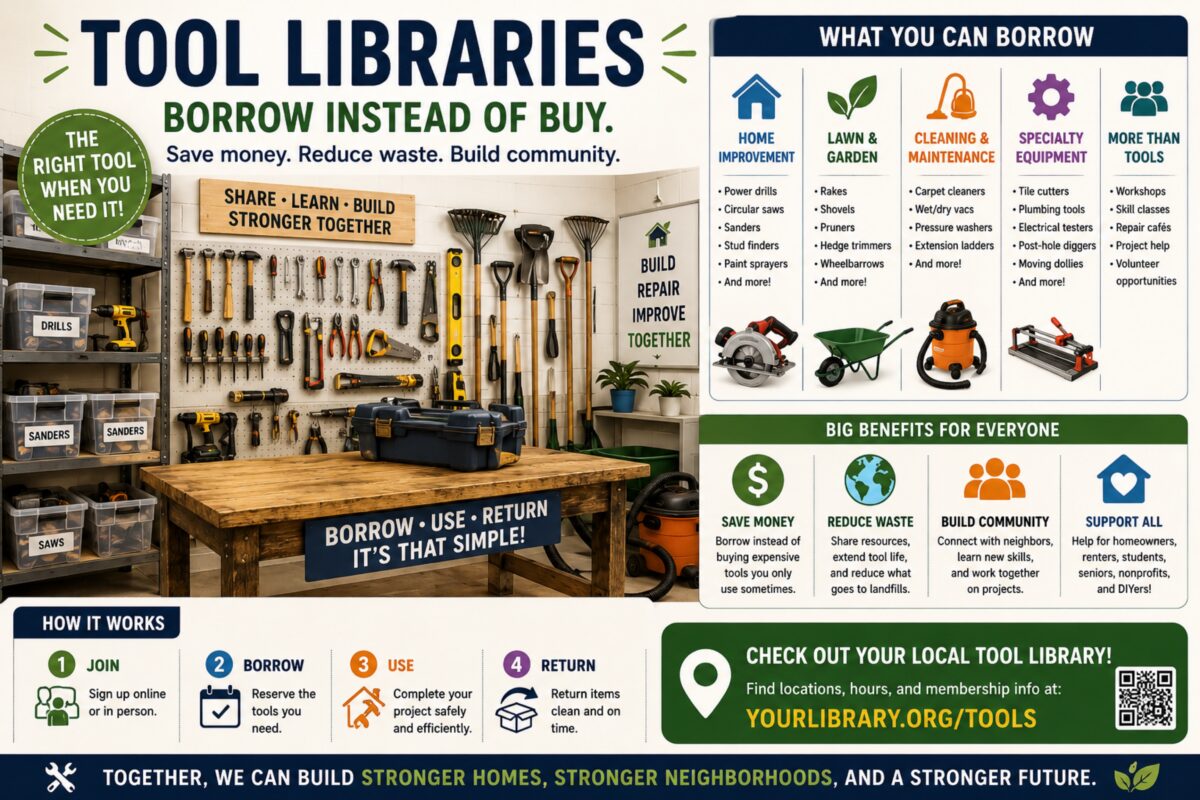
Community Tool Libraries Are Expanding — Borrow Instead of Buy

A growing number of communities are launching or expanding Tool Libraries, allowing residents to borrow tools, equipment, and home improvement supplies just like checking out books from a traditional library.

These programs are helping residents save money, complete projects, learn new skills, and reduce waste by sharing resources that are often only used a few times per year.

Many households own expensive tools that spend most of their lives sitting unused in garages, sheds, basements, or storage units. Tool libraries provide an alternative by making those same resources available to the community when needed.

🔨 Why This Matters Now

As the cost of living continues to rise, many families are looking for practical ways to reduce expenses.

At the same time:

* Home improvement projects remain popular.
* More people are repairing instead of replacing.
* Communities are embracing sustainability initiatives.
* Interest in DIY projects continues to grow.

Tool-sharing programs address all of these needs simultaneously.

🛠️ Items Commonly Available

Depending on the organization, tool libraries may offer:

Home Improvement

* Power drills
* Impact drivers
* Circular saws
* Jigsaws
* Sanders
* Stud finders
* Paint sprayers

Lawn & Garden

* Rakes
* Shovels
* Pruners
* Hedge trimmers
* Wheelbarrows
* Garden tillers

Cleaning & Maintenance

* Carpet cleaners
* Wet/dry vacuums
* Pressure washers
* Extension ladders

Specialty Equipment

* Tile cutters
* Plumbing tools
* Electrical testing equipment
* Moving dollies
* Post-hole diggers

Some locations even provide workshops, training sessions, and project guidance.

💰 Financial Benefits

Many tools cost:

* $50–$100 for occasional-use hand tools
* $200–$500 for power equipment
* $1,000+ for specialized tools

Borrowing instead of purchasing can save hundreds or even thousands of dollars annually.

For homeowners, renters, community groups, and nonprofits, these savings can be substantial.

🌎 Environmental Benefits

Tool-sharing programs also help:

* Reduce manufacturing demand
* Lower waste generation
* Extend equipment lifespan
* Reduce storage needs
* Promote responsible consumption

A single shared tool may replace dozens of individually owned tools.

👥 Community Benefits

Tool libraries often become more than equipment lending programs.

They frequently foster:

* Neighborhood collaboration
* Skill sharing
* Volunteer opportunities
* Community improvement projects
* DIY education
* Environmental stewardship

Many communities report stronger neighborhood connections when residents share resources and knowledge.

📚 Additional Resources Often Offered

Some organizations provide:

* Repair cafés
* Home maintenance classes
* Gardening workshops
* Safety training
* Volunteer mentor programs
* Community build days

These services help residents develop practical skills while strengthening community engagement.

🏘️ Who Benefits Most?

Tool libraries are particularly useful for:

* First-time homeowners
* Renters
* Seniors
* Students
* Community organizations
* Small nonprofits
* DIY enthusiasts
* Low-income households

They provide access to resources that might otherwise be financially out of reach.

🔍 Resource Takeaway

You may not need to own every tool you use.

Many communities now offer ways to borrow equipment, save money, reduce waste, and build stronger neighborhoods through resource sharing.

Remember:
Sometimes the smartest purchase is not purchasing at all. Borrow, build, save, and share. 🔨🏡🌎🤝

Categories
Life Hacks

“One-Touch Rule” — Stop Moving the Same Task Around All Day

A simple productivity life hack gaining attention is the One-Touch Rule: when you pick up a small task, finish it, file it, schedule it, or delete it right away instead of moving it from place to place.

This applies to mail, emails, receipts, laundry, dishes, paperwork, text messages, and small chores. The goal is to prevent “task clutter” from piling up mentally and physically.

Why it matters now:
With constant notifications, work messages, online bills, subscriptions, and household responsibilities, people are overwhelmed by tiny unfinished tasks. Each unfinished item takes up mental space. Handling small tasks once reduces stress and saves time.

Examples:
Open mail → trash, file, or pay it.
Read an email → reply, archive, or schedule it.
See a dish → wash it or load it.
Take off a jacket → hang it instead of dropping it.

Life Hack Takeaway:
Touch it once. Decide once. Move on.

Categories
Outdoors and Environment

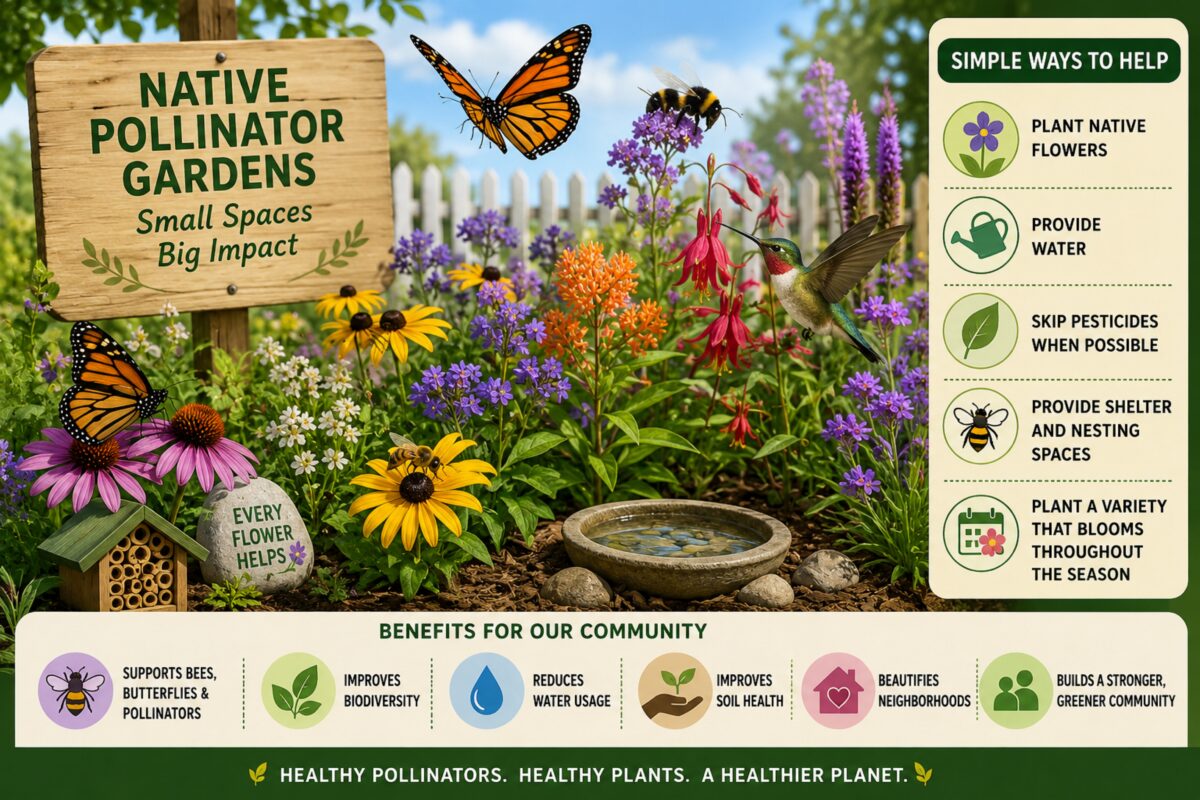
Native Pollinator Gardens Are Growing in Popularity — Small Spaces Can Have a Big Environmental Impact

Communities across the country are increasingly embracing native pollinator gardens as a simple way to support local ecosystems. Homeowners, schools, parks, businesses, and community groups are replacing portions of traditional lawns with native flowers, grasses, and plants that provide food and shelter for bees, butterflies, hummingbirds, and other important pollinators.

Pollinators play a critical role in the environment. They help fertilize plants, support food production, and contribute to healthy ecosystems. However, habitat loss, pesticide exposure, extreme weather, and urban development have placed growing pressure on many pollinator populations.

The encouraging news is that even small actions can make a meaningful difference. A pollinator-friendly garden doesn’t require acres of land. A flower bed, balcony planter, school courtyard, or community green space can become a valuable habitat resource.

🌼 Why This Matters Now

Environmental organizations and conservation groups are reporting increased interest in sustainable landscaping and biodiversity initiatives.

Communities are looking for practical ways to:

* Support local wildlife
* Improve environmental resilience
* Reduce water consumption
* Beautify neighborhoods
* Promote ecological education

Native plants are particularly valuable because they evolved alongside local pollinators and often require less maintenance, fertilizer, and irrigation than non-native ornamental species.

🐝 Benefits of Native Pollinator Gardens

Native gardens may help:

* Support bees and butterflies
* Improve biodiversity
* Strengthen local ecosystems
* Reduce water usage
* Improve soil health
* Create wildlife habitat
* Increase neighborhood beautification
* Encourage environmental stewardship

Many communities are now incorporating pollinator-friendly landscaping into parks, schools, municipal properties, and community development projects.

🦋 Pollinators Need More Than Flowers

Healthy pollinator habitats provide:

* Nectar sources
* Pollen sources
* Shelter from weather
* Nesting opportunities
* Water sources
* Diverse seasonal blooms

Plant diversity is often more important than simply planting a large number of flowers.

🌱 Simple Ways Residents Can Help

Even small actions can contribute:

* Plant native flowers
* Leave some areas less manicured
* Reduce unnecessary pesticide use
* Add a shallow water source
* Support community garden projects
* Participate in local conservation efforts
* Plant species that bloom at different times of year

Small habitats can create important environmental “stepping stones” that help pollinators move through urban and suburban areas.

🌎 Community Impact

Pollinator-friendly spaces contribute to healthier local ecosystems and create opportunities for environmental education. Schools, libraries, parks, and community organizations are increasingly using pollinator gardens as hands-on learning spaces that connect residents with nature.

These projects also encourage community involvement, beautify neighborhoods, and foster environmental awareness among future generations.

🌻 Outdoors & Environment Takeaway

You don’t need a large property to support nature.

A few native plants can provide food, shelter, and habitat for countless pollinators while making your community greener, healthier, and more resilient.

Remember:
Small gardens can create big environmental change. Every flower helps. 🐝🦋🌻🌎

Categories
Food and Drinks

Hydration Drinks Are Everywhere — But Water Is Still the Most Important Beverage

Sports drinks, electrolyte mixes, hydration packets, enhanced waters, and functional beverages are becoming increasingly popular. Social media influencers, athletes, wellness brands, and fitness communities frequently promote hydration products that promise improved energy, recovery, focus, and performance.

While some hydration products can be beneficial during intense exercise, illness, extreme heat, or prolonged physical activity, health experts continue to emphasize that plain water remains the primary hydration source most people need throughout the day.

Many consumers mistakenly assume that constantly drinking electrolyte beverages is healthier than water. However, many of these products contain added sugars, sodium, caffeine, artificial sweeteners, or unnecessary supplements that may not be needed for everyday hydration.

💧 Why This Matters Now

Hydration awareness is increasing as communities experience:

* Higher summer temperatures
* More outdoor activities
* Increased fitness participation
* Heat advisories
* Greater focus on wellness and recovery

At the same time, beverage companies are introducing hundreds of new hydration-focused products, making it difficult for consumers to know when specialized drinks are actually necessary.

⚠️ Common Hydration Myths

Many people believe:

* Sports drinks are healthier than water
* Electrolytes should be consumed constantly
* Thirst is the only indicator of dehydration
* Energy drinks improve hydration
* More supplements always equal better hydration

Health experts caution that hydration needs vary significantly based on activity level, age, climate, and overall health.

🏃 When Electrolytes May Help

Electrolyte replacement can be useful during:

* Intense exercise lasting more than one hour
* Heavy sweating
* Outdoor work in extreme heat
* Illness involving vomiting or diarrhea
* Athletic competitions
* Extended physical exertion

In these situations, replacing lost minerals may help support hydration and recovery.

🥤 Everyday Hydration Tips

Simple habits often provide the greatest benefits:

* Carry a reusable water bottle
* Drink water consistently throughout the day
* Increase intake during hot weather
* Consume water-rich foods such as fruits and vegetables
* Monitor urine color as a hydration indicator
* Limit excessive sugary beverages

Many people discover that small, consistent hydration habits work better than occasional large amounts of fluid.

🧠 Benefits of Proper Hydration

Adequate hydration may support:

* Improved focus and concentration
* Better energy levels
* Healthy digestion
* Temperature regulation
* Physical performance
* Joint function
* Overall wellness

Even mild dehydration can sometimes contribute to headaches, fatigue, dizziness, and reduced concentration.

🍉 Food Can Help Too

Hydration doesn’t only come from beverages.

Foods with high water content include:

* Watermelon
* Strawberries
* Cucumbers
* Oranges
* Lettuce
* Celery
* Tomatoes

These foods contribute to daily fluid intake while providing vitamins and nutrients.

🌞 Community Impact

During heat waves and periods of high temperatures, hydration becomes an important public health concern. Communities often see increases in heat exhaustion, dehydration-related illnesses, and emergency medical calls when residents underestimate fluid needs.

Awareness, preparation, and consistent hydration habits help reduce these risks.

🔍 Food & Drink Takeaway

Hydration trends will come and go, but the fundamentals remain the same.

Water is still one of the most effective, affordable, and accessible wellness tools available.

💧 Drink consistently. Stay hydrated. Stay healthy. 🥤🍉☀️

Categories
Everyday Life and Productivity

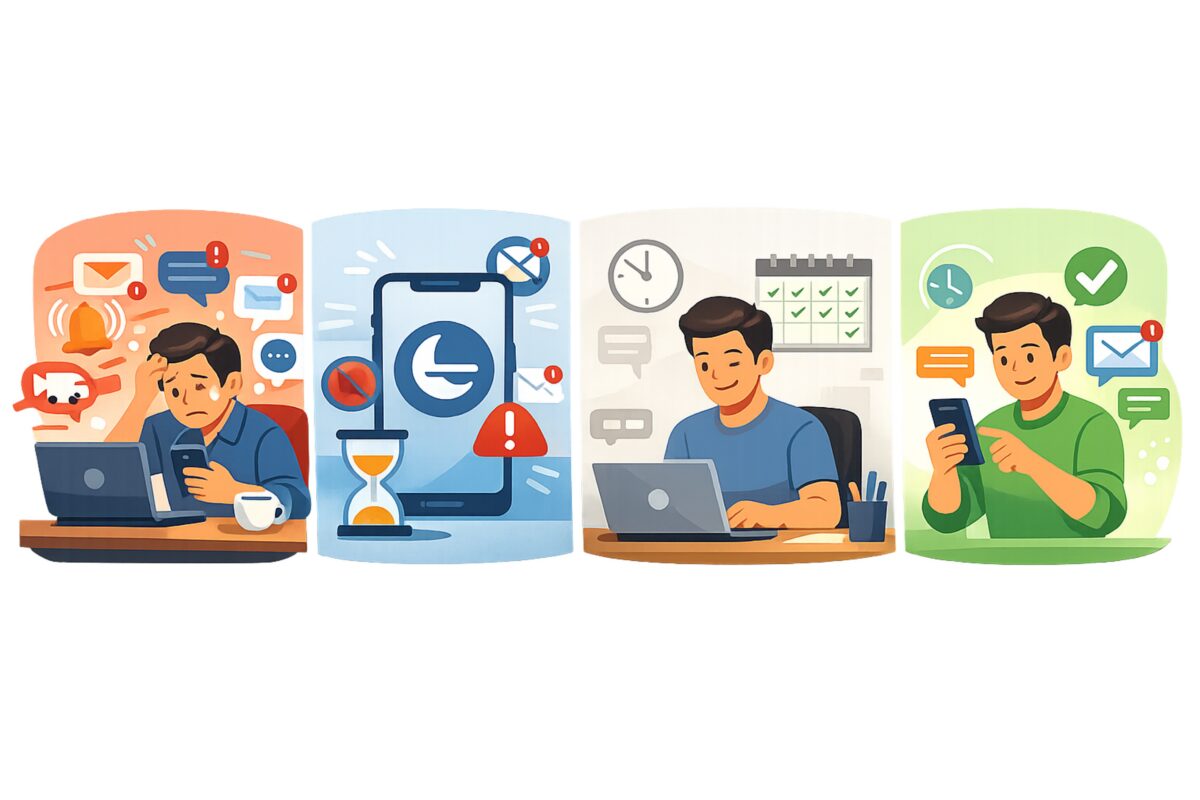
Notification Fatigue Is Reducing Focus — Experts Recommend “Batch Checking” Instead of Constant Monitoring

As smartphones, messaging apps, social media platforms, email services, delivery notifications, banking alerts, AI assistants, and workplace collaboration tools continue to multiply, many people are experiencing what productivity experts call notification fatigue.

The average person receives dozens—sometimes hundreds—of alerts each day. While each notification may seem harmless on its own, constant interruptions can significantly impact concentration, productivity, and mental clarity.

Researchers have found that every interruption forces the brain to shift attention away from the task at hand. Even brief distractions can create a “switching cost,” requiring additional time and mental energy to regain focus. Over the course of a day, these interruptions can add up to hours of lost productivity.

📱 Why This Matters Now

Modern life is increasingly connected.

Many people now manage:

* Work emails
* Team chats
* Social media messages
* Banking notifications
* Delivery updates
* Calendar reminders
* News alerts
* AI assistant notifications
* Smart home alerts

Because all of these compete for attention simultaneously, people often find themselves reacting instead of focusing.

This constant state of interruption has been linked to:

* Reduced concentration
* Increased stress
* Mental fatigue
* Lower productivity
* More mistakes
* Difficulty completing deep work

⚠️ Common Signs of Notification Fatigue

* Constantly checking your phone
* Forgetting what you were working on
* Starting multiple tasks without finishing them
* Feeling mentally exhausted by mid-afternoon
* Difficulty concentrating on reading or learning
* Increased stress when notifications appear

Many people don’t realize how much these interruptions affect them until they intentionally reduce them.

💡 The Productivity Hack: Batch Checking

Instead of responding to every alert immediately, productivity experts recommend batch checking.

This means reviewing messages, emails, and notifications during specific times rather than throughout the day.

Example schedule:

* Morning check
* Midday check
* Afternoon check
* End-of-day check

This allows uninterrupted blocks of focus while still staying informed.

⏱️ Additional Productivity Tips

* Disable non-essential notifications.
* Turn off social media alerts.
* Use “Do Not Disturb” during focused work.
* Place your phone face-down while working.
* Create dedicated focus periods.
* Use notification summaries instead of real-time alerts.
* Separate work apps from personal apps when possible.

🧠 Mental Benefits

Reducing interruptions may help:

* Improve focus
* Increase productivity
* Reduce stress
* Improve memory retention
* Increase creativity
* Improve decision-making
* Reduce mental exhaustion

Many people report feeling calmer within days of reducing unnecessary notifications.

🚀 Real-World Impact

The goal is not to disconnect from technology.

The goal is to control when technology gets your attention rather than allowing it to control your day.

Small changes to notification settings often produce immediate improvements in productivity and mental clarity.

🔍 Productivity Takeaway

Every notification asks your brain to stop what it’s doing.

The fewer unnecessary interruptions you allow, the more time, energy, and focus you regain.

Remember:
Protect your attention like a valuable resource—because it is. 📱🎯🧠⚡

Categories
Health, Wellness and Medicine

Sitting Has Become the New Health Risk — Experts Are Encouraging “Movement Snacks” Throughout the Day

Health professionals are increasingly warning about the effects of prolonged sitting, a growing concern as more people work remotely, spend hours on computers, stream entertainment, and rely on mobile devices throughout the day. While many people focus on exercise, research suggests that long periods of uninterrupted sitting may have negative effects on health even for individuals who regularly work out.

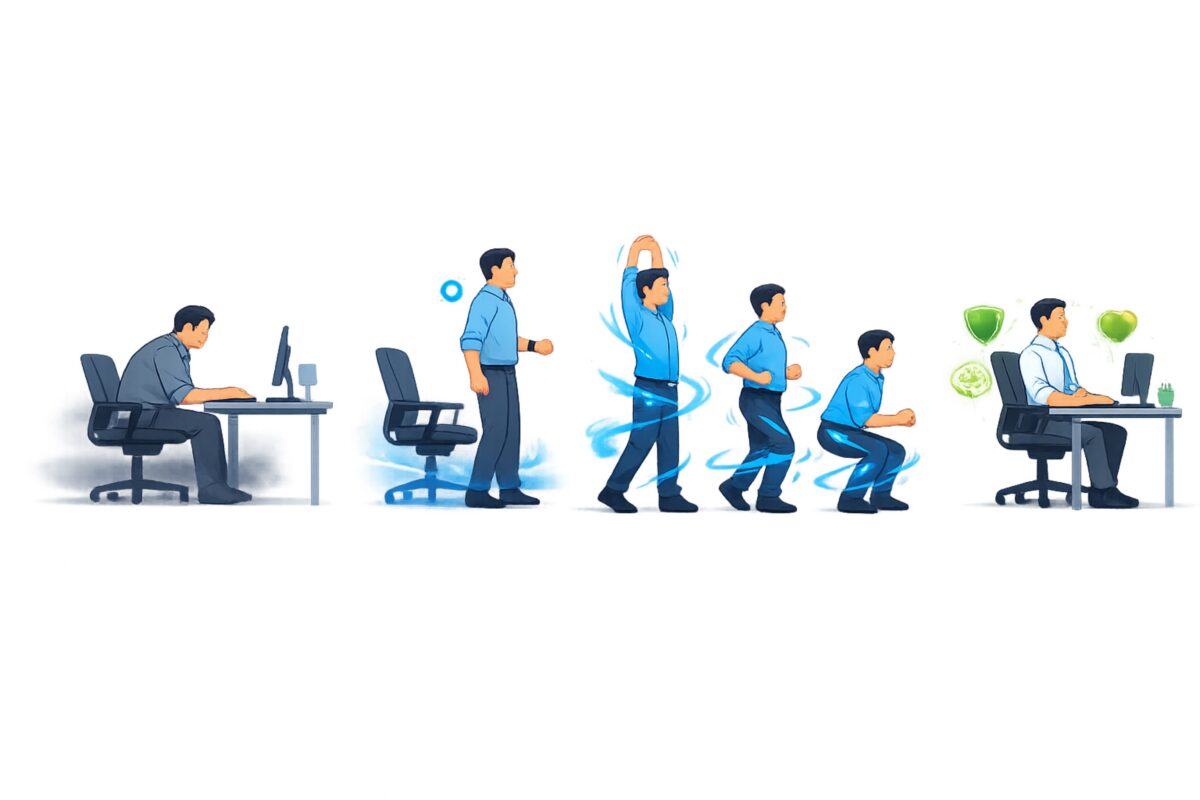
To combat this, wellness experts are promoting what are known as “movement snacks” — short bursts of physical activity lasting anywhere from 30 seconds to 5 minutes throughout the day. These small movement breaks can help improve circulation, reduce muscle stiffness, boost energy levels, and support overall health without requiring a full workout.

Unlike traditional exercise sessions, movement snacks are designed to fit naturally into everyday routines. Examples include standing up and stretching during phone calls, walking while listening to podcasts, taking stairs instead of elevators, or performing a few bodyweight movements between tasks.

🚶 Why This Matters Now

Modern lifestyles are becoming increasingly sedentary.

Many people now spend:

* 8–10 hours working at desks
* Additional hours driving or commuting
* Even more time using phones, tablets, televisions, and computers

The result is that some individuals may spend the majority of their waking hours seated.

Health researchers have linked prolonged sedentary behavior to:

* Reduced circulation
* Increased fatigue
* Back and neck discomfort
* Poor posture
* Elevated stress levels
* Increased risk of metabolic health issues
* Lower energy and productivity

As workplaces continue to embrace remote and hybrid models, movement throughout the day is becoming an increasingly important wellness strategy.

⚠️ Common Signs You’re Sitting Too Much

* Tight hips or lower back discomfort
* Stiff neck and shoulders
* Feeling sluggish in the afternoon
* Frequent headaches
* Poor posture
* Reduced concentration
* Feeling tired despite getting enough sleep

Many people attribute these symptoms to stress or aging when inactivity may be contributing significantly.

💡 Examples of “Movement Snacks”

Health experts recommend incorporating simple movement throughout the day, such as:

* Standing and stretching every 30–60 minutes
* Taking a short walk around the office or home
* Performing a few squats or calf raises
* Walking during phone calls
* Using a standing desk periodically
* Doing light mobility exercises between meetings
* Parking farther away from destinations
* Choosing stairs when available

Even a minute or two of movement can help break up long periods of sitting.

🧠 Mental Wellness Benefits

Movement doesn’t just affect the body.

Brief activity breaks may help:

* Improve focus and concentration
* Reduce mental fatigue
* Improve mood
* Lower stress levels
* Increase productivity
* Promote better sleep quality

Many people report feeling more alert and energized after even a short movement break.

❤️ Long-Term Health Benefits

Regular movement throughout the day may support:

* Better cardiovascular health
* Improved circulation
* Healthier blood sugar regulation
* Reduced muscle stiffness
* Better posture
* Increased mobility
* Greater overall physical resilience

Combined with proper sleep, hydration, nutrition, and exercise, frequent movement creates a stronger foundation for long-term wellness.

🏃 Practical Wellness Guidance

Try setting a recurring timer every hour.

When it goes off:

1. Stand up.
2. Stretch.
3. Walk for one minute.
4. Resume your activity.

This simple habit can add dozens of minutes of healthy movement to your day without requiring extra gym time.

🔍 Wellness Takeaway

You don’t need a one-hour workout to improve your health.

Small amounts of movement performed consistently throughout the day can have a surprisingly positive impact on physical health, mental clarity, energy levels, and overall well-being.

Remember:
The body was built to move. Even a few minutes of activity can help counteract hours of sitting. 🚶💙🧠💪